Reviewed · PRIVATE
3 Day All of Armenia Private Tour from Yerevan
Armenia hits you fast, and this route moves with purpose. In just 3 days, I like how you bounce between faith sites, ancient ruins, and food and wine experiences, all tied together by views of biblical Mount Ararat. You also get a hands-on cultural moment with lavash baking, plus a stop at Birds Cave where the famous ancient leather shoe was found.
Two things I really like: the private flow with hotel pickup and a driver who keeps the days moving, and the way the itinerary connects UNESCO monuments to everyday Armenian traditions like bread and wine. One consideration: this is a packed schedule with lots of driving, so you will want comfortable shoes and patience for long days, plus you will pay some site entrances on top of the tour price.
In This Review
- Key moments that make this private tour work
- A smart 3-day hit of UNESCO Armenia from Yerevan
- Day 1: Khor Virap, Noravank, and the Birds Cave shoe discovery
- Areni-1 to Areni Winery: why wine fits this itinerary
- Day 2: Charents Arch, Geghard, and the Garni pagan temple
- Lavash baking at Garni: bread you will understand better
- Lake Sevan on the peninsula: a calm counterweight
- Day 3: Etchmiadzin and Zvartnots, UNESCO church power in one day
- Saghmosavank and the Armenian Alphabet Monument, stone meaning
- Price and logistics: what $259 buys you, and what to budget
- Who this private tour suits, and who may want a different plan
- Should you book this 3-day private Armenia tour?
- FAQ
- How long is the private tour?
- What is included in the tour price?
- Are lunch and drinks included?
- Do I need to pay entrance fees at the sites?
- Is this tour private?
- What should I bring for the trip?
- Is the tour suitable for wheelchair users?
- What language options are available for the guide?
- What is the cancellation policy?
Key moments that make this private tour work
- Mount Ararat viewpoints from key stops like Khor Virap and the Arch of Charents
- Birds Cave (Areni-1), tied to the discovery of the oldest known leather shoe
- Lavash masterclass in Garni, tied to UNESCO Intangible Cultural Heritage
- Areni wine tasting, focused on Armenia’s deep winemaking traditions
- UNESCO church history on Day 3, with Etchmiadzin and the ruins of Zvartnots
Other ways to fill a day in Armenia
- Private 7-8-hour Khor Virap, Garni temple & Geghard monastery trip from Yerevan
★ 5.0 · 272 reviews - Private Half-Day Garni Temple and Geghard Monastery Tour from Yerevan
★ 5.0 · 245 reviews - Private 7-8 hour Trip to Garni – Geghard – Lake Sevan – Sevanavank from Yerevan
★ 5.0 · 185 reviews
A smart 3-day hit of UNESCO Armenia from Yerevan
This private tour is built for travelers who want “the big ideas” of Armenia without spending weeks planning. You start each day with hotel pickup and end back at your accommodation, which makes the whole thing feel smoother than doing each stop by taxi or bus.
What makes the pacing feel practical is the mix of themes. Day 1 focuses on the Armenian Christian story and archaeological wonder, Day 2 adds pagan-era Garni plus monasteries and lakeside views, and Day 3 leans into the church heart of the country and monumental Armenian identity. It is not random sightseeing, it is a storyline.
The other practical win is comfort. You travel in a vehicle with AC and Wi-Fi on board, and the driver is there for the road while the guide handles context, history, and site orientation (if you choose the option with guide). That matters because many of these places are more meaningful when someone explains what you are seeing.
Day 1: Khor Virap, Noravank, and the Birds Cave shoe discovery
Day 1 has a strong emotional center, starting at Khor Virap Monastery at the foot of biblical Mount Ararat. This is one of the most important sanctuaries of Armenians, and the monastery’s setting helps you understand why it is remembered so intensely. Even if you are not chasing religious landmarks, the location and the views give the stop weight.
Next comes Areni-1, also called Birds Cave. The cave is described as a rocky room with niches and aisles, used by ancient civilizations in different eras. The headline connection is what was discovered there: the ancient leather shoe, considered the oldest shoe in the world. If you like history that feels physical, not just dates on a plaque, this is a great pivot. It turns “Armenia’s past” into something tangible.
Then you head to Noravank Monastery, set in an impressive canyon. Here the experience shifts again: you get dramatic architecture in a setting that makes the monastery look carved into the cliffs. The combination of canyon light and stone detail can be a photographer’s favorite moment of the trip.
Practical note: Day 1 is heavy on walking around rocky and uneven areas. Keep your footwear sturdy and plan for a long day, not a quick in-and-out.
Areni-1 to Areni Winery: why wine fits this itinerary
After the cave stop, you move into a totally different side of Armenian heritage: wine. You visit Areni Winery, one of Armenia’s main attractions for vintage wines. The key detail here is that you are tasting within the same cultural region associated with ancient wine traditions, not a generic, tourist-only cellar.
This is a smart inclusion because Armenia’s wine story is not just about vineyards. It is part of the country’s identity, trade, and calendar. Even a short wine tasting can do two useful things for you on a short trip: it gives you a sensory memory to anchor the history you have just heard, and it helps you understand why places like Areni keep showing up in Armenian heritage narratives.
One small reality check: wine tasting is included, but lunch and drinks are not. So if you are the kind of person who needs a steady meal to enjoy tastings, plan to eat between stops, or at least buy something you can carry and snack on.
Also remember you are driving the next day. Keep your pace responsible, and treat the tasting like part of an experience, not a competition.
Point the car somewhere else for the day:
- From Tbilisi: Day Trip to Armenia Including Homemade Lunch★ 4.9 · 1,084 reviews
- Group Tour: Garni, Symphony of Stones, Geghard, Lavash Baking★ 5.0 · 1,042 reviews
- Group Tour: Lake Sevan (Sevanavank), Dilijan (Goshavank, Haghartsin)★ 5.0 · 1,036 reviews
- Garni & Geghard Small-Group Day Trip with Lavash Baking★ 4.8 · 881 reviews
Day 2: Charents Arch, Geghard, and the Garni pagan temple
Day 2 starts with a hit of Armenia’s most famous view. The Arch of Charents is a spot where you can admire one of the most beautiful views of Mount Ararat. This is the kind of stop that makes you look up, not just around. If the weather is clear, it can be a highlight. If it is hazy, you still get the point of the location, but you may need to adjust expectations for how dramatic the mountain looks.
After that, you head to Garni and then Geghard, which is a great pairing because they represent different “eras” of Armenian sacred space. Geghard Monastery is a medieval site declared a World Heritage Site by UNESCO. Tradition says it was founded by Saint Gregory in the 4th century on the site of a sacred spring, and the current constructions are partially carved in rock, dating from the 13th century. That mix, holy spring story plus rock-cut architecture, gives you a layered sense of why this place survived and why people kept coming back.
Then you get Garni Temple, described as the only preserved pagan temple in the entire Caucasus. Construction dates to the second half of the 1st century, dedicated to the Sun God. It is a striking contrast after Geghard, and that contrast is exactly why it is so useful on a 3-day trip.
If you care about architecture, this day gives you variety without turning into a theme park. If you care about photos, it also gives you angles and textures that are hard to fake.
Lavash baking at Garni: bread you will understand better
The highlight for many people on this tour is the lavash baking masterclass in Garni. This is not just watching someone bake. It is a hands-on cultural class tied to Armenia’s traditional bread, which was inscribed in the UNESCO Representative List of the Intangible Cultural Heritage of Humanity in 2014.
Here is why I think this matters for you. Lavash is one of those foods that can feel everyday once you see it sold in stores back home. A masterclass turns it into a story: flour, heat, shape, and timing, plus the social role bread plays in Armenian daily life. You also get to connect the intangible heritage (the practice) to the tangible setting (a historic site like Garni), which makes the whole experience click.
The class is included in the tour price. What is not included is your lunch and drinks, so if you are hungry, ask the guide how baking timing fits with the day’s schedule, then plan accordingly.
Bring practical things: comfortable shoes, and dress for the weather. If it is warm, you will appreciate breathable clothing. If it is cooler, you will want a layer.
Lake Sevan on the peninsula: a calm counterweight
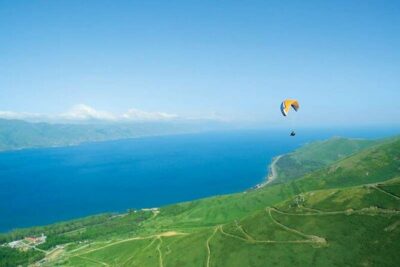
After monasteries and temples, Day 2 slows down with a stop at Sevanavank, on the peninsula of Lake Sevan. The monastic complex sits where you can contemplate the landscape and take in the lake views, described as the pearl of Armenia.
This stop is valuable because it gives your brain a rest. After rock-cut monasteries and ancient stone temples, the open water helps your eyes reset. It also gives you a different kind of context for Armenian geography, where faith sites are not only in cities, but also threaded along lake and river routes.
One key planning point: because you are fitting this into a full day, you may not have endless hours. Make the time count. Take a slow walk around where you can, and give yourself a moment to just look. Lake stops work best when you stop trying to capture everything.
Day 3: Etchmiadzin and Zvartnots, UNESCO church power in one day
Day 3 is about Armenia’s church center and the architecture that shaped it. You visit Etchmiadzin Cathedral, listed as a UNESCO World Heritage Site in 2000. It is described as the religious center for all Armenians, and Armenia’s early adoption of Christianity in 301 is part of why this cathedral carries cultural weight.
Then you head to Zvartnots Cathedral, another UNESCO site. These are the medieval ruins of a cathedral built in the 7th century. Seeing Etchmiadzin first and then Zvartnots next is a smart order because you get a sense of continuity. One is a living focal point, the other is a ruined masterpiece. Together, they make the story feel less abstract.
If you like sites that explain why a place matters beyond the walls, Day 3 delivers. It is easy to leave with a better sense of how religion shaped Armenian identity and how monumental building worked across centuries.
Also, remember that UNESCO ruins can involve uneven ground. Wear shoes you can trust, and take your time in any areas where the surface looks irregular.
Saghmosavank and the Armenian Alphabet Monument, stone meaning
After the big UNESCO church stops, you shift to two places that feel more personal. Saghmosavank is a 13th-century monastery on the right bank of the Kasakh River. The description emphasizes location and how it adds beauty and comeliness. This is the kind of stop that can be quieter, but still memorable because the surroundings are part of the design story.
Then you end at the Armenian Alphabet Monument. The complex includes sculptures of the 39 letters of the Armenian alphabet, plus monuments to great Armenian thinkers. The letters and statues are made of Armenian tufa, which is a detail that makes the monument feel grounded and local. It is not just a statue garden. It is a physical reminder that identity in Armenia is tied to language and learning as much as religion and architecture.
If your trip includes family or anyone interested in Armenian heritage, this monument is a strong emotional capstone. It is easy to point at the letters and talk through meaning, even if you do not know the language.
Price and logistics: what $259 buys you, and what to budget
At $259 per person for 3 days, this tour is positioned as a private, well-guided route with transport done for you. For many people, the value is not only the destinations, it is the saved effort: you do not have to map driving routes, coordinate pickups, or figure out how to move between far-flung sites efficiently.
Included basics that matter on short trips:
- Hotel pickup and drop-off
- Comfortable transportation with AC and Wi-Fi
- A professional English-speaking driver
- A guide if you pick the option with guide (you can specify the language)
- Lavash baking masterclass and wine degustation
- One bottle of water per person
- Assistance 24/7, plus a map of Armenia and Yerevan
What you should budget separately:
- Entrance fees at several sites (Garni, Birds Cave/Areni-1, Zvartnots)
- Lunch and drinks
That last part is important. Two people can pay the same tour price and feel very different depending on how they handle meals. Plan to cover lunch on your own each day.
One more logistics reality: it is a private group, so the vehicle type may be a car, minivan, or minibus based on number of participants. That is convenient, but it means the experience is tailored to your group size, not a fixed “one size fits all” bus day.
Who this private tour suits, and who may want a different plan
This works well for:
- Families or friends who want private timing and less stress
- People who want UNESCO sites plus food and wine in one package
- Travelers who care about cultural meaning, not just quick photo stops
It may not be ideal for:
- Anyone who needs wheelchair access, since the tour is listed as not suitable for wheelchair users
- Travelers who hate long days, because the itinerary packs major sites into each day
If you are Armenian diaspora, or just deeply curious about the country’s identity, this kind of route tends to land well. The mix of sanctuaries, language monument, bread heritage, and wine tradition gives you multiple ways into Armenia, not just one.
Should you book this 3-day private Armenia tour?
If you want a focused overview with strong cultural anchors, I would book it. The combination of UNESCO architecture, a hands-on lavash masterclass, and wine tasting gives you more than a checklist. You leave with stories you can repeat, not only photos.
I would hesitate only if you know you personally struggle with tight schedules and long driving days. This route is designed to maximize value in three days, so it is not slow travel.
One more decision tip: choose the option with a guide if you can. The tour’s sites are easier to enjoy when someone can connect what you see with what it meant, including why places like Etchmiadzin and Geghard matter. If you do go, wear shoes you trust and plan your meals so the included tastings and class stay fun, not rushed.
FAQ
How long is the private tour?
It lasts 3 days.
What is included in the tour price?
The tour includes hotel pickup and drop-off, comfortable transportation with AC and Wi-Fi, a professional English-speaking driver, a lavash baking masterclass, wine degustation, one bottle of water per person, a map of Armenia and Yerevan, and 24/7 assistance. A professional guide is included if you choose the option with guide.
Are lunch and drinks included?
No. Lunch and drinks are not included.
Do I need to pay entrance fees at the sites?
Yes. Entrance fees for Garni, Bird’s Cave (Areni-1), and Zvartnots are not included and you should budget for them.
Is this tour private?
Yes. It is a private group tour.
What should I bring for the trip?
Bring comfortable shoes and weather-appropriate clothing.
Is the tour suitable for wheelchair users?
No. The tour is not suitable for wheelchair users.
What language options are available for the guide?
The tour notes that if you choose the option with guide, you should specify the language in your message.
What is the cancellation policy?
Free cancellation is available up to 24 hours in advance for a full refund.
Newest listings across Armenia
- Private Trip: Sevan, Dilijan, Parz Lake,Haghartsin,Goshavank★ 5.0 · 1 review
- Yerevan’s Sights: Guided Walking Tour★ 5.0 · 1 review
- Mount Aragats-Saghmosavank Monastery-Alphabet Park★ 5.0 · 1 review
- Private transfer Yerevan-Tbilisi-Yerevan in one day★ 5.0 · 1 review
- Yerevan tour in a retro Lada with drinks (Yerevan city tour)★ 5.0 · 1 review
- Group tour: Haghpat, Sanahin, Akhtala, Odzun, Mendz Er★ 5.0 · 1 review
- Yerevan: Garni Temple, Geghard Monastery, Symphony of Stones★ 5.0 · 1 review
- “Journey Through Time: Garni Temple and Geghard Monastery”★ 5.0 · 1 review
Private, compared.
Private 7-8-hour Khor Virap, Garni temple & Geghard monastery trip from Yerevan
Read our review →
Private Half-Day Garni Temple and Geghard Monastery Tour from Yerevan
Read our review →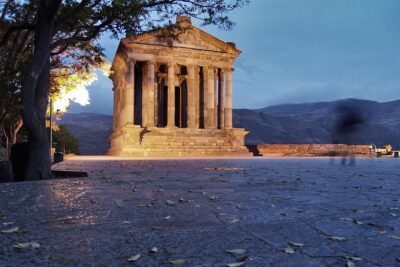
Private 7-8 hour Trip to Garni – Geghard – Lake Sevan – Sevanavank from Yerevan
Read our review →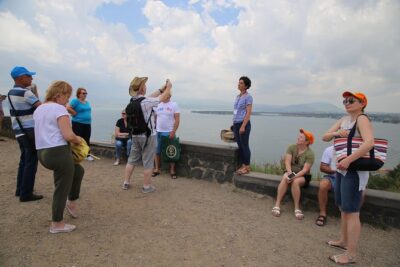
Private Lake Sevan, Sevanavank, Dilijan, Haghartsin, Goshavank Tour from Yerevan
Read our review →
Private Full-Day Trip to Khor Virap – Noravank – Tatev-ropeway from Yerevan
Read our review →
Private Half-day Echmiadzin Cathedral, Hripsime & Zvartnots Temple from Yerevan
Read our review →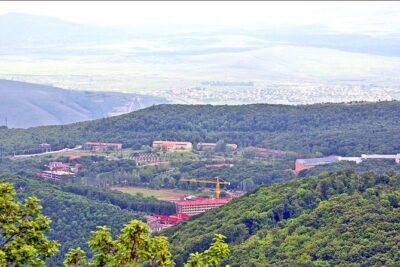
Private 6-7 hour Tsaghkadzor, Kecharis, Lake Sevan, Sevanavank Tour from Yerevan
Read our review →