Reviewed · TOURS
7 Day Tour through Armenia
Monasteries, museums, and big views in one week. This Armenia trip from Yerevan strings together ancient sites and modern city walks in a way that feels practical, not chaotic. I like that the tour is small-group friendly (max 30), with pickup and an English option, so you spend more time looking and less time figuring out logistics.
I also like the mix of experiences across the week. You get classic Yerevan viewpoints at Cascade, a proper stop at ARARAT Museum, and then full days built around monasteries like Geghard and Sevanavank, plus church complexes near gorges. One possible drawback: the schedule is tight, with many stops that are about an hour each, so if you prefer slow travel or hate stairs and churches, you’ll want to pace yourself.
In This Review
- Key highlights worth planning around
- Entering Yerevan: Cascade views, ARARAT Museum, and a city-walk reset
- Holy Archangels Church and Zvartnots: Armenian Church roots in two very different settings
- Lake Sevan and three monastery stops: a full day of water views and scholarship vibes
- Gyumri plus three monasteries: earthquake-resilient streets and stone craftsmanship
- Garni Temple, Charents Arch, and Geghard’s cave complex: one day where the rocks do the talking
- Color churches near gorges, Oshakan, and Amberd Fortress at 2,300 meters
- Parajanov Museum, Erebuni’s origins of Yerevan, and Vernissage market
- Price and logistics: what $885.13 buys you over 7 days
- Who this Armenia tour suits best (and who should rethink)
- Should you book Ari Tour’s 7-day Armenia trip?
- FAQ
- How long is the tour?
- Where does the tour take place?
- Is pickup included?
- Is the tour available in English?
- Are admission tickets included?
- What is the group size limit?
- Can I cancel for a full refund?
Key highlights worth planning around
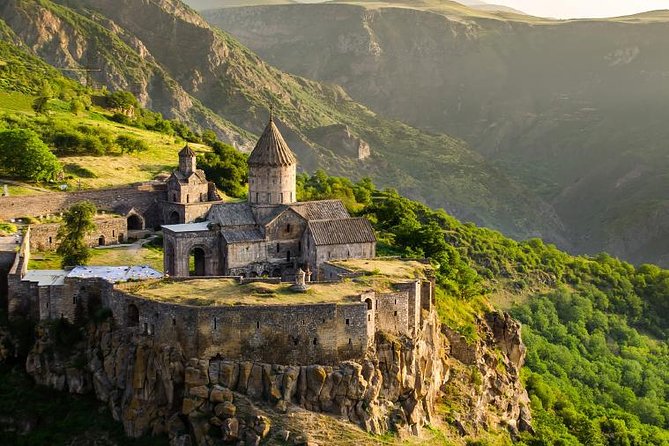
- Yerevan’s Cascade Complex for a fast, high-level orientation of the city
- ARARAT Museum with an included tasting that’s fun even if you are not a spirits person
- UNESCO-listed Geghard Cave Monastery, plus Charents Arch and Garni Temple on the same day
- Lake Sevan time, including Sevanavank Monastery with striking views
- Amberd Fortress at 2,300 meters, for dramatic ruins and big altitude air
- Parajanov Museum and Erebuni Museum to balance all the temples with art and city origins
Yet more Things to Do in Yerevan
- Group Tour: Garni, Symphony of Stones, Geghard, Lavash Baking
★ 5.0 · 1,042 reviews - Group Tour: Lake Sevan (Sevanavank), Dilijan (Goshavank, Haghartsin)
★ 5.0 · 1,036 reviews - Garni & Geghard Small-Group Day Trip with Lavash Baking
★ 4.8 · 881 reviews
Entering Yerevan: Cascade views, ARARAT Museum, and a city-walk reset
Day 1 is all about getting your bearings. You start at the Cascade Complex, the famous stairway in front of the Opera House, and it is more than a photo stop. From the top, you get a sweeping sense of Yerevan’s layout, which helps the rest of the week click, because you stop seeing places as isolated dots.
Then you head to ARARAT Museum for an included tasting experience. Even if you think you do not like brandy, this stop is worth it because it turns a drink into a story about aging and craft. You get a structured place to learn and taste, instead of stumbling into something random on your own.
Your day finishes with a walk along Mesrop Mashtots Avenue, where you can take in central Yerevan architecture at a comfortable pace. This is a good “reset” after temples and viewpoints, because it lets you see street life and city design without a strict site-within-site feeling. If you arrive early on Day 1, you’ll likely enjoy it more, because it is easier to soak it in rather than rush.
What to watch for: Cascade means stairs. It is iconic, but wear shoes you trust, and don’t treat it like a quick sprint.
Holy Archangels Church and Zvartnots: Armenian Church roots in two very different settings
Day 2 is built around two heavyweight religious sites with a strong sense of time depth. You begin at the Holy Archangels Church, described as the main religious and administrative center of the Armenian Apostolic Church, founded on a site with even older layers. The quick history note matters: Gregory the Illuminator is tied to the site in 303 A.D., and later the St. Hripsime monastery is dated to 618 A.D. This means you are not just looking at a church building, you are looking at centuries of continuity in one place.
Next comes Zvartnots Temple, a dramatic, UNESCO-associated stop in the story of ancient Armenia. It started in 641-643 and took decades with interruptions, initiated by Catholicos Nerses III. What makes this site interesting is how it connects the people who shaped the architecture, including references to experts tied to Dvin, another place mentioned as UNESCO-listed.
Even if you are not a history nerd, Zvartnots tends to land because ruins are honest. You see what survived, what hints at grandeur, and what the builders achieved before modern eyes existed. It’s also a good day to ask your guide to explain what you are seeing, because the site layout can feel abstract until someone gives you the framework.
Practical tip: Keep your expectations flexible. Ruins and reconstruction can vary by season and lighting, so bring patience and good photos, not perfection.
Lake Sevan and three monastery stops: a full day of water views and scholarship vibes
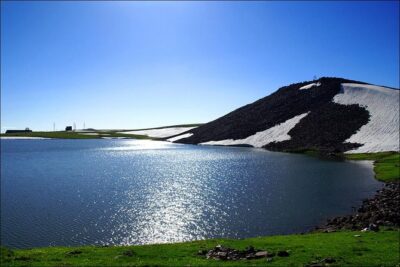
Day 3 heads to Lake Sevan, and the tour frames it as the second high-altitude lake in the world, with sweet, blue water. That detail matters because it signals what kind of day you are in for. This is not just a drive to a church stop, it is a change in scenery, air, and mood.
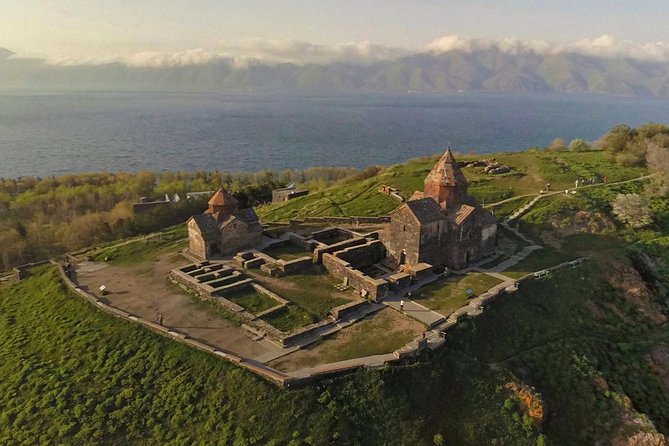
Your first monastery visit is Sevanavank Monastery, the one you reach on the lake. Monasteries by water always feel different, and here you get that “perched” sense of place, where the view does half the explaining for you. It also helps that the stop is an hour, long enough to look around, but not so long that you lose the meaning.
After that, you visit Haghartsin Monastery and Goshavank Monastery, tied to medieval Armenian religious and educational life. Haghartsin is described as a religious and educational center from the 10th-13th centuries, set around the nature of Dilijan. Goshavank adds a scholar angle through Mkhitar Gosh, known as a legal expert and scientist (1130-1213). If you like learning through human stories, this pairing works well, because the monasteries are not just “old rocks,” they are linked to ideas.
What to expect: This day can feel like a string of beautiful places, but it is still a sightseeing marathon. If you need breaks, use the transitions between stops to breathe, drink water, and reset.
Point the car somewhere else for the day:
- Khor Virap, Noravank and Birds’ Cave Trip with Wine Tasting★ 4.8 · 845 reviews
- Yerevan: Garni, Geghard, Symphony of Stones & Lavash Baking★ 4.8 · 758 reviews
- From Yerevan: Lake Sevan & Dilijan Full-Day Group Tour★ 4.7 · 709 reviews
- Group tour: Khor Virap, Noravank, Areni Winery and Cave★ 5.0 · 651 reviews
Gyumri plus three monasteries: earthquake-resilient streets and stone craftsmanship
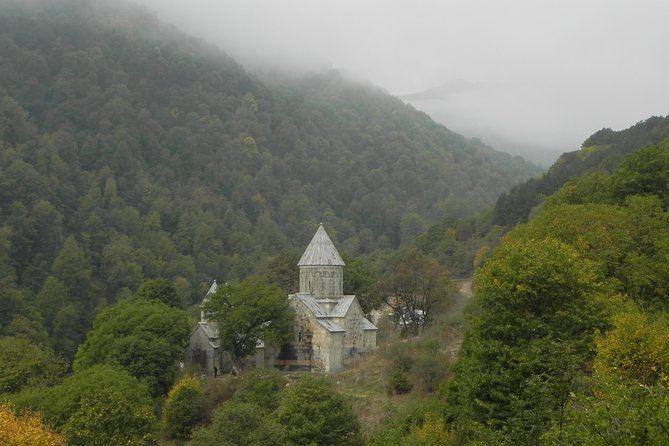
Day 4 shifts you away from the capital for a reason. You start in Gyumri Main Square and walk old Gyumri, where the tour idea is that you can almost hear the old rhythms of the city. The details you are given matter here, like colorful stones and bas-reliefs, and the fact that part of the old housing survived the devastating 1988 earthquake. Gyumri becomes more than a location, it becomes a study in survival and design choices.
Then you move through monasteries with different flavors. Marmashen Monastery, built from 988-1029 on the left bank of the Akhurian River, is described as consisting of five churches and as one of the best surviving examples of the Ani school of medieval Armenian architecture. That “school” framing is useful, because it tells you the style is not random, it has a recognized identity.
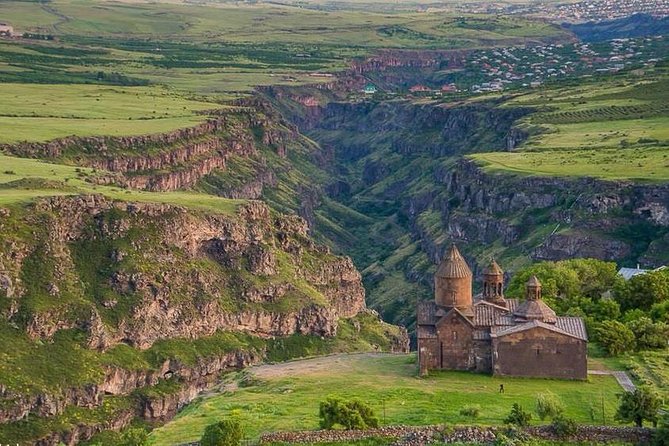
Finally comes Harichavank Monastery, perched on the western slope of Mount Aragats on a rocky cape. The description includes a 7th-century foundation and a main church built in the 13th century, plus later use as a summer residence of Catholicoses. The most unforgettable detail is about an earthquake split, leaving a small chapel towering over the canyon, literally separated from the cape. It is hard not to feel the drama of that when you are standing there.
Consideration: Gyumri walking plus monastery terrain can be a lot on your legs. Plan for tired feet and bring layers, because gorge settings can feel cooler than the city.
Garni Temple, Charents Arch, and Geghard’s cave complex: one day where the rocks do the talking
Day 5 is one of the most famous combinations in Armenia, and it is built smartly. You start with a short stop at Charents Arch, where the view covers the Ararat valley and Mount Ararat. That view stop is not just sightseeing, it is a geography anchor. After that, when you reach Garni and Geghard, you can better place them in the broader region.
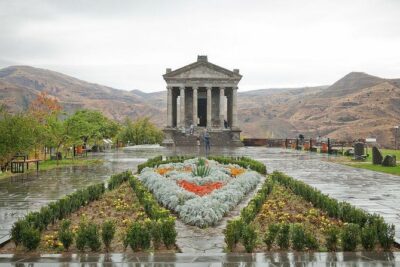
Next comes Garni Temple, described as the only extant temple in Armenia, dating back to paganism and Hellenism, devoted to the sun god Mithra. It is dated to 76 B.C., built by Greek slaves, and linked to centuries of Armenian royal use as a summer residence. This is a sharp contrast to the Christian monastery days earlier. If you like variety, this is your “history curveball,” and it often refreshes attention.
Then the day culminates at Geghard (Geghard) Monastery, described as a 13th-century complex of cave structures in a picturesque valley, with UNESCO status noted. The name Geghard means lance, tied to a biblical story about a Roman soldier and the spear used to pierce Christ’s body. The tour also points out that khachkars, crosses carved into stone, and caves are built into the rock around the complex.
One hour at Geghard can feel short, but that timing can also be a good thing. If the cave churches are crowded or the light changes fast, you still get your core look without losing the day. And when a site is that visually intense, you’ll likely feel it even without lingering for hours.
Practical tip: Bring a light jacket. Rock sites can change temperature quickly.
Color churches near gorges, Oshakan, and Amberd Fortress at 2,300 meters
Day 6 is the “church colors plus ruins” day. You begin with three churches that are named by color and location: Tsiranavor Church (apricot-colored, 5th-century partly ruined), Karmravor Church (red-colored, 7th-century), and Spitakavor Church of Ashtarak (white-colored, 13th-century, partly ruined). Being named by color is helpful, because you can compare what you see instead of feeling like every church looks the same.
Then you cross Ashtarak Bridge, built in 1664 with three arches of unequal size over the Kasagh River. The tour notes that the area underneath and around the bridge is good for picnics, which is a nice moment to stop and just exist for a bit.
After that, you visit Saint Gevorg Church with frescoes painted in the 17th century, and then Saghmosavank Monastery, known for acoustics and called Saghmosavank because the clergy used to sing spiritual songs there. That acoustics detail is a fun way to understand why a monastery might be famous beyond looks.
Next, you go to Oshakan village for the Church of Saint Mesrop Mashtots, also described as his burial place. This is another type of history stop, focused on the creation of the Armenian alphabet, which helps connect the religious story to the language and culture story.
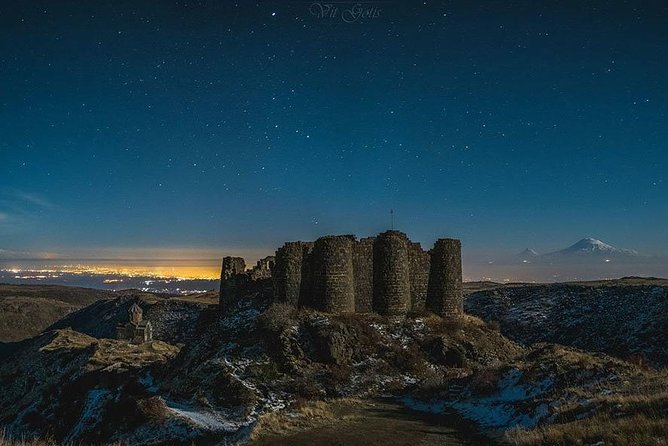
Finally comes Amberd Fortress, a 10th-century fortress located at 2,300 meters above sea level at the confluence of the Arkashen and Amberd rivers. The tour frames it as a castle used by Armenian kings during wars. This is the day’s big finale, and altitude makes a difference in how you feel up there. Even if you are not doing intense hikes, you will notice the air.
What to consider: At higher altitude, plan for slower walking and extra water. It is not the place to “power through” if you get winded easily.
Parajanov Museum, Erebuni’s origins of Yerevan, and Vernissage market
Day 7 balances everything. After days of stones, caves, and churches, you end with arts and city origins.
You start with Parajanov Museum, honoring filmmaker Parajanov. The tour highlights assemblages, flat and three-dimensional collages, drawings, dolls, and film sketches. This kind of stop matters because it changes your brain from “how old is it?” to “how does creativity work?” It is a satisfying pivot.
Then comes Erebuni Museum, focused on the history of the foundation of Yerevan at the foot of Arin Berd hill, where the Urartian Fortress Erebouni was constructed. This gives you a different lens on the city, from “how it looks now” to “how it began.”
To finish, you hit Vernissage, an open-air market where locals sell handmade works. Vernissage is a smart last stop because it turns your final hours into something you can take home, and it also gives you a chance to buy small gifts without overthinking where to go.
Practical tip: Set aside time to browse. The market works best when you are not rushing to the last bus.
Price and logistics: what $885.13 buys you over 7 days
At $885.13 per person for an approx. 7-day program, the value depends on what you compare it to. The schedule clearly includes entry where listed: ARARAT Museum on Day 1, and most other stops show admission tickets as included. A couple of items are free on the plan, like Cascade and Vernissage, which still keeps the overall price competitive.
The practical side is also there. You have pickup offered, and you get a mobile ticket. The tour is offered in English, and it runs with a maximum of 30 travelers, which usually means less waiting around than big bus tours. It is also described as being near public transportation, which can help if you want to extend your trip on your own.
One more value point: the itinerary is organized as a sequence of “why this connects.” You do not just bounce between random monuments. You see the religious evolution, the scholarly and cultural story, then the art and origin story in Yerevan.
My advice on value: If you want a guided outline that covers the major priorities in Armenia with minimal hassle, this kind of package makes sense. If you want total freedom to stay longer at one site and skip others, you may prefer building your own route.
Who this Armenia tour suits best (and who should rethink)
This tour fits best if you want a structured week with clear highlights and minimal planning stress. I think it is a strong match for first-time visitors to Armenia who want to see Yerevan plus a broad sweep of monasteries, historic churches, and a couple of major cultural museums.
It also looks like the guides do a good job of keeping the week readable and engaging, with enough variety that you do not feel trapped in the same “church after church” rhythm forever. That balance shows up in the order: city viewpoints and tasting early, UNESCO-style cave monastery and pagan temple in the middle, then art and city origins at the end.
Who should rethink it: if you dislike religious architecture, if you need lots of downtime between stops, or if walking is a problem. The plan includes stairs and sites with uneven terrain, and the stops are frequent enough that you will want to travel prepared for long days.
Should you book Ari Tour’s 7-day Armenia trip?
If you want one week that covers Yerevan, Lake Sevan area monasteries, Geghard, and Amberd Fortress without you having to map everything, I think yes, book it. The price feels reasonable when you factor in the included admissions on most stops, pickup, English support, and the small-group limit.
If you are picky about pacing, consider this your heads-up. The plan is designed for a full circuit, so you should pack with comfort in mind and expect a busy rhythm. If that works for you, this tour is a strong way to see what makes Armenia feel both ancient and unexpectedly human.
FAQ
How long is the tour?
It lasts approximately 7 days.
Where does the tour take place?
The itinerary is based in Armenia, starting from Yerevan.
Is pickup included?
Pickup is offered.
Is the tour available in English?
Yes, it is offered in English.
Are admission tickets included?
Many stops list admission tickets as included, while a few are marked free.
What is the group size limit?
The tour has a maximum of 30 travelers.
Can I cancel for a full refund?
You can cancel up to 24 hours in advance for a full refund.
Newest listings across Yerevan
- Yerevan’s Sights: Guided Walking Tour★ 5.0 · 1 review
- Private transfer Yerevan-Tbilisi-Yerevan in one day★ 5.0 · 1 review
- Yerevan tour in a retro Lada with drinks (Yerevan city tour)★ 5.0 · 1 review
- Private tour to Saghmosavank, Karmravor, Oshakan, Hovhannavank★ 5.0 · 1 review
- Day Tour to Amberd Fortress Aragats and Kari Lake From Yerevan★ 5.0 · 1 review
- Yerevan Walking Architecture Tour★ 5.0 · 1 review
- Armenia – Guaranteed Departure – Book Now! – 2025★ 5.0 · 1 review
- Mother Cathedral of Holy Echmiadzin★ 5.0 · 1 review
Tours, compared.
Garni, Symphony of Stones, Geghard, Lavash Baking
Read our review →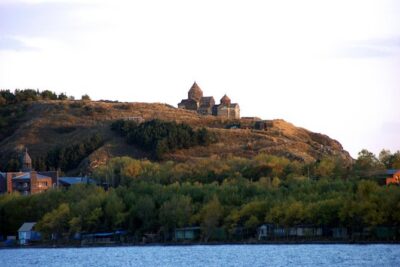
Lake Sevan (Sevanavank), Dilijan (Goshavank, Haghartsin)
Read our review →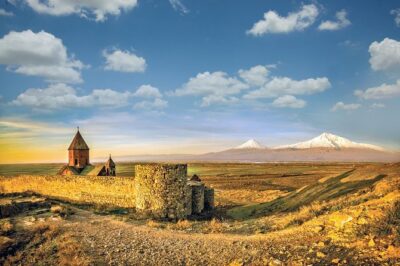
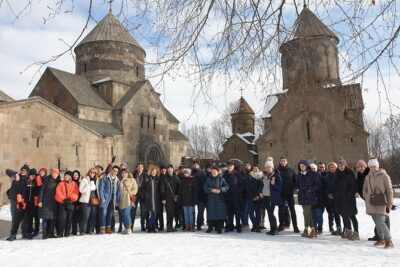
Tsaghkadzor (Kecharis, Ropeway), Lake Sevan, Trout barbecue treat
Read our review →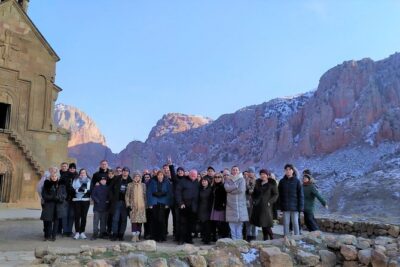
Khor Virap, Noravank, Tatev monasteries (wayback on Ropeway)
Read our review →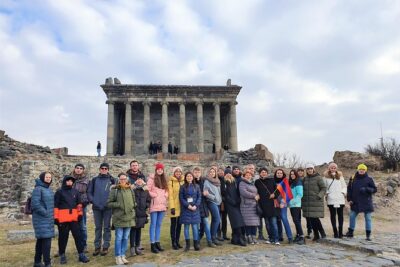
Garni pagan temple, Geghard monastery, Lake Sevan, Sevanavank
Read our review →