
Reviewed · GARNI TEMPLE & GEGHARD MONASTERY
Private: Garni, Geghard, Symphony of stones, Sevan, Dilijan
One day, four worlds of Armenia. You get a smart mix of sacred sites and wild scenery, from the rock churches of Geghard to the unreal symmetry of the Symphony of Stones. The day feels packed, but the stops are paced so you can actually look up, not just rush through.
I especially like two things: the way this route connects Armenia’s religious story across centuries, and the variety of nature in one outing, from the river gorge at Garni to the high-water mood of Sevan. One thing to consider is that it is a long day with lots of time on the road, and in bad weather you may miss the gorge descent at Symphony of Stones.
In This Review
- Key Highlights You Will Notice Fast
- The Value: Private Group, Real Time, and Fewer Hassles
- Starting Point in Yerevan: How the Day Actually Flows
- Charents Arch: A Framed View of Ararat
- Garni: Basalt Fortress, Roman Baths, and a Pagan Temple
- Symphony of Stones (Basalt Organ): Geometry You Can Hear
- Geghard Monastery: Rock Churches and a UNESCO-Listed Story
- Lake Sevan and Sevanavank: High Views and Quiet Time
- Dilijan Old Complex and the Mimino Statue: 19th-Century Mood
- Haghartsin Monastery: Forest Silence in Tavush
- Transportation and Timing: What a Long Day Means for You
- Who This Trip Fits Best
- Should You Book It?
- FAQ
- What is the tour duration?
- Where does pickup happen?
- What languages is the live guide available in?
- Are entrance tickets included?
- Is lunch included in the price?
- What happens at Symphony of Stones in bad weather?
Key Highlights You Will Notice Fast
- UNESCO Geghard’s rock-cut churches and tombs give you medieval Armenia in one place
- Garni’s pagan temple uses basalt columns and a fortress-style setting above the cliffs
- Symphony of Stones, aka Basalt Organ shows near-perfect basalt geometry with river sound below
- Sevanavank and a Sevan Lake sail balance monastery sights with high-altitude views
- Dilijan’s Old Complex and Mimino statue add a 19th-century flavor to the day’s mix
More Garni and Geghard mornings:
- Group Tour: Garni, Symphony of Stones, Geghard, Lavash Baking
★ 5.0 · 1,042 reviews - Garni & Geghard Small-Group Day Trip with Lavash Baking
★ 4.8 · 881 reviews - Yerevan: Garni, Geghard, Symphony of Stones & Lavash Baking
★ 4.8 · 758 reviews
The Value: Private Group, Real Time, and Fewer Hassles
This is a private group day trip, price set per group up to 3 people. At $323 per group, the value jumps if you travel with two others, because you’re essentially paying for a private driver, a professional guide, and included entry tickets, while keeping control of how you spend your free time at each stop.
You also get free pickup and drop-off within Yerevan, plus a comfortable vehicle with AC and bottled water. Lunch is not included, but you do have short blocks of free time where you can grab something before you move on, or you can plan to eat earlier or later back in the city.
The biggest practical win is the layout of the day. It’s built like a loop: monasteries for the morning, geology and fortress ruins in the middle, then Sevan and Dilijan to finish with scenery and calmer pacing.
Starting Point in Yerevan: How the Day Actually Flows
Pickup starts in Yerevan, and the total time is 690 minutes, which is about 11 and a half hours. That sounds long on paper, but the itinerary is structured with guided visits and short photo or free-time windows throughout.
A detail I like in this setup is that it’s not one long, silent drive. Each major stop includes a guided component, then a bit of breathing room, so you can step away, take photos, or just stand and look at the views that Armenia is famous for.
There’s also a sensible rule for timing at the end of the day. The schedule is designed to get you back in time to have dinner in Yerevan, which matters because otherwise day trips can turn into “travel all day, eat whenever you survive.”
Charents Arch: A Framed View of Ararat
Your first real stop is Charents Arch, created by architect Raphael Israelyan. The story is romantic and very Armenian: on his way to Garni, he noticed a picturesque view toward Mount Ararat and decided to build an arch like a temple dedicated to Ararat. The arch was constructed in 1957, marking the 60th anniversary of the poet Yeghishe Charents.
Even if you don’t know the poet, you’ll get the point fast. This is a picture frame moment. The arch’s shape guides your eyes toward the Ararat valley, with the mountain looking like it floats in the distance. You’ll have about 15 minutes, which is enough time to photograph and then move on without turning it into a slow stop.
Tip for your photos: wear shoes you can stand in comfortably, because this is one of those sites where you’ll likely want to try multiple angles, not just one quick shot.
More days up at Lake Sevan:
- Group Tour: Lake Sevan (Sevanavank), Dilijan (Goshavank, Haghartsin)★ 5.0 · 1,036 reviews
- From Yerevan: Lake Sevan & Dilijan Full-Day Group Tour★ 4.7 · 709 reviews
- Group Tour: Tsaghkadzor (Kecharis, Ropeway), Lake Sevan, Trout barbecue treat★ 5.0 · 511 reviews
- Sevan, Dilijan, Ancient Monasteries: Haghartsin & Goshavank★ 4.7 · 477 reviews
Garni: Basalt Fortress, Roman Baths, and a Pagan Temple
Next comes Garni, and it’s a strong anchor for the day because it mixes religion, architecture, and landscape.
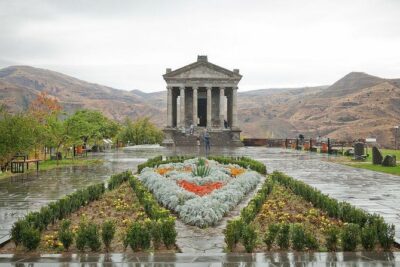
The center of attention is the pagan temple, said to have been built in 77 AD. It sits in the Kotayk region by the left bank of the Azat River. The temple is dedicated to God Mihr, the Armenian pagan god of light and the Sun. Construction is grey basalt, and the temple is supported by 24 Ionic-order columns, with six on the front and back and eight on each side. Those 24 columns symbolize the 24 hours, which is a neat way to turn astronomy and daily time into stone.
The setting feels strategic. The complex was built on a promontory above high cliffs, surrounded by walls like a fortress. That means you’re not just looking at ruins, you’re looking at a place designed to watch over the landscape.
Garni also includes a Roman bath and a royal summer palace, plus a 7th-century church. One specific detail worth noticing is the bath mosaic made from fifteen colors of natural stone. The mosaic carries an inscription that reads, We worked but received nothing. It’s the kind of line that makes you pause, because it humanizes an ancient site through one blunt message.
You’ll spend around 40 minutes here. That’s enough time to see the big features, take photos, and get your bearings. Just remember this is an active site with uneven ground at points, so comfortable shoes are not optional.
Symphony of Stones (Basalt Organ): Geometry You Can Hear
After Garni, you get the stop most people can’t easily explain until they see it: Symphony of Stones, also known as the Basalt Organ.
The monument sits in the basin of the Azat River near the village of Garni. It consists of huge basalt columns in symmetric shapes, nearly 50 meters tall. They’re described as hexagon and pentagon columns, and they look so perfectly arranged that it feels almost handmade.
The “organ” part comes from the way the Azat River fills the gorge with sound. The stones create a natural echo, and the place makes water feel louder than it should. It’s one of those “stop and listen” moments.
Important weather note: if conditions are unsafe, you will not descend to the gorge. So even though you’ll have around 30 minutes, your experience could be viewpoint-focused in bad weather. Plan for that. This is exactly the kind of place where you don’t want to take risks for a photo.
Geghard Monastery: Rock Churches and a UNESCO-Listed Story
Then you reach the headliner for many visitors: Geghard Monastery.
The name Geghard means spear in Armenian. The monastery’s identity is tied to a belief that for centuries it held the actual spear associated with Christian tradition. Whether you come for theology, architecture, or just gorgeous places, this stop works.
Geghard began in the 4th century, and it acquired much of its present appearance in the 13th century. It is UNESCO World Heritage listed, and the reason you’ll hear that word used often is simple: the architecture is seriously impressive. Many churches and tombs are cut into the rock, and that rock-cut style is a signature of Armenian medieval design.
When you visit, don’t treat it like a single church you walk past. Think of it as a whole complex where rock, shadow, stonework, and carved spaces all contribute to the feeling. You’ll have around 40 minutes, and that usually gives you time to appreciate both the grand view and the details up close.
Practical thought: wear layers if it’s cool, because rock interiors can feel colder than open air. Comfortable shoes still matter, since you’ll be moving across uneven surfaces.
Lake Sevan and Sevanavank: High Views and Quiet Time
Next is Lake Sevan, and this is where the day shifts from stone and columns to water and sky. You’ll have a guided visit plus time for photos and sightseeing, about 35 minutes at the lake area.
The bigger highlight is that the experience includes a sail on Sevan Lake. Even a short sail changes how you understand the size of the lake and how the monastery geography fits into the waterline. It also gives you a break from standing on the ground at every stop.
After the lake, you go to Sevanavank, a monastery tied directly to Sevan’s shoreline. You’ll spend about 40 minutes, which is usually enough for the guided points and a walk for photos.
If you’re trying to understand the rhythm of the day, Sevanavank acts like a reset button. After Garni and Geghard, you get open space, light, and breathing room. It’s a different kind of Armenia.
Dilijan Old Complex and the Mimino Statue: 19th-Century Mood
Finally, you head into Dilijan, known for forests and a more storybook feel. This part of the route is about historical flavor and a softer finish after the busier monuments.
You’ll visit the Old Dilijan complex, with time for a guided look and photos. The idea here is the 19th-century atmosphere, and you can expect the area to feel like a step backward in time compared with the bigger, stone-heavy sites earlier in the day. You’ll have around 20 minutes, so treat it as a taste, not a museum crawl.
Then you’ll make a quick stop for the Mimino statue. It’s only about 10 minutes, but it’s a fun pop-culture nod that helps break up the monastery pace and gives you something lighter to photograph.
Haghartsin Monastery: Forest Silence in Tavush
Your last monastery stop is Haghartsin Monastery Complex, located in the Tavush region. It’s described as forest-enclosed, and that matters. You’re not just walking through history. You’re walking into a natural setting that changes how quiet feels.
You’ll have around 40 minutes, including guided time and free time. This is a good stop to slow down. If you’ve been rushing mentally to keep up with the schedule, Haghartsin is where you can actually pause and let the atmosphere land.
As always, keep an eye on footing. Monastery grounds tend to be uneven, and the day is already long by this point.
Transportation and Timing: What a Long Day Means for You
Because the total trip time is long, the success of your day depends on comfort and pacing. The vehicle has AC, which helps a lot. The schedule gives short buffers for photos and a bit of free time, and it’s arranged so you can still return to Yerevan for dinner.
One more practical detail: you cannot bring pets, and shorts are not allowed. Also, there are restrictions on drinks in the vehicle, food in the vehicle, and alcohol, including alcoholic drinks. So pack smart, and plan to follow local rules at each stop.
This is one reason I like doing this kind of route with a private guide. You’ll have someone to ask questions in plain terms, and your guide can adjust their explanations based on what you care about most, religious history, architecture, or Armenian nature.
Who This Trip Fits Best
This day trip is a great match if you want a single day that covers:
- Christian and pre-Christian Armenian history through major sites
- big “wow” geography, like the basalt columns and gorge views
- both high-water scenery at Sevan and forest scenery in Tavush
- a private setting where you can ask questions without crowd pressure
It’s also a solid option if you only have limited time in Armenia and want maximum structure. If you’re the type who hates driving and prefers guided order, you’ll appreciate that there’s a professional driver handling the road while the guide focuses on your questions and timing.
If you’re sensitive to long days, this might feel like a lot. But if you love seeing the breadth of Armenia in one go, the variety here is the whole point.
Should You Book It?
If your goal is a religion plus nature Armenia day, I think you should book this. The route hits the UNESCO Geghard site, the dramatic basalt sights of Garni and Symphony of Stones, then softens the finish with Sevan and Dilijan.
The main reason to skip is if you know weather will be rough where the gorge descent might be unsafe, or if you simply don’t want an 11 and a half hour schedule. Otherwise, private groups up to three people make the price feel reasonable for what’s included: guide service, driver, entry tickets, AC transport, and bottled water.
If you come with comfortable shoes, a flexible mindset for weather, and curiosity about how Armenia’s story is written in stone, this day trip gives you a lot to remember.
FAQ
What is the tour duration?
The total duration is 690 minutes, which is about 11 and a half hours.
Where does pickup happen?
Pickup and drop-off are available within Yerevan.
What languages is the live guide available in?
The live guide service is available in Armenian, Russian, or English.
Are entrance tickets included?
Yes, entry tickets are included.
Is lunch included in the price?
No, lunch is not included.
What happens at Symphony of Stones in bad weather?
If weather is unsafe, you will not descend to the gorge at Symphony of Stones for safety reasons.
More Trips to the Basalt Organ Pipes
- Yerevan: Garni, Geghard, Symphony of Stones & Lavash Baking
★ 5.0 · 589 reviews - Private tour to Garni temple, Geghard Monastery, Symphony of Stones
★ 5.0 · 56 reviews - Garni, Geghard, Charent’s Arch, Symphony of Stones & LavashBaking
★ 4.5 · 48 reviews - Charents Arch, Garni, Symphony of Stones , Geghard, Lake Sevan
★ 5.0 · 41 reviews - Private tour to Garni Pagan Temple, Geghard Cave Monastery & Symphony of Stones
★ 5.0 · 28 reviews
Deeper into the Dilijan Forests
- From Yerevan:Sevan, Dilijan, Haghartsin, Goshavank, Lake Parz
★ 4.5 · 454 reviews - Armenia. Akhpat, Dilijan, Sevan, cascad Yerevan from Tbilisi
★ 4.7 · 254 reviews - Private Lake Sevan, Sevanavank, Dilijan, Haghartsin, Goshavank Tour from Yerevan
★ 5.0 · 162 reviews - Lake Sevan & Dilijan Guided Day Trip with Ijevan Wine Tour
★ 4.7 · 135 reviews - Lake Sevan & Dilijan Guided Day Trip with Ijevan Wine Tour
★ 5.0 · 132 reviews
Newest listings across Armenia
- Private Trip: Sevan, Dilijan, Parz Lake,Haghartsin,Goshavank★ 5.0 · 1 review
- Yerevan’s Sights: Guided Walking Tour★ 5.0 · 1 review
- Mount Aragats-Saghmosavank Monastery-Alphabet Park★ 5.0 · 1 review
- Private transfer Yerevan-Tbilisi-Yerevan in one day★ 5.0 · 1 review
- Yerevan tour in a retro Lada with drinks (Yerevan city tour)★ 5.0 · 1 review
- Group tour: Haghpat, Sanahin, Akhtala, Odzun, Mendz Er★ 5.0 · 1 review
- Yerevan: Garni Temple, Geghard Monastery, Symphony of Stones★ 5.0 · 1 review
- “Journey Through Time: Garni Temple and Geghard Monastery”★ 5.0 · 1 review
Garni Temple & Geghard Monastery, compared.
Garni, Symphony of Stones, Geghard, Lavash Baking
Read our review →
Garni & Geghard Small-Group Day Trip with Lavash Baking
Read our review →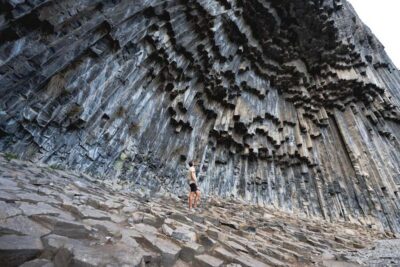
Garni, Geghard, Symphony of Stones & Lavash Baking
Read our review →Garni, Geghard, Symphony of Stones & Lavash Baking
Read our review →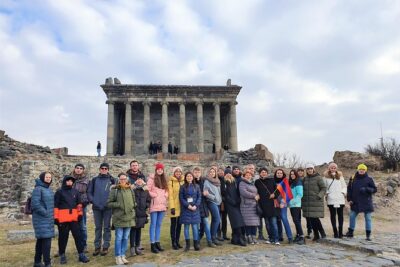
Garni pagan temple, Geghard monastery, Lake Sevan, Sevanavank
Read our review →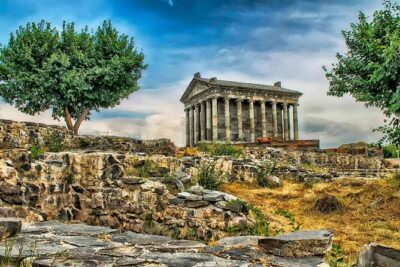
Khor Virap, Garni temple, Geghard, Lavash baking
Read our review →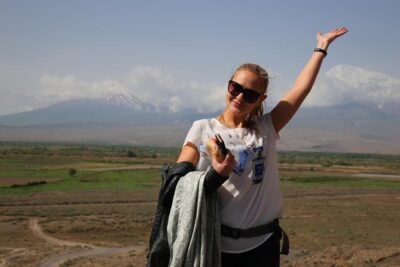
Private 7-8-hour Khor Virap, Garni temple & Geghard monastery trip from Yerevan
Read our review →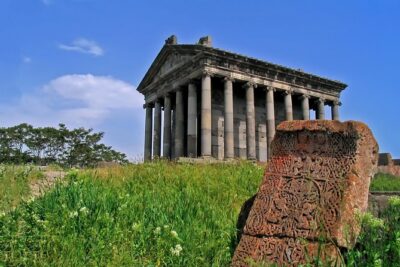
Garni, Geghard & Symphony Small-Group Day Trip with Lavash Baking
Read our review →Browse the lists this tour appears in