
Reviewed · ECHMIADZIN & ZVARTNOTS CATHEDRALS
Private Tour to Echmiadzin,St.Hripsime & Gayane Churches, Zvartnots Temple
Echmiadzin shows Armenia at its spiritual center. This private 7-hour route strings together UNESCO-listed churches and the earthquake-ruined grandeur of Zvartnots, all with hotel pickup so you are not stuck planning transport. I like how the pacing gives you real time at each stop, but one consideration is that you will likely pay separate entry fees for the Etchmiadzin treasury museum and Zvartnots.
The best part is how straightforward it feels: a small private group (up to 3), an air-conditioned car, and an English-speaking approach that helps you connect the sites to the bigger story. You also get helpful extras like bottled water and onboard WiFi, plus a guide service that is optional if you want more context.
In This Review
- Key highlights you will feel right away
- How this private day trip works from Yerevan
- Etchmiadzin Monastery: the cathedral where sacred geography matters
- St. Hripsime Church: UNESCO power in a 7th-century setting
- St. Gayane Church: murals, relics, and the matah rite room
- Zvartnots Temple ruins: seeing a giant rebuilt in your mind
- Price and value: is $70 per group a smart buy?
- Best fit: who this tour suits (and who should consider other options)
- Practical tips to make the most of each stop
- Should you book this Echmiadzin, Hripsime, Gayane, Zvartnots private tour?
- FAQ
- How long is the private tour?
- How many people can join the private group?
- Is hotel pickup included?
- What language is the tour offered in?
- Is a guide included?
- What is included in the tour price?
- Are admission tickets included for all stops?
- Is lunch included?
- Where does the tour start?
- Can I cancel for a full refund?
Key highlights you will feel right away
- Private door-to-door pickup from your Yerevan accommodation
- Four major church sites in one day, including two UNESCO World Heritage churches
- Etchmiadzin’s cathedral plus its Treasury Museum, a big draw for relics and ecclesiastical art (entry fee extra)
- St. Hripsime and St. Gayane, both treated as must-sees for early Armenian architecture
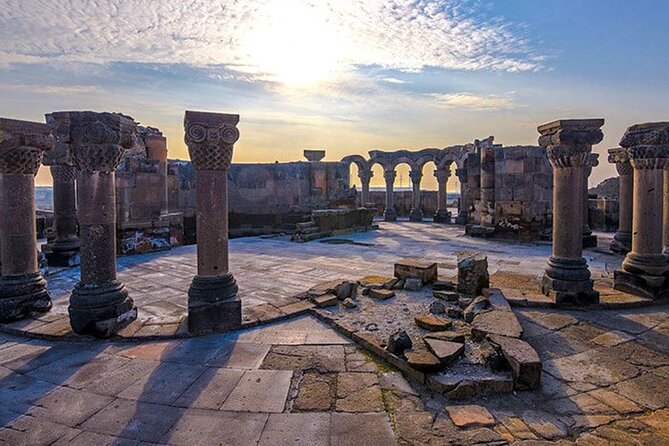
- Zvartnots ruins and reconstructions, where you can see what the temple once looked like
- Small group size (up to 3), so questions and timing are easier to manage
More cathedral days at Echmiadzin and Zvartnots:
- Group Tour: Echmiadzin Cathedral & churches, Zvartnots Temple
★ 5.0 · 352 reviews - Yerevan: Khor Virap, Garni, Geghard, Echmiadzin, & Zvartnots
★ 4.9 · 192 reviews - Private Half-day Echmiadzin Cathedral, Hripsime & Zvartnots Temple from Yerevan
★ 5.0 · 95 reviews
How this private day trip works from Yerevan
This is a classic full-day Armenia sampler, built for people who want the highlights without the stress of arranging buses, taxis, and ticket stops on their own. You get a professional driver and a vehicle with A/C, and the tour is private, meaning it is just your group in the car. That matters more than you might think, because church visits can be timing-sensitive, and you will move through them with less waiting and fewer coordination headaches.
The day runs about 7 hours. In practice, that is enough time to see each site at a comfortable pace, with pre-set time blocks at the main stops. You also receive a mobile ticket, and the tour is offered in English. If you prefer less talking and more wandering, the optional guide service lets you choose how much guidance you want.
One small plus: bottled water and onboard WiFi help you keep the day smooth, especially if you are traveling with a phone full of maps, photos, and messages.
Etchmiadzin Monastery: the cathedral where sacred geography matters
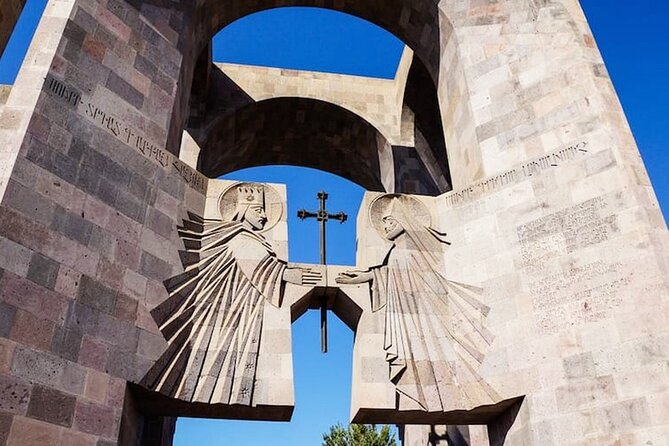
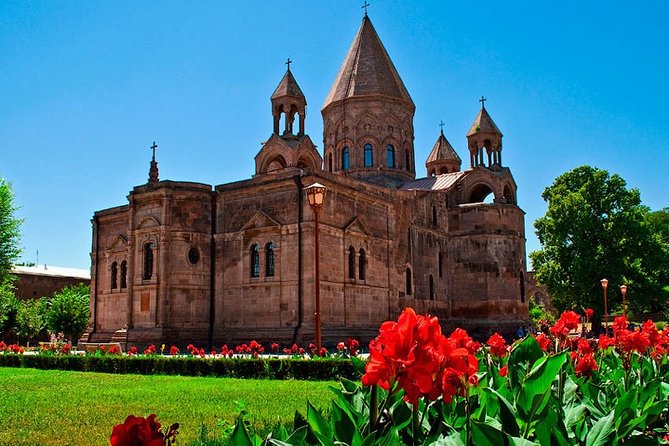
Your day starts at Etchmiadzin (Echmiadzin) Monastery, the spiritual center of Armenian Christianity. The cathedral is known as the first Christian cathedral associated with the region, and its name points to a powerful idea: place of the descent of the Only Begotten. Even if you do not know every term in advance, you will feel that the site is designed around meaning, not just beauty.
A detail I really like about this stop is the way the architecture reflects belief. In addition to the main altar in the eastern part of the cathedral, there is another altar in the middle, at the site linked to the descent of Christ. When you stand there, it is easier to understand how Armenian churches often treat the building like a map of events, not just a shelter for worship.
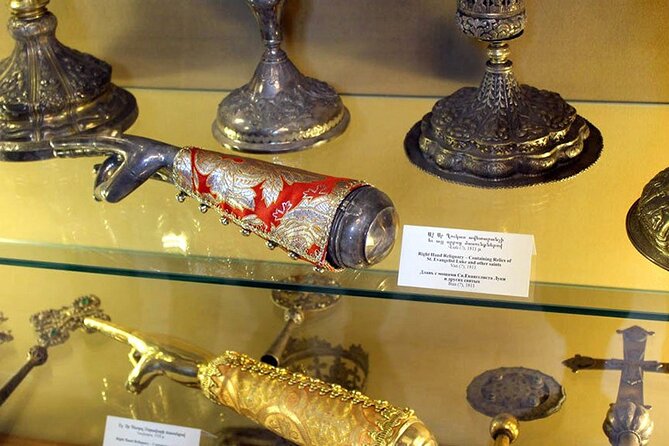
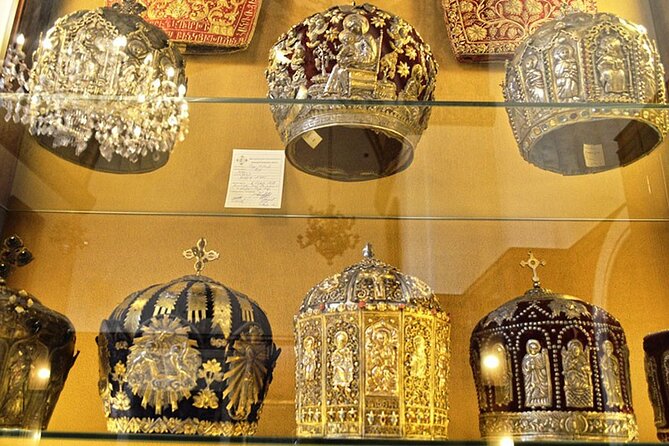
You also have the chance to connect history to objects. On the monastery grounds sits the Treasury Museum, where relics and ecclesiastical items are kept. The list is impressive in a very practical way, because it tells you what kind of craftsmanship and authority Armenian churches carried across centuries, including embroidered church clothes, catholicos staffs and crosses, and ritual objects made of gold, silver, and ivory. If you are the type who likes to see how faith turns into art, this is a strong reason to add time or budget for the museum entry, since it is not included.
The grounds also include the residence of the Catholicos of all Armenians, so you are not just looking at an abandoned monument. You are visiting an active religious center. And there are cross-stones around the complex worth noticing, including the Amenaprakich cross-stone from 1279, along with a cross-stone devoted to victims of the 1915 genocide. That last one adds a heavy, necessary layer to the visit, because it reminds you that Armenian Christianity and Armenian history are tightly intertwined.
Watch-out / drawback to plan for: the main area timing works well, but the Treasury Museum has its own admission. If you think you will want it, you should plan your day budget and energy for it.
St. Hripsime Church: UNESCO power in a 7th-century setting
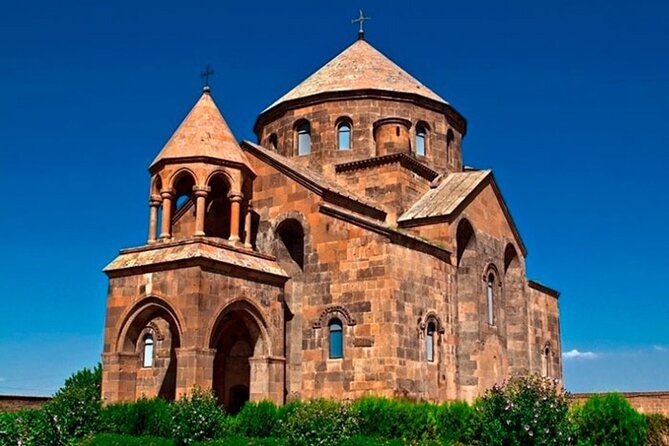
Next comes St. Hripsime Church, founded in the 7th century by Catholicos Komitas I Aghtsetsi. The church is built at the place of the sepulcher of Saint Hripsime, so the connection between location and story is direct.
This site has also been on the UNESCO World Heritage List since 2000, and that designation is not just paperwork. In a short visit window, you still get enough to appreciate why architects and historians value Hripsime: it sits in the tradition of early Armenian church building that influenced later styles.
There is also an emotional element in the courtyard. Two prominent Armenian Catholicos figures are buried there, including Catholicos Astvatsatur (1715 to 1725) and Catholicos Garaped II Oolnetzi (1725 to 1729). Even if you are not someone who reads every inscription, the burial context gives the church a lived-in feeling. This is not only about what happened long ago, but also about what continued.
Time-wise, the stop is relatively short, about 30 minutes. That is a good duration for most people. You get a focused look without feeling like the whole day disappears into paperwork and photo lines.
Yet more Things to Do in Yerevan
- Group Tour: Garni, Symphony of Stones, Geghard, Lavash Baking★ 5.0 · 1,042 reviews
- Group Tour: Lake Sevan (Sevanavank), Dilijan (Goshavank, Haghartsin)★ 5.0 · 1,036 reviews
- Garni & Geghard Small-Group Day Trip with Lavash Baking★ 4.8 · 881 reviews
- Khor Virap, Noravank and Birds’ Cave Trip with Wine Tasting★ 4.8 · 845 reviews
St. Gayane Church: murals, relics, and the matah rite room
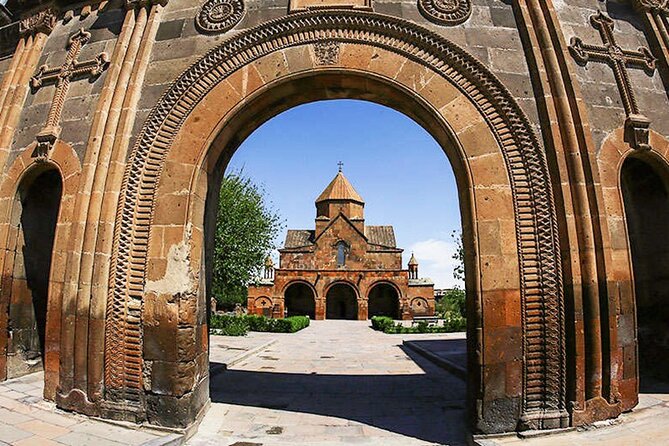
After Hripsime, you move to St. Gayane Church, another 7th-century landmark. It was built in honor of St. Gayane on the place of an earlier 4th-century chapel, which makes this stop feel layered. You are seeing one era’s church built over another era’s sacred ground.
A standout detail here is what happens near the altar area. The relics of Saint Gayane are kept in the southern wall of the temple, next to the altar niche. If you like to understand how churches organize sacred space, this is a useful clue. It tells you that the building’s key features are meant to hold tangible connections to belief.
Above the western entrance, murals from the 17th century remain, tied to the theme of the birth of Christ. Those murals are one of the reasons this stop often feels different from others on the same day. They add color and narrative when the architecture is doing the heavy lifting everywhere else.
Then there is a detail that may catch your attention, so it is worth framing it calmly: near St. Gayane Temple there is a special room where animals are sacrificed and stabbed, a rite called matah. It is associated with St. Gregory the Illuminator and is said to be customary for occasions like weddings or birth of a child. If you have never encountered this kind of tradition, treat it as a cultural and religious practice that is part of local history, not a tourist spectacle. You are not required to react dramatically, just be respectful and take it in as context.
This stop also runs about 30 minutes, which is enough to see the main features and keep the day from dragging.
Zvartnots Temple ruins: seeing a giant rebuilt in your mind
The day closes with Zvartnots Temple, a name that means Temple of Vigil Forces. This one has a different mood because it is not intact. The temple was built in the 7th century over 20 years, and later it was destroyed by a powerful earthquake in the 20th century, leaving ruins behind.
But the ruins are not just rubble. Today Zvartnots is an archaeological reserve and museum founded in 1937. The setting is built for understanding, with model reconstructions of the temple and sculptural fragments that give you a sense of scale. Even in broken pieces, the site can feel grand, because the artistry and size were meant to communicate importance.
This stop is about 1 hour, and it is also the one place where you should be ready for extra costs. The Zvartnots admission is not included. If you want to walk through the museum elements and not only photograph the stones, it is a good idea to budget for the entry so you do not feel rushed.
The UNESCO angle also applies here, since the Zvartnots ruins are included in the UNESCO World Heritage list. That helps explain why the museum is focused on interpretation, not just preservation.
Price and value: is $70 per group a smart buy?
The headline price is $70 per group for up to 3 people, with the tour running about 7 hours. That pricing model often works out well if you are traveling as a pair or a small family, because you are paying for a private vehicle plus a professional driver for the full day.
What you get for that money is practical:
- Hotel pickup and drop-off in Yerevan
- Air-conditioned vehicle with WiFi on board
- Bottled water
- A private format, so you are not squeezed into a crowded schedule
- A guide service that is optional (so you can decide how much explanation you want)
What costs extra:
- The Etchmiadzin treasury museum entrance fee
- Zvartnots Temple admission
- Lunch is not included
So the true value comes down to your priorities. If you want four major church stops with smooth transport and optional guidance, this price can feel fair. If you are on a tight budget and would skip the museum portions, you can still enjoy the day, but you should expect those key entry fees to add up.
Also, this tour is commonly booked around 50 days in advance on average. If you are visiting during a popular travel window, booking earlier helps you lock in your preferred pickup time.
Best fit: who this tour suits (and who should consider other options)
This tour fits well if you:
- Want a private day trip without planning bus routes or backtracking
- Like religious and architectural sites, especially early Armenian church history
- Prefer small-group pacing, with enough time at each stop to actually look
It may feel less ideal if you:
- Want a completely ticket-included day with zero extra entrances
- Prefer a shorter outing, since this is set up as a full-day route
- Expect lunch to be handled for you, because it is not included
One note from the reviews that matters for your decision: the tour is often praised for how well it explains the historical importance of Armenia. Guides people have highlighted include Marianna and Arias, plus Arak. If you know you will want interpretation, ask for guide service when you book.
Practical tips to make the most of each stop
This route uses focused time blocks, so your biggest job is mental preparation. Start the day ready to switch from photography mode to reading-the-site mode. At Etchmiadzin, look for the altar placement concept and the cross-stones on the grounds, because those help you understand the site’s meaning beyond architecture.
At St. Hripsime and St. Gayane, spend a moment connecting what you are seeing to what the churches were built for. Hripsime is tied to Saint Hripsime’s sepulcher, and Gayane is tied to a relic location and murals about Christ’s birth. Those are not random facts, they are the reason the buildings have the feel they do.
For Zvartnots, go in expecting ruins first, museum interpretation second. If you only photograph from the outside, you might miss the value of the model reconstructions and sculptural fragments. When the entrance is not included in your base price, it becomes even more important to decide early if you want the full museum experience.
Should you book this Echmiadzin, Hripsime, Gayane, Zvartnots private tour?
Yes, I think you should book it if you want a smooth, small-group way to see Armenia’s major early church landmarks in one organized day. The private pickup, A/C comfort, and English guidance make the experience easier to enjoy, not just to attend. And the mix of intact churches plus Zvartnots ruins gives you a strong sense of continuity, damage, and recovery in Armenian cultural history.
Book it especially if you are the type who likes to leave a site with better context. The route is built so you can connect architecture, sacred stories, and the objects churches preserve. Just budget for the extra admissions at the treasury museum and Zvartnots, and plan for a full day without lunch included.
If that sounds like your kind of travel day, this is a solid value choice for Armenia highlights from Yerevan.
FAQ
How long is the private tour?
It lasts about 7 hours.
How many people can join the private group?
The tour is priced per group of up to 3 people.
Is hotel pickup included?
Yes, pickup and drop-off from your hotel (or other accommodation) in Yerevan is included.
What language is the tour offered in?
It is offered in English.
Is a guide included?
Guide service is listed as optional. You can arrange for guide service if you want it.
What is included in the tour price?
Included items are a professional driver, hotel pickup and drop-off, an air-conditioned vehicle, bottled water, WiFi on board, guide service (optional), and private transportation.
Are admission tickets included for all stops?
Not all of them. The Etchmiadzin cathedral complex and the St. Hripsime and St. Gayane churches have free admission tickets, but Zvartnots Temple admission is not included. The Etchmiadzin treasury museum entrance fee is also not included.
Is lunch included?
No, lunch is not included.
Where does the tour start?
Pickup is organized from your hotel, hostel, or apartment.
Can I cancel for a full refund?
Yes, you can cancel for free up to 24 hours in advance of the experience start time for a full refund. If you cancel less than 24 hours before, the paid amount is not refunded.
Newest listings across Yerevan
- Yerevan’s Sights: Guided Walking Tour★ 5.0 · 1 review
- Private transfer Yerevan-Tbilisi-Yerevan in one day★ 5.0 · 1 review
- Yerevan tour in a retro Lada with drinks (Yerevan city tour)★ 5.0 · 1 review
- Private tour to Saghmosavank, Karmravor, Oshakan, Hovhannavank★ 5.0 · 1 review
- Day Tour to Amberd Fortress Aragats and Kari Lake From Yerevan★ 5.0 · 1 review
- Yerevan Walking Architecture Tour★ 5.0 · 1 review
- Armenia – Guaranteed Departure – Book Now! – 2025★ 5.0 · 1 review
- Mother Cathedral of Holy Echmiadzin★ 5.0 · 1 review
Echmiadzin & Zvartnots Cathedrals, compared.
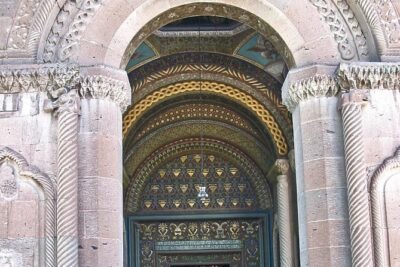
Echmiadzin Cathedral & churches, Zvartnots Temple
Read our review →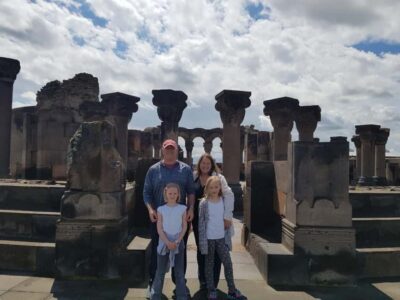
Khor Virap, Garni, Geghard, Echmiadzin, & Zvartnots
Read our review →Echmiadzin Mother Cathedral, Hripsime, Zvartnots
Read our review →
Private Half-day Echmiadzin Cathedral, Hripsime & Zvartnots Temple from Yerevan
Read our review →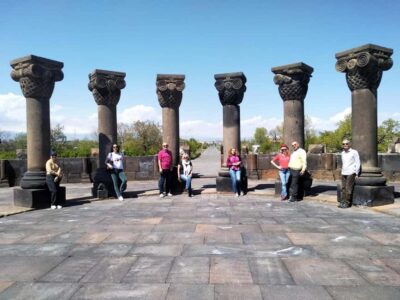
Khor Virap, Echmiadzin & Zvartnots UNESCO Small-Group Tour
Read our review →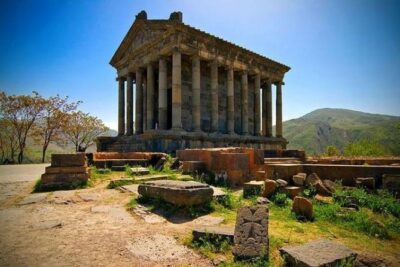
Private tour to Echmiadzin (st Cathedral), Zvartnots, Khor Virap, Garni, Geghard
Read our review →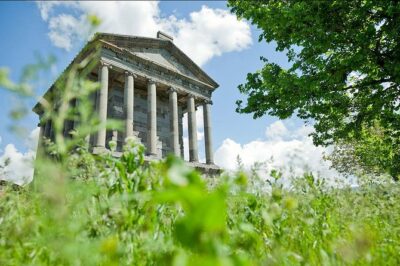
Private 8-9-hour Echmiadzin, Zvartnots, Garni and Geghard trip from Yerevan
Read our review →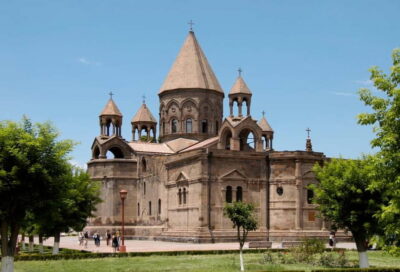
Echmiadzin, Hripsime, Gayane, Zvartnots Temple Tour
Read our review →Browse the lists this tour appears in