
Reviewed · GARNI TEMPLE & GEGHARD MONASTERY
Private Tour to Garni Temple, Geghard Monastery, Echmiadzin Cathedral, Zvartnots
Ararat views and cave churches in one day. This private tour strings together UNESCO sites like Garni Temple, Geghard Monastery, Etchmiadzin Cathedral, and Zvartnots in a smooth, full-day loop. I also like that it is private (up to 3 people) with hotel pickup, so the day feels less chaotic than bus tours. One thing to plan for, though, is that several key entrances are not included, so you will want a little extra cash for tickets.
If you like structure, this route gives it to you. You start near Yerevan at Charents Arch, then move into pagan and early Christian Armenia, finishing at Zvartnots ruins. You can also customize the day, and if you want more context you can upgrade to an English or Russian-speaking guide (some travelers go guide, others keep it driver-led).
The main trade-off is time. With about 7 hours and multiple stops, it is a packed heritage day, not a slow wander. Bring comfortable shoes, because you will spend a lot of time standing, climbing a bit, and taking photos.
In This Review
- Key points worth knowing before you go
- Entering the 7-hour Armenia highlights route from Yerevan
- Charents Arch to Garni, where the Ararat view sets the tone
- Garni Temple, UNESCO pagan roots and the earthquake story
- Geghard Monastery, the cave church that changes your scale
- Etchmiadzin Cathedral and the “place of descent” at Armenia’s spiritual center
- Saint Hripsime and Saint Gayane, small stops with big details
- Zvartnots ruins, when 20 years of building becomes a museum
- Price and logistics: what you really get for $105 per group
- Pickup, pacing, and customization without turning it into chaos
- Who this private tour suits best, and who should think twice
- Should you book this Garni, Geghard, Etchmiadzin, Zvartnots private day?
- FAQ
- What is the duration of the private tour?
- How many people are in a group?
- Where does the tour start and end?
- Is a guide included?
- Are entrance fees included for all the sites?
- Is Charents Arch admission free?
- Is Geghard Monastery admission free?
- Is Etchmiadzin Cathedral free to enter?
- Does the tour include food?
- Can I cancel for a full refund?
Key points worth knowing before you go
- Private group, up to 3, with hotel pickup and drop-off, so you start your sightseeing right away.
- UNESCO-heavy route in one day: Garni, Geghard, Etchmiadzin area sites, and Zvartnots.
- Charents Arch is free, and it is a great warm-up for the day’s views toward Ararat.
- Guide is optional, so decide early if you want expert commentary or a driver-led day.
- Several entrances cost extra, including Garni and Zvartnots, plus Etchmiadzin Treasury Museum.
- Comfort details included, like bottled water, WiFi on board, and air-conditioned transport.
More Garni and Geghard mornings:
- Group Tour: Garni, Symphony of Stones, Geghard, Lavash Baking
★ 5.0 · 1,042 reviews - Garni & Geghard Small-Group Day Trip with Lavash Baking
★ 4.8 · 881 reviews - Yerevan: Garni, Geghard, Symphony of Stones & Lavash Baking
★ 4.8 · 758 reviews
Entering the 7-hour Armenia highlights route from Yerevan
This is built for one clear goal: see a lot of Armenia’s best-known heritage sites in a single day without juggling taxis or bus schedules. The tour is listed as about 7 hours, and it usually works well if it is your first real day in Yerevan or your only chance for a big historical circuit.
The pacing is “busy but fair.” Each stop is timed so you can get real viewing time, not just a quick drive-by. Still, you should treat this as a full-day sightseeing mission. If you prefer a calm, slow trip with long lunches and zero rush, you might find this schedule too tight.
The private setup is the biggest practical advantage. Up to 3 people share the vehicle, and you can customize the day. That means you can spend extra time at the spots that grab you, and move past the ones that do not.
Charents Arch to Garni, where the Ararat view sets the tone
Your first stop is Charents Arch, near Yerevan in the village of Vokhchaberd. It sits between Garni, the pagan temple area, and the Geghard monastery complex. On the outside, it can look plain. Then you step to the platform inside the arch and suddenly the place makes sense, because you get a dramatic panorama of Mount Ararat.
Charents Arch is also one of the simplest wins on the itinerary. Admission is free and the stop is about 30 minutes, so it works like a reset button. You stretch your legs, you get that postcard-worthy view, and you start mentally switching gears from modern Yerevan to ancient Armenia.
Practical tip: if you care about photos, spend your time here strategically. Stand where the view lines up, then only afterward wander around the edges. You will get a better shot without rushing.
Garni Temple, UNESCO pagan roots and the earthquake story
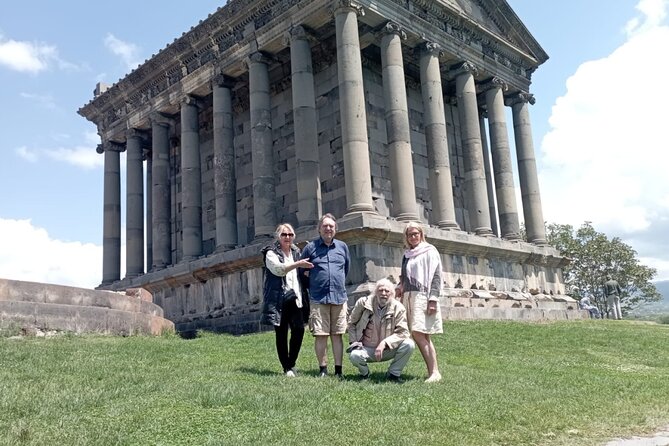
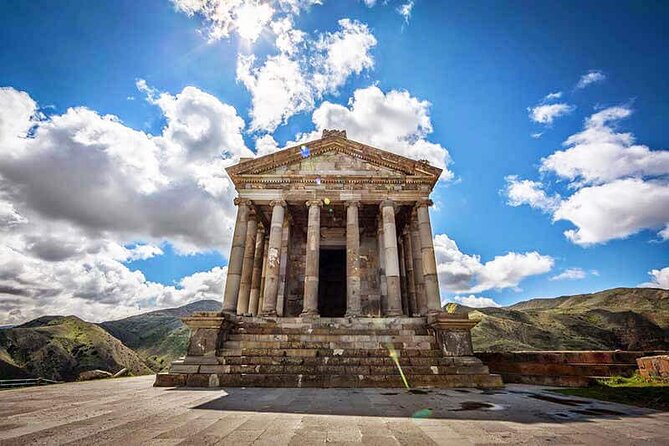
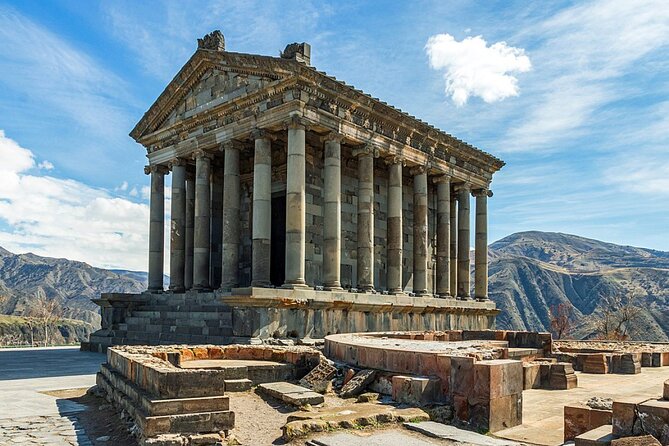
Next comes Garni Temple, built in the second half of the 1st century by King Trdat III. This is described as the only preserved pagan temple on Armenian territory. Later, after Christianity was adopted, it became associated with royal life, including use as a summer residence tied to Khosrovadukht.
Then comes the plot twist history loves to repeat. The temple was destroyed in 1679 by an earthquake, so what you see today includes surviving parts, fragments, columns, and wall stones spread around the site. Even with that loss, the setting and the surviving architecture give you a real sense of how monumental it once was.
Garni Temple is on UNESCO World Heritage lists, and it is also one of the places where you will likely notice how Armenia’s layers overlap. Pagan Roman-era influences, Armenian royal history, and later Christian reinterpretations all sit within the same visual space.
Cost note: Garni Temple admission is not included. The same is true for the Symphony of the Stones. If you want to see everything fully, plan on paying those entrance fees on the day.
More cathedral days at Echmiadzin and Zvartnots:
- Group Tour: Echmiadzin Cathedral & churches, Zvartnots Temple★ 5.0 · 352 reviews
- Yerevan: Khor Virap, Garni, Geghard, Echmiadzin, & Zvartnots★ 4.9 · 192 reviews
- Private Half-day Echmiadzin Cathedral, Hripsime & Zvartnots Temple from Yerevan★ 5.0 · 95 reviews
- Private tour to Echmiadzin (st Cathedral), Zvartnots, Khor Virap, Garni, Geghard★ 5.0 · 67 reviews
Geghard Monastery, the cave church that changes your scale
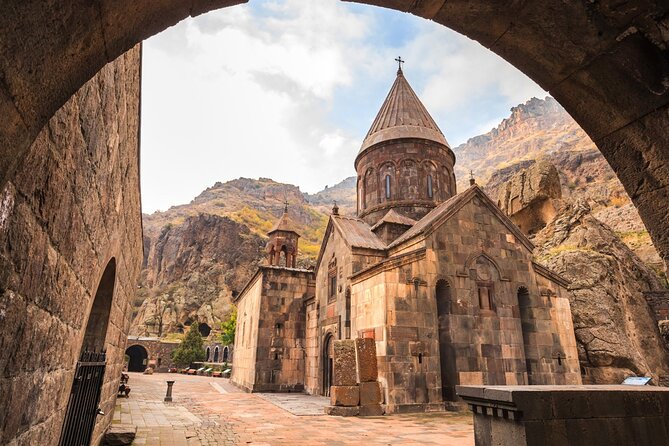
Geghard Monastery is one of those stops that makes you slow down, even when you are on a tight schedule. This complex is known as a cave monastery because it is hollowed out in rock. It was founded in the 4th century AD at a sacred spring thought to originate inside the cave.
The name Geghard means spear, and the story connects to the Langin spear, described as the spear that pierced the body of Jesus Christ on the cross. The tour info also notes that this spear is kept in the museum of Etchmiadzin, so you can later connect what you see in Geghard with a related object you might encounter at the cathedral complex.
This stop is about 1 hour and admission is listed as free. That is a great value moment in the day. You are not paying extra to enter, which keeps the overall cost more predictable.
Practical expectation: Geghard rewards patience. You may want a few minutes just to notice how the stone carving and cave architecture affect sound and light. You are inside rock, so the space feels different from a typical open-air ruin.
Etchmiadzin Cathedral and the “place of descent” at Armenia’s spiritual center
After Geghard, the day shifts more fully into Armenian Christian heritage with Etchmiadzin Monastery. The cathedral there was founded in the 4th century BC, and its name is described as meaning place of the descent of the Only Begotten. That phrase matters because it frames why the site is treated as sacred space, not just historical architecture.
One specific feature mentioned is that in addition to the main altar in the eastern part, there is another altar in the middle at the site of the descent of Christ. In other words, this is not just a big church. It has specific points of devotion built into the layout.
Treasury Museum detail: the right-hand boundary includes the Treasury Museum, with relics and church items described as gold-and-pearl embroidered church clothing, catholicos’ staffs and crosses, and ritual objects made of gold, silver, and ivory. Entrance fee for the Treasury Museum is not included, so you will need to decide on the day whether you want to add it.
This stop includes the residence of the Armenian patriarch, the Catholicos of all Armenians. That gives the whole complex a living-world feel. You are seeing a major religious center, not only ruins and stonework.
Admission for the cathedral complex is listed as free, and the stop is about 1 hour.
Saint Hripsime and Saint Gayane, small stops with big details
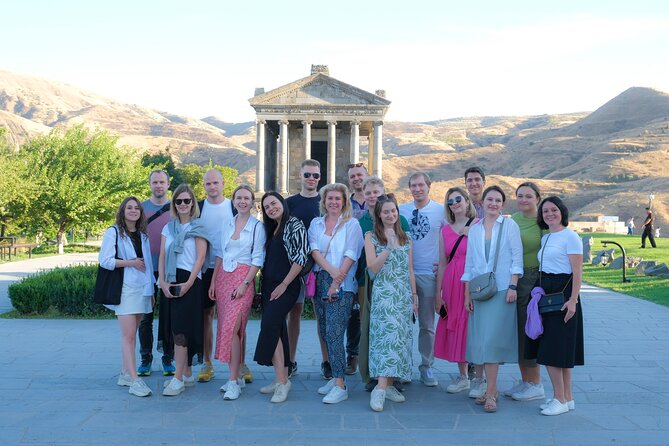
Two additional churches round out the Etchmiadzin area: Saint Hripsime Church and Saint Gayane Church.
Saint Hripsime was founded in the 7th century by Catholicos Komitas I Aghtsetsi, placed at a sepulcher of Saint Hripsime. This church is noted as included in UNESCO World Heritage lists. The tour info also mentions prominent Catholicos figures buried in the courtyard: Catholicos Astvatsatur (1715 to 1725) and Catholicos Garaped II Oolnetzi (1725 to 1729). Even if you are not a church-architecture specialist, those names help you connect the site to actual people and eras.
Admission is listed as free, and it is a shorter stop, about 30 minutes.
Then Saint Gayane Church, also founded in the 7th century, built in honor of St. Gayane. It is said to sit on the place of an earlier 4th century chapel. The relics of Saint Gayane are described as kept in the southern wall next to the altar niche. Above the western entrance, there are preserved murals from the 17th century connected to the birth of Christ.
There is also a room described for animal sacrifice rituals called matah, said to be carried out for occasions like weddings or childbirth. You do not have to seek that out, but it is part of understanding how tradition and religion have been practiced here over time. This stop is listed as about 30 minutes and also has free admission.
Zvartnots ruins, when 20 years of building becomes a museum
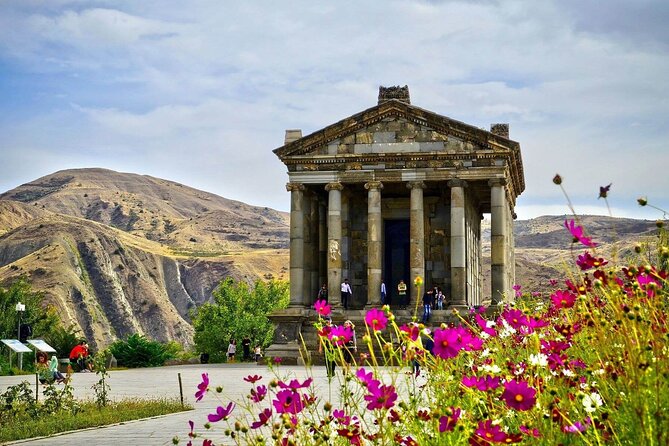
The final heritage stop is Zvartnots Temple, meaning Temple of Vigil Forces. It was built in the 7th century and took 20 years to complete. The site was destroyed by a powerful earthquake later on, so what remains are ruins.
Even in ruin, the info makes it clear Zvartnots still gives you a sense of its scale and beauty. Today it is an archaeological reserve and museum, founded in 1937. The museum includes model versions of reconstruction plus sculptural fragments described as impressive in size.
Zvartnots is included on UNESCO World Heritage lists. The stop is about 1 hour. The only catch is that Zvartnots cathedral entrance is not included, so you will likely pay a ticket at the site.
Practical tip: if the day is hot or you are tired, plan your time carefully. Spend first on the main viewpoints for the big structure sense, then do museum time if you still have energy. The ruins plus model reconstructions make a strong combo if you are curious about what it looked like.
Price and logistics: what you really get for $105 per group
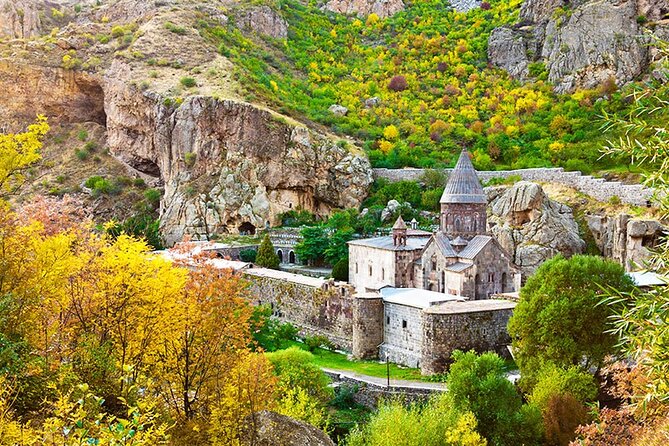
At $105 per group (up to 3), this tour can be good value, mainly because it bundles transport, water, and the heavy-hitter sites into a single day. If you are traveling with 1 or 2 companions, the per-person cost drops fast compared with private car services priced by person.
What is included:
- Hotel pick-up and drop-off
- Bottled water
- Air-conditioned vehicle
- WiFi on board
- Private transportation with a professional driver
- English or Russian speaking guide service is optional
- Mobile ticket
That last point matters. A mobile ticket can reduce stress on arrival so you spend more time at sites and less time figuring out what desk to find.
Where you need to plan extra money:
- Lunch is not included
- Entrance fee for Etchmiadzin Treasury Museum
- Entrance fee for Zvartnots Cathedral
- Entrance fee of Garni temple and Symphony of the Stones
So the real budget question is simple: do you want the museum add-ons and the paid entrances? If yes, set aside additional funds. If no, you can still see plenty of the free sections, but you may lose some depth at the sites that have paid interior or museum components.
One more real-world detail: the tour often works with travelers who want a guide-led day. Names like Arev show up in the experience world as the kind of guide who mixes history with everyday Armenia context. David is another example of a driver described as keeping the day moving smoothly. In real life, that can make a big difference, because a day with multiple heritage stops can turn into “logistics fatigue” if the timing is off.
Pickup, pacing, and customization without turning it into chaos
This tour is straightforward about starting and ending: pick-up from your hotel, apartment, or hostel in Yerevan, then drop-off back at the same general setup. The vehicle is described as air-conditioned with WiFi on board, and that is more than comfort. When you have a long day, it helps keep energy up between stops.
The schedule is about 7 hours, with each stop ranged from about 30 minutes to 1 hour. That is enough time to explore at human speed, not bus-speed. Charents Arch starts the day at about 30 minutes, and you move into Garni for about an hour. Geghard takes about an hour, then Etchmiadzin Cathedral plus Hripsime and Gayane give you several shorter windows. Zvartnots closes about an hour.
Customization is mentioned as possible. In a private tour, that is where you can shape the day:
- If you love architecture, you can linger a bit more at cave-carved Geghard or the cathedral areas.
- If views are your thing, you might spend extra time around Charents Arch.
- If you want less walking, you can keep your movements tight during the museum and ruins sections.
Guide note: the guide is optional. If you book without a guide upgrade, you may still have a driver-led day where the driver handles the logistics and helps point you to key spots. If history storytelling is important to you, it is worth choosing the guide upgrade so you get explanations as you go.
Who this private tour suits best, and who should think twice
This is a strong fit if:
- You want a first-time in Armenia day built around major heritage sites.
- You prefer private comfort over group bus tours.
- You like having a plan but still want the flexibility to adjust time at stops.
- You are okay paying a few extra site entrance fees for the places that require them.
It might not be your best match if:
- You want a slow day with long unstructured breaks.
- You dislike ticket budgeting, because several major sites and museums are listed as not included.
- You need a fully guide-led experience, since the guide is optional. If you care about commentary, pick the upgrade.
Should you book this Garni, Geghard, Etchmiadzin, Zvartnots private day?
My take: book it if you want maximum heritage density with minimal effort from Yerevan. The private size, hotel pickup, and efficient route make it a practical choice. Add in UNESCO stops that cover pagan roots, cave-monastery spirituality, and ruined 7th century grandeur, and you get a day that feels like a greatest-hits collection.
Before you hit the button, do two quick checks:
- Confirm whether you are choosing the English or Russian-speaking guide upgrade, if you want more than logistics.
- Budget for the extra entrances, especially Garni Temple and Zvartnots, plus the Etchmiadzin Treasury Museum if you want museum time.
If that all sounds like your style, this is an easy yes for a one-day Armenia highlights loop.
FAQ
What is the duration of the private tour?
It is listed as about 7 hours.
How many people are in a group?
The price is per group up to 3 people.
Where does the tour start and end?
Pickup and drop-off are from your hotel, apartment, or hostel in Yerevan.
Is a guide included?
An English or Russian-speaking guide service is optional. The tour can be done with the listed driver and included services, depending on what you choose.
Are entrance fees included for all the sites?
No. The tour states that lunch is not included, and several entrances are also not included, including Garni Temple, Zvartnots, and the Etchmiadzin Treasury Museum.
Is Charents Arch admission free?
Yes. Charents Arch is listed as free with an admission ticket.
Is Geghard Monastery admission free?
Yes. Geghard Monastery is listed as free.
Is Etchmiadzin Cathedral free to enter?
The cathedral complex itself is listed as free, but the Treasury Museum entrance fee is not included.
Does the tour include food?
Lunch is not included.
Can I cancel for a full refund?
Yes. You can cancel up to 24 hours in advance for a full refund.
Newest listings across Yerevan
- Yerevan’s Sights: Guided Walking Tour★ 5.0 · 1 review
- Private transfer Yerevan-Tbilisi-Yerevan in one day★ 5.0 · 1 review
- Yerevan tour in a retro Lada with drinks (Yerevan city tour)★ 5.0 · 1 review
- Private tour to Saghmosavank, Karmravor, Oshakan, Hovhannavank★ 5.0 · 1 review
- Day Tour to Amberd Fortress Aragats and Kari Lake From Yerevan★ 5.0 · 1 review
- Yerevan Walking Architecture Tour★ 5.0 · 1 review
- Armenia – Guaranteed Departure – Book Now! – 2025★ 5.0 · 1 review
- Mother Cathedral of Holy Echmiadzin★ 5.0 · 1 review
Garni Temple & Geghard Monastery, compared.
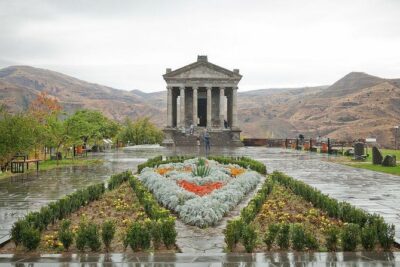
Garni, Symphony of Stones, Geghard, Lavash Baking
Read our review →
Garni & Geghard Small-Group Day Trip with Lavash Baking
Read our review →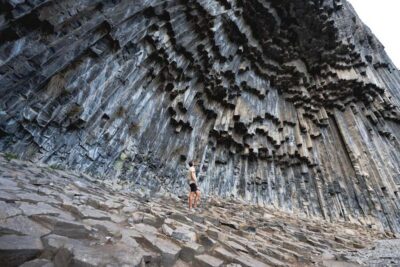
Garni, Geghard, Symphony of Stones & Lavash Baking
Read our review →Garni, Geghard, Symphony of Stones & Lavash Baking
Read our review →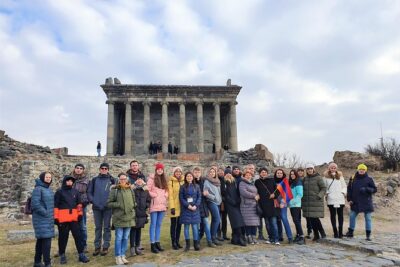
Garni pagan temple, Geghard monastery, Lake Sevan, Sevanavank
Read our review →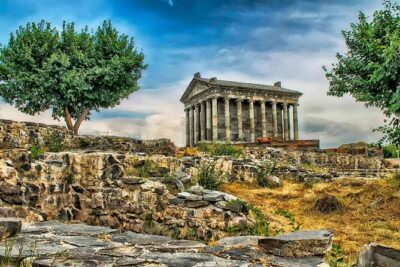
Khor Virap, Garni temple, Geghard, Lavash baking
Read our review →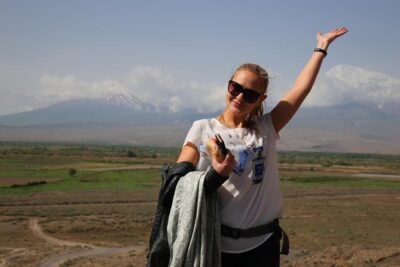
Private 7-8-hour Khor Virap, Garni temple & Geghard monastery trip from Yerevan
Read our review →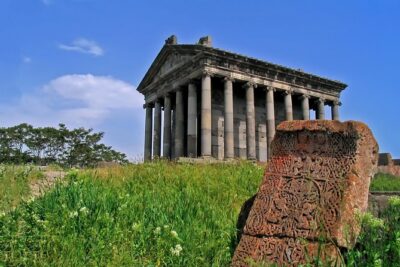
Garni, Geghard & Symphony Small-Group Day Trip with Lavash Baking
Read our review →Browse the lists this tour appears in