Reviewed · TOURS
The Great Beauty of Armenia: 7-Day Culture and Cuisine Tour
Armenia hits hard, in a good way. This 7-day private tour blends classic Yerevan sights with big “wow” days out in the countryside, plus real food and drink moments like brandy and wine tastings. I especially like how the route keeps you moving between ancient manuscripts, medieval monasteries, and Armenian epic statues, so the culture makes sense as you go.
My favorite part is the mix of indoor stops and outdoor views, so you are not stuck staring at temples all day. The one drawback to plan for is the pace, with a full day schedule, so you will want comfortable shoes and a calm mindset about travel time between stops.
In This Review
- Key highlights you should care about
- How this Armenia tour feels in real life
- Day 1 in Yerevan: art halls, epic statues, and singing fountains
- Day 2: manuscripts, Echmiadzin, UNESCO ruins, and an ARARAT brandy tasting
- Day 3: Khor Virap, Bird Cave, Areni wine, Noravank, and Jermuk mineral water
- Day 4: swinging bridge caves, Tatev by cable car, and the “Armenian Stonehenge”
- Day 5: Silk Road caravanserai, khachkars at Noratus, Sevan, Geghard, and Garni lavash
- Day 6: Amberd fortress views and a history museum that connects the dots
- Day 7 in Yerevan: Vernissage shopping for wines, herbs, and gifts
- Price and what $750 buys you
- How the tour handles comfort, weather, and long days
- Who should book this tour (and who might skip it)
- Should you book this Great Beauty of Armenia tour?
- FAQ
- What is the tour price?
- How long is the tour?
- What time does the tour start, and how does pickup work?
- Is this tour private or shared?
- Do I need to print tickets?
- Are admission tickets included?
- What is the cancellation policy?
Key highlights you should care about
- Modern art plus epic monuments in Yerevan, not just temples
- UNESCO sites like Zvartnots and Geghard, with context that makes them easier to love
- Tastings built into the day, including ARARAT brandy and Areni wine
- Cable-car access to Tatev via Wings of Tatev, with sweeping mountain views
- Cave, bridge, waterfall, and “Stonehenge” stops, so the scenery changes often
- Guides like Gor, Levon, and Varsenik are frequently praised for keeping things upbeat and on schedule
Yet more Things to Do in Yerevan
- Group Tour: Garni, Symphony of Stones, Geghard, Lavash Baking
★ 5.0 · 1,042 reviews - Group Tour: Lake Sevan (Sevanavank), Dilijan (Goshavank, Haghartsin)
★ 5.0 · 1,036 reviews - Garni & Geghard Small-Group Day Trip with Lavash Baking
★ 4.8 · 881 reviews
How this Armenia tour feels in real life
You get a tight loop across Armenia’s highlights, starting in Yerevan and then fanning out to monasteries, fortresses, caves, and wine country. The tone is practical and guided, meaning you spend less time guessing and more time understanding why each place matters.
This is also a tour where your senses do the remembering. You will see ancient stones and medieval carvings, but you will also taste Armenia through brandy, wine, mineral water, and even lavash-making. If you like history, you will get it. If you do not, the scenery still does the job.
Day 1 in Yerevan: art halls, epic statues, and singing fountains
Day 1 is a smooth start that helps you get oriented fast. You begin at the Cafesjian Center for the Arts, which mixes contemporary art with a real museum setting and open-air elements. It is a smart way to jump into modern Armenia before you go chasing older centuries.
Next come the monument stops, starting with Victory Park and the Mother Armenia statue. You get a brief history lesson and then a payoff view over central Yerevan. After that, you see the Statue of David of Sassoun, tied to the Armenian national epic, created by Yervand Kochar.
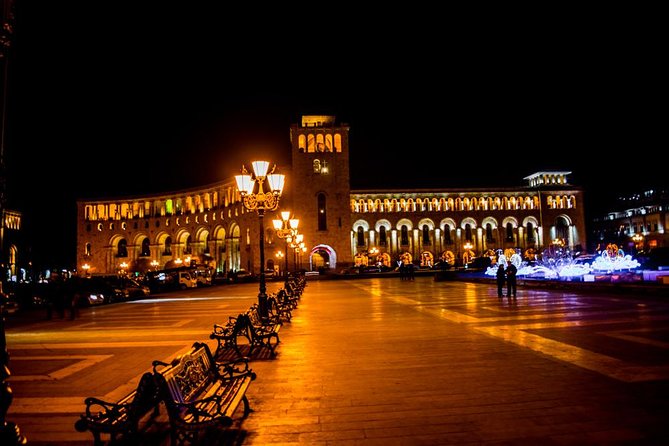
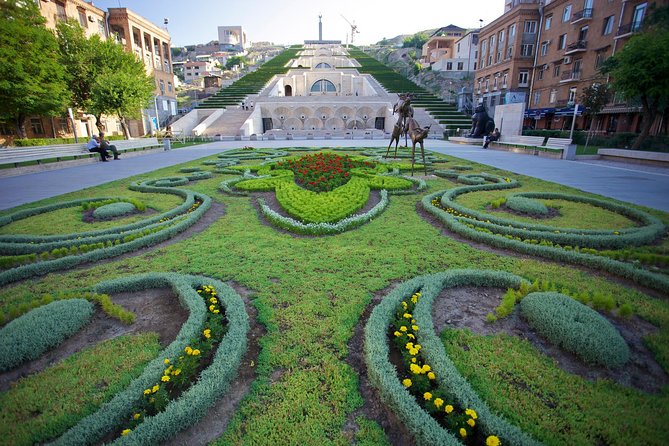
You end at Republic Square, the heart of Yerevan, where the architecture feels grand and official. The singing fountains show is a fun rhythm-break at the end of the day, especially if you are tired from walking. If you are a photo person, this is a high-return stop.
What to watch for: Republic Square is central, so it can be busy. Go a bit early for photos and you will waste less time waiting for a clear angle.
Day 2: manuscripts, Echmiadzin, UNESCO ruins, and an ARARAT brandy tasting
Day 2 is about Armenia’s spiritual and intellectual roots, plus one very Armenian detour into drinking. You start at Matenadaran, the Museum and Research Institute of Ancient Manuscripts, which houses one of the world’s richest collections of medieval manuscripts. Even if you do not read Armenian, you still feel the weight of preservation here.
Then you head to Echmiadzin, the spiritual center of Armenia. You visit the 4th century Echmiadzin Cathedral, tied to the Pontifical Residence of the Catholicos of All Armenians. The setting gives context for why monasteries in Armenia are never just buildings, they are living meaning.
From there, you go to the Alex and Marie Manoogian Treasury House Museum, where one of the standout displays is the lance that pierced the side of Christ by the Roman soldier. It is the kind of artifact stop that makes the religious history feel tangible.
After the sacred sites, you shift to UNESCO at Zvartnots Cathedral. The ruins are an early medieval masterpiece of Armenian architecture, and seeing them after Echmiadzin helps you connect timelines. It is not a long stop, but it is a memorable one.
You finish back in Yerevan with the ARARAT Museum and brandy tasting. This is where the tour earns its cuisine name. You taste a few sorts, so you can talk about flavor notes instead of only talking about dates and dynasties.
Consideration: If you are not a drinker, the stop is still worth it for Armenian food culture context, but plan on water between tastes.
Point the car somewhere else for the day:
- Khor Virap, Noravank and Birds’ Cave Trip with Wine Tasting★ 4.8 · 845 reviews
- Yerevan: Garni, Geghard, Symphony of Stones & Lavash Baking★ 4.8 · 758 reviews
- From Yerevan: Lake Sevan & Dilijan Full-Day Group Tour★ 4.7 · 709 reviews
- Group tour: Khor Virap, Noravank, Areni Winery and Cave★ 5.0 · 651 reviews
Day 3: Khor Virap, Bird Cave, Areni wine, Noravank, and Jermuk mineral water
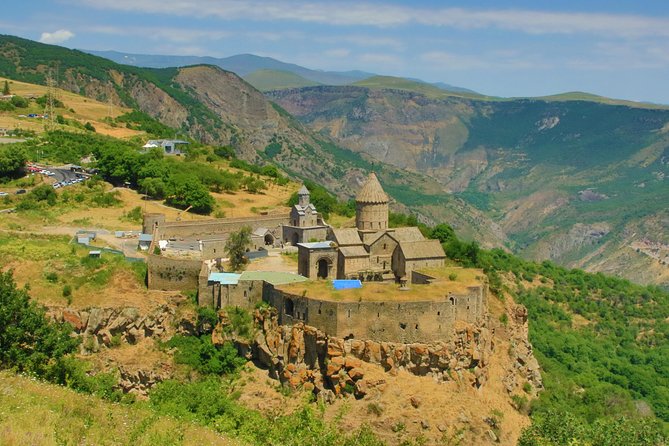
Day 3 is built like a string of dramatic scenes. You start at Khor Virap Monastery, known for its view of biblical Mount Ararat. Even if Ararat is partly hidden by clouds, you still get that sense of Armenia’s big geography and big symbolism.
Next comes T’rchuneri, the Bird Cave. This is the kind of stop that makes you slow down because the details are surprising. Archaeologists have found very old leather items and an ancient winery there, and the area is tied to the Areni wine region.
Then you head to an Areni wine factory for a tasting. This works better than a generic wine stop because you already heard the story behind the place. You are tasting a region with a past, not just a product on a shelf.
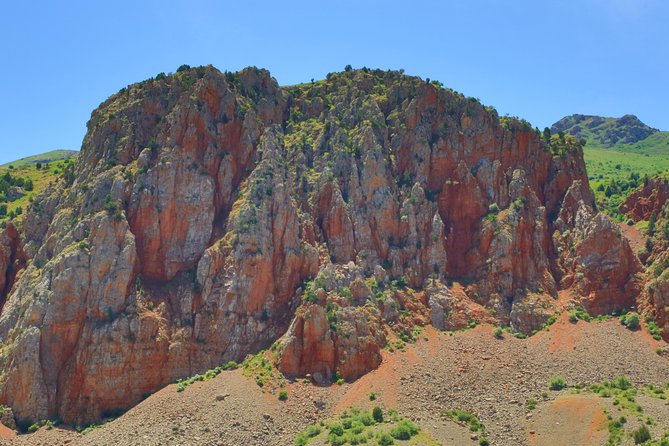
After wine, you shift to Noravank Monastery, set in dramatic red cliffs. The architecture and the setting together make this a top scenery day.
You end in Jermuk, a resort town known for mineral water. You visit a Drink gallery with different sources and then see Jermuk Waterfall. It is a relaxing way to close a full travel day, especially if you have been walking all morning.
What to watch for: This day mixes viewpoints, walking, and tastings, so pace yourself with water. The views are great, but your feet will ask for breaks.
Day 4: swinging bridge caves, Tatev by cable car, and the “Armenian Stonehenge”
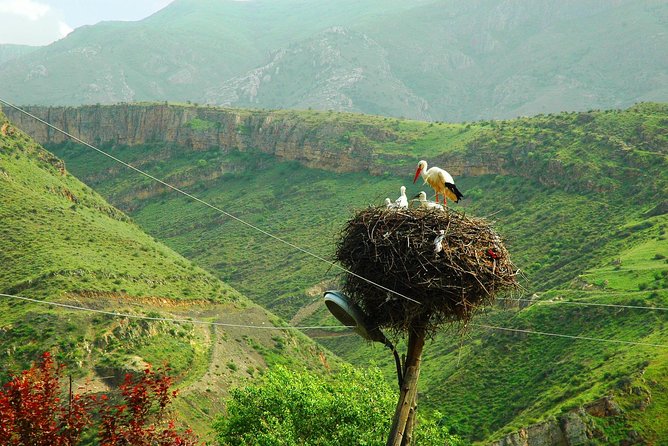
Day 4 leans hard into unusual places and big views. You start with Khndzoresk, an uninhabited cave town reached via a unique swinging bridge. The walk and the bridge feel like part adventure, part history lesson. It is one of those stops where your imagination fills in what used to be there.
Next is Tatev Monastery, reached via the Wings of Tatev cable car from Halidzor village. The cable car is described as the longest in the world, and the ride itself becomes part of the experience. When you arrive, the monastery feels like it has been watching the valleys for centuries.
Then you head to Shaki Waterfall, about 18 meters tall. It is a short stop, but the waterfall is visually satisfying and a good reset between major sites.
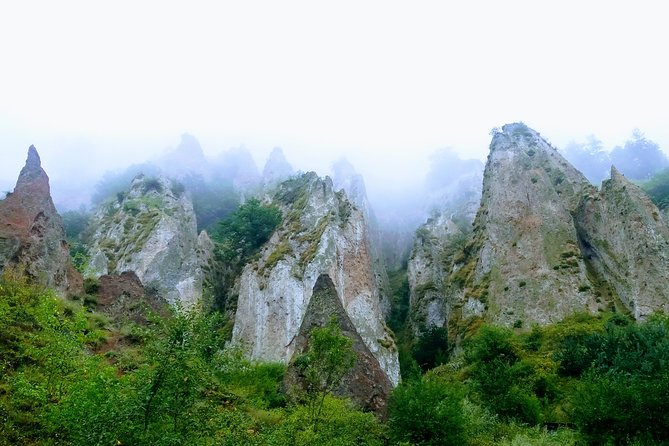
After the waterfall, you visit Zorats Karer, also called Zorats Stones. This metallic installation dating back to the VI millennium B.C. is often compared to an “Armenian Stonehenge” for its observatory reputation. It is a quick visit, but it sparks curiosity if you like astronomy and ancient tech.
Consideration: Outdoor weather matters a lot on this day. If it is cold or windy, dress in layers, because you will be exposed during bridge and viewpoint moments.
Day 5: Silk Road caravanserai, khachkars at Noratus, Sevan, Geghard, and Garni lavash
Day 5 is a masterclass in variety. You start at Selim Caravanserai, also known as Vardenyats (Selim). It sits along the Great Silk Road route, built to house travelers. It makes history feel practical: people moved through Armenia, traded, slept, and kept going.
Then you visit Noratus Cemetery, home to the biggest khachkar cemetery in modern Armenia. Khachkars are Armenian cross-stones, and seeing them close up makes them more than decorative. You notice patterns, wear, and the quiet artistry.
Next is Sevanavank Monastery on the north-west shore of Lake Sevan, the biggest lake in the Caucasus. The lake context changes how you experience monastic sites, because water and wind shape the mood.
You also get Charent’s Arch as a quick photo stop with a view of Ararat. It is short, but it is a good “save-the-best-angle” moment.
After that, you visit Geghard Monastery, the rocky complex from the XII to XIII centuries, listed as UNESCO World Heritage. The rock-hewn feel is a big part of why this place earns its reputation.
To end with food and culture, you go to Garni Temple, a restored pagan temple and the only restored monument tied to Hellenism in Armenia. Then you have Armenian traditional lavash baking at a village house in Garni. This is the day where Armenia stops feeling like a list of sights and starts feeling like daily life.
What to watch for: Garni and lavash are an emotional combo, so give yourself a little time to watch the process. The point is not just eating it, it is seeing how it is made.
Day 6: Amberd fortress views and a history museum that connects the dots
Day 6 gives you two different kinds of “past.” First is Amberd Fortress, a historical defense complex with a VII century castle and a XI century church. The route is designed to reward you with mountain views, and the fortress layout makes it easy to imagine how people defended themselves.
Then you visit the History Museum of Armenia. It represents different eras of the Armenian Highland, from Paleolithic to the present. This stop is useful if you felt pulled in different directions by the earlier sites. It gives you a timeline anchor, so the monasteries and artifacts stop feeling random.
Consideration: Amberd is a fortress, so expect uneven terrain and elevation. Take it slow and you will enjoy it more.
Day 7 in Yerevan: Vernissage shopping for wines, herbs, and gifts
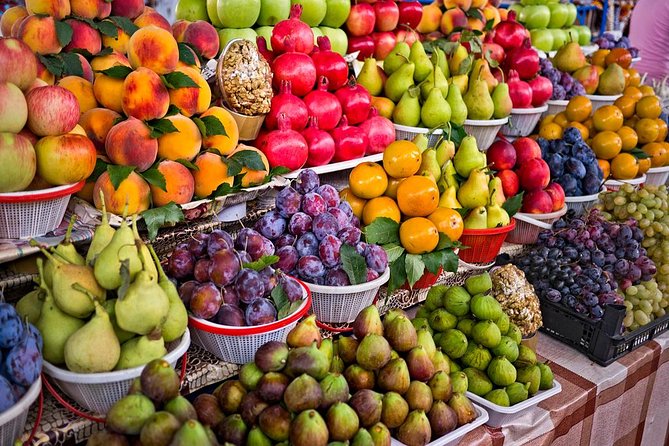
Your final day keeps things simple and flexible: shopping and souvenirs. You visit Vernissage Market for about two hours. You can choose from wines, brandies, dried fruits, sweets, herbs, jewelry, and more. It is a good place to buy gifts that are actually Armenian, not just generic “souvenir” stuff.
You also visit Tashir, the market of local sweets and dried fruits. If you like tasting before buying, this is where you make decisions quickly.
Tip: Keep your last-day bag lighter. If you buy wine and dried goods, you will appreciate having space in your luggage.
Price and what $750 buys you
At $750 per person for about 7 days, this tour is priced like a true guided experience, not a DIY outline with a driver. What helps it feel like good value is that many stops include admissions. You are not paying out of pocket for every museum and UNESCO site.
You also get private-group treatment. The tour is private, so it is easier to move at your group’s speed, and that matters when you have different walking comfort levels. In past departures, guides such as Gor and Levon have been praised for keeping schedule while explaining things clearly, and Varsenik is highlighted for maintaining a positive program even when weather turns ugly.
The other value angle is timing: start at 9:00 am and you are typically out from morning to late afternoon. That kind of schedule reduces idle hours, meaning you spend more time seeing and less time reorganizing.
How the tour handles comfort, weather, and long days
This tour can be intense because it packs a lot into each day. You will likely spend time walking between sights, standing for views, and traveling by car between regions. If you love action, you will be happy. If you want a slow café pace, you might find it too full.
Weather matters too. One departure ran through cold, snowy conditions and still kept the program going with indoor moments and events. That is a practical strength: it reduces the chance your day collapses if the sun does not show up.
For comfort, I recommend you plan around layers and shoes that can handle uneven ground at fortresses, caves, and monasteries. You will thank yourself.
Who should book this tour (and who might skip it)
Book it if you want Armenia with structure: Yerevan foundations, UNESCO highlights, and the kind of nature stops that feel unforgettable because they are different, like the swinging bridge at Khndzoresk and the cable car to Tatev.
This tour fits well for couples, small groups, and even multigenerational travel. Private tours also help when you need small adjustments, and there are examples of groups with advanced age being accommodated while keeping the day productive.
Skip it if your dream trip is slow and lightweight, with long unplanned stops and minimal driving. This one is built for getting a lot of Armenia in one week.
Should you book this Great Beauty of Armenia tour?
If you want a week where history, views, and food all get equal billing, I think this is a strong pick. The route makes sense, starting in Yerevan and then layering spiritual sites, ancient ruins, wine culture, and dramatic natural moments before finishing with shopping for Armenian gifts.
For me, the best reason to book is simple: you are not just looking at Armenia, you are sampling it. Brandy tastings, wine in Areni, mineral water in Jermuk, and lavash baking at Garni give you memories you can taste, not only photos you can scroll.
If that sounds like your kind of travel week, book it. If you hate busy schedules, you might prefer a slower, shorter route and more downtime.
FAQ
What is the tour price?
The price is $750.00 per person.
How long is the tour?
It runs for 7 days (approx.).
What time does the tour start, and how does pickup work?
The start time is 9:00 am. You will meet at any time of the day with the sign Barev Armenia and be taken to your place of residence in Yerevan.
Is this tour private or shared?
It is a private tour/activity, and only your group participates.
Do I need to print tickets?
The tour uses a mobile ticket.
Are admission tickets included?
Some stops have admission tickets included, while others are listed as free. The specific stops vary by day.
What is the cancellation policy?
You can cancel for free up to 24 hours in advance for a full refund.
Newest listings across Yerevan
- Yerevan’s Sights: Guided Walking Tour★ 5.0 · 1 review
- Private transfer Yerevan-Tbilisi-Yerevan in one day★ 5.0 · 1 review
- Yerevan tour in a retro Lada with drinks (Yerevan city tour)★ 5.0 · 1 review
- Private tour to Saghmosavank, Karmravor, Oshakan, Hovhannavank★ 5.0 · 1 review
- Day Tour to Amberd Fortress Aragats and Kari Lake From Yerevan★ 5.0 · 1 review
- Yerevan Walking Architecture Tour★ 5.0 · 1 review
- Armenia – Guaranteed Departure – Book Now! – 2025★ 5.0 · 1 review
- Mother Cathedral of Holy Echmiadzin★ 5.0 · 1 review
Tours, compared.
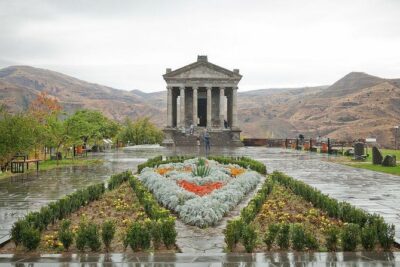
Garni, Symphony of Stones, Geghard, Lavash Baking
Read our review →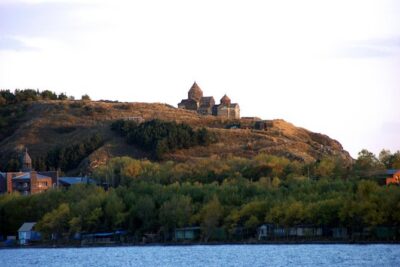
Lake Sevan (Sevanavank), Dilijan (Goshavank, Haghartsin)
Read our review →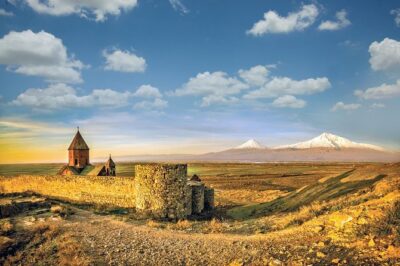
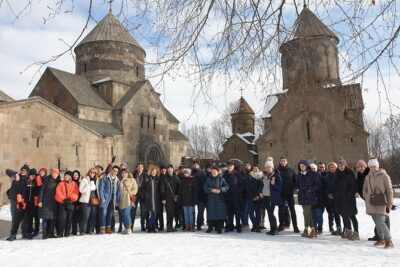
Tsaghkadzor (Kecharis, Ropeway), Lake Sevan, Trout barbecue treat
Read our review →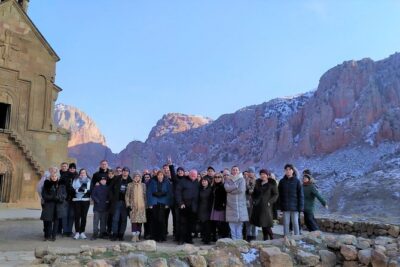
Khor Virap, Noravank, Tatev monasteries (wayback on Ropeway)
Read our review →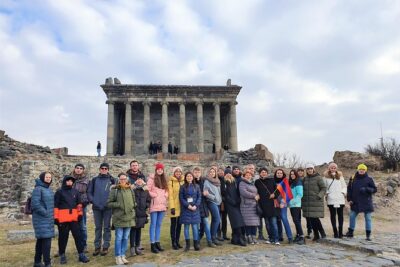
Garni pagan temple, Geghard monastery, Lake Sevan, Sevanavank
Read our review →