
Reviewed · FOOD & DRINK
Traditional Vegetarian Food Masterclass
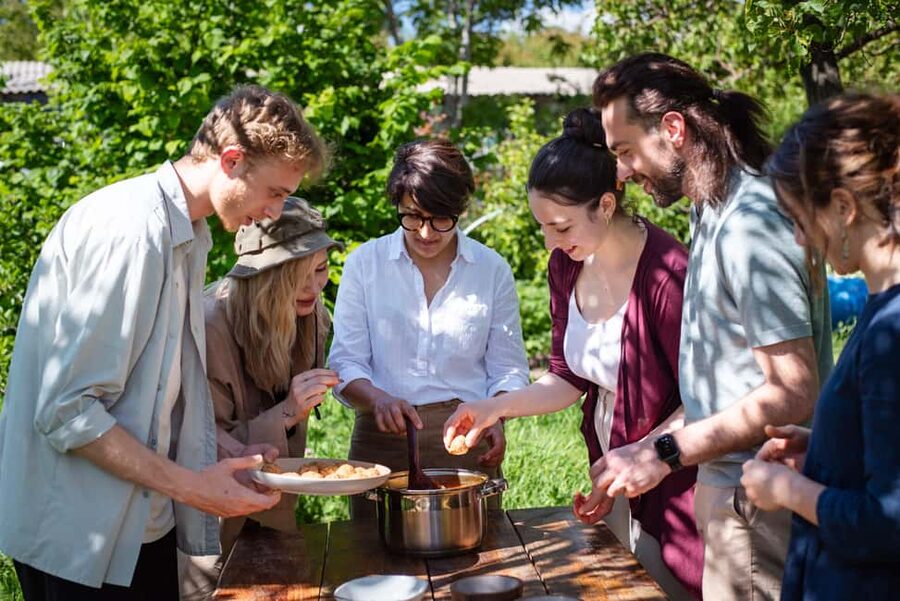
Ashnak turns a meal into a story you can taste. In this 90-minute Traditional Vegetarian Food Masterclass, you make Sasuni klulik with local women over an open fire, then learn Sassoun dances from local children, all in a village setting with real hospitality.
I love how practical this feels, not staged. You get instruction while the cabbage broth and bulgur-based dumplings do their work, plus cultural storytelling about Sasun and why food keeps connections alive across generations.
One thing to consider: this is strongly focused on a vegetarian dish and village culture, so it is not a broad restaurant-style tasting menu. If you want multiple culinary styles or a long, slow hang, you might prefer a longer food tour.
In This Review
- Key highlights you should care about
- Ashnak and Aragatsotn: why the setting matters
- Noosh Guest House start, then straight into village routines
- Making Sasuni klulik over an open fire
- The Sasun connection: food as resilience, not trivia
- Cultural storytelling while the dish simmers
- Sassoun dances with local children
- The home-cooked meal, locally sourced ingredients, and sweets
- Price and timing: value of a 90-minute village class
- Languages, guide support, and who this fits best
- Accessibility and practical comfort
- Should you book this Traditional Vegetarian Food Masterclass?
- FAQ
- Where does the masterclass take place?
- What is the meeting point?
- How long is the Traditional Vegetarian Food Masterclass?
- How much does it cost?
- What dish will I learn to cook?
- What else do I do besides cooking?
- Is there food included?
- What languages are available for the live guide?
- Is the experience accessible for wheelchair users?
- What is the cancellation policy?
Key highlights you should care about
- Hands-on klulik cooking with local women over an open fire, not just watching from the sidelines
- Sasuni klulik roots in Sasun (Western Armenia), including how the recipe and meaning evolved over time
- Sassoun dance lesson learned with local children, tied to everyday village life
- Locally sourced, home-cooked meal eaten together after the cooking
- Tea/coffee and local sweets served alongside the cultural talk and village atmosphere
Yet more food tours in Armenia:
- Khor Virap, Noravank and Birds’ Cave Trip with Wine Tasting
★ 4.8 · 845 reviews - Cultural Walking Tour in Yerevan with Armenian food Tastings
★ 5.0 · 334 reviews - Khor Virap, Noravank & Birds’ Cave Day Trip with Wine Tasting
★ 5.0 · 320 reviews
Ashnak and Aragatsotn: why the setting matters
Aragatsotn Province is not about tourist shortcuts. It is where village life still shapes the rhythm of the day, and Ashnak gives that vibe a clear historical anchor. Ashnak is a historic village founded by survivors of the Armenian Genocide, so the experience carries meaning beyond food entertainment.
That context changes what you notice. A cooking lesson stops being only about technique. You start paying attention to why certain ingredients show up, why a dish has a name tied to Sasun, and why sharing food is treated like community work, not a performance.
Noosh Guest House start, then straight into village routines
Your meeting point is Noosh Guest House in Ashnak Village, so you are not hunting for a hidden kiosk or a back-of-house door. Go there directly, and you will be taken into the flow of the activity with a live guide who works in Armenian, English, and Russian.
The session is 90 minutes, which is long enough to learn something real and short enough to fit into a day without turning your schedule into a marathon. Because it runs from a home base, you also tend to get a more personal pace than with larger, more formal group tours.
Practical tip: wear clothes you are comfortable moving in. You will be part of the cooking and learning, not only taking photos.
Making Sasuni klulik over an open fire
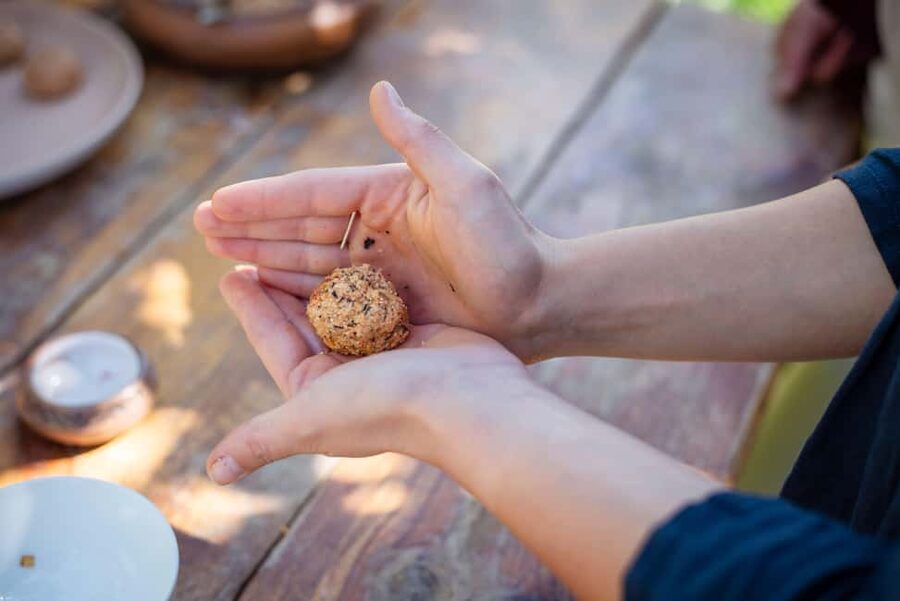
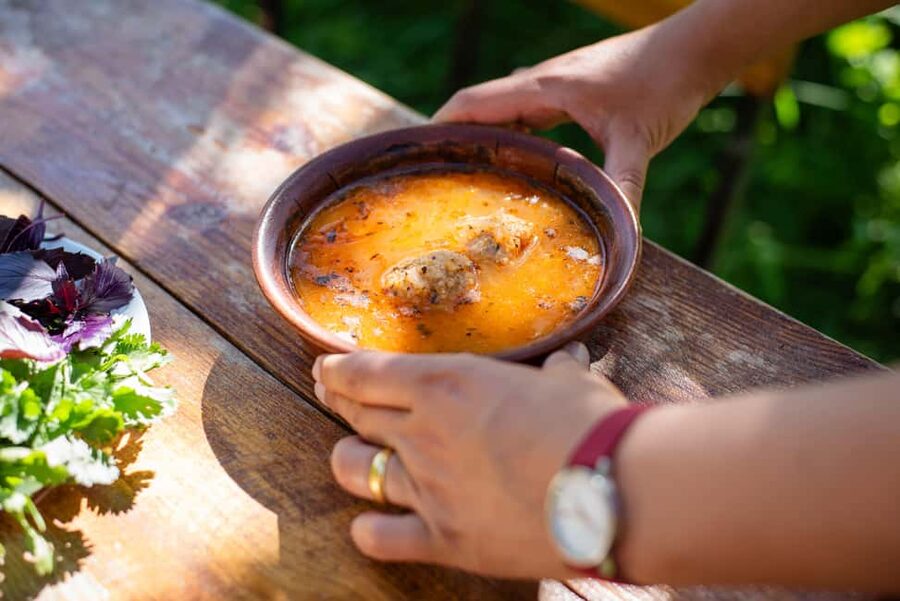
The core of this experience is klulik, Armenian vegetarian comfort shaped by Sasun traditions. You learn how to cook Sasuni klulik with local women using an open-fire setup. The dish is built on bulgur, formed into small round balls (the name klulik literally points to small rounds), then cooked in a tangy cabbage broth.
What I like about the structure is that you are not simply handed a finished dish. You see the stages: mixing, shaping, and then watching the broth and dumplings work together. It is the kind of cooking where you can feel the time in the simmer, and the food becomes part of the cultural conversation.
And yes, this is a vegetarian masterclass. That matters for planning your expectations and your hunger. If you eat meat, you can still enjoy this, because the flavor logic in the cabbage broth and bulgur texture is the point. But if you are looking for meat-based variety, this class is intentionally not built that way.
More eating around Armenia:
- Yerevan Private Walking Food Tour★ 5.0 · 31 reviews
- Masterclass of Armenian food with a local family in Yerevan★ 5.0 · 7 reviews
- Authentic Flavors of Armenia: Day Food and Cooking Trip★ 5.0 · 2 reviews
The Sasun connection: food as resilience, not trivia
You will hear stories about where klulik came from and how it traveled. The dish is tied to Sasun in Western Armenia, in what is today Turkey, where it was once a staple made with bulgur and cooked in tangy cabbage broth. Over generations the recipe evolved, but it stays important as a culinary heritage marker.
This is where the experience feels more grounded. The stories are not extra decoration. They explain how dishes become memory containers, especially for communities that had to carry culture through loss, relocation, and rebuilding. When you sit down later, you can connect the flavors to that meaning without turning it into heavy-handed history lessons.
If you care about cultural context, this is a big plus. It helps you understand why people teach recipes with the same seriousness they teach songs or dances.
Cultural storytelling while the dish simmers
While the klulik is cooking, the conversation expands. You get cultural storytelling and history tied to Sasun, and you also hear how the dish was traditionally made in large family gatherings.
I find that detail helps the meal feel less like a one-off class. You are learning a recipe that once belonged to celebrations and shared time. Even though you are in modern Ashnak, the lesson recreates that structure: cook together, talk together, then eat together.
That pacing is also practical. By the time the dumplings are ready, you are not rushing into a meal before you understand it. You have already built a mental map of what you are eating, which makes the flavors more satisfying.
Sassoun dances with local children
The dance lesson is not a separate side show. Learning traditional Sassoun dances with local children gives the same “community transmission” feeling you get from the cooking. It is cultural learning through movement, not just through words.
You can expect to be taught basic steps in a friendly, active way within the village atmosphere of Ashnak. Since the children are part of the instruction, it also creates a direct human connection that feels natural rather than scripted.
One useful mindset shift: treat the dance lesson like a chance to participate, not a performance test. You are there to learn steps and pick up the rhythm, and the value is in the sharing, not perfection.
The home-cooked meal, locally sourced ingredients, and sweets
When the klulik is ready, you sit down with your hosts and eat a meal made entirely from locally sourced ingredients. That means the cooking you helped prepare turns into your actual dinner, served in the same spirit of hospitality that shaped the lesson.
Along with the meal, you get tea or coffee and local sweets. This is a nice finish because it slows things down after hands-on activity. You can share what you learned, ask questions, and keep the cultural conversation going while you digest cabbage broth and bulgur warmth.
If you are a solo traveler, this meal format often helps you feel connected quickly. And if you are traveling with a friend or partner, it is easy to compare notes on how each dumpling batch came out and what the stories meant to you.
Price and timing: value of a 90-minute village class
At $20 per person for a 90-minute experience, this is priced like a cultural activity with real instruction, not just a snack stop. You are paying for several things at once: cooking class guidance with local women, a traditional dance lesson with local children, the home-cooked meal, and the storytelling that gives the food its meaning.
The time length also matters. Ninety minutes is enough to see the process and share a meal without losing the day to logistics. It is a smart choice if you want an authentic experience but do not want a half-day commitment.
Languages, guide support, and who this fits best
The live guide supports Armenian, English, and Russian, which makes the experience workable even if your Armenian is limited. If you are choosing between languages, pick what you are most comfortable with so you can catch the details of the Sasun stories.
This class is a great fit for:
- People who want authentic village culture more than polished tourist shows
- Vegetarian travelers who want a meaningful dish with a clear origin story
- Anyone who enjoys hands-on activities, cooking, and learning a cultural step or two
- Travelers who like short, concentrated experiences that still feel personal
If you are traveling with kids, the dance element is a strong reason to consider it, but you still should know the main focus is teaching. It is not a playground session; it is an activity with cultural instruction.
Accessibility and practical comfort
The experience is listed as wheelchair accessible. Since the activity happens in a village setting and includes open-fire cooking, I recommend checking with your host or operator about how the space works for your specific needs before you go. That is the best way to avoid surprises.
Also, bring a respectful attitude. This is a community experience, and the hosts are sharing time, skills, and stories. Showing up ready to participate goes a long way.
Should you book this Traditional Vegetarian Food Masterclass?
If your idea of a great Armenia experience includes food with context and culture taught through real people, I think this is an easy yes. The biggest strength is that you do not just watch klulik being made. You learn the dish, hear why it matters, then share a meal in the same setting where the stories come from.
I would skip it only if you want a big variety of dishes, or if you are not interested in vegetarian cooking and dance-based cultural learning. Otherwise, for $20 and 90 minutes, you get a compact but meaningful village experience that connects history, community, and taste in one sitting.
FAQ
Where does the masterclass take place?
It takes place in Ashnak Village, in Aragatsotn Province, Armenia.
What is the meeting point?
Meet directly at Noosh Guest House in Ashnak Village.
How long is the Traditional Vegetarian Food Masterclass?
The experience lasts 90 minutes.
How much does it cost?
It costs $20 per person.
What dish will I learn to cook?
You will cook Sasuni klulik, a traditional vegetarian dish made with bulgur and cooked in a tangy cabbage broth.
What else do I do besides cooking?
You also get a traditional dance lesson in Sassoun dances with local children.
Is there food included?
Yes. You’ll enjoy a home-cooked meal with locally sourced ingredients, plus tea or coffee and local sweets.
What languages are available for the live guide?
The live tour guide speaks Armenian, English, and Russian.
Is the experience accessible for wheelchair users?
Yes, it is listed as wheelchair accessible.
What is the cancellation policy?
You can cancel up to 24 hours in advance for a full refund.
Newest listings across Armenia
- Private Trip: Sevan, Dilijan, Parz Lake,Haghartsin,Goshavank★ 5.0 · 1 review
- Yerevan’s Sights: Guided Walking Tour★ 5.0 · 1 review
- Yerevan tour in a retro Lada with drinks (Yerevan city tour)★ 5.0 · 1 review
- Mount Aragats-Saghmosavank Monastery-Alphabet Park★ 5.0 · 1 review
- Private transfer Yerevan-Tbilisi-Yerevan in one day★ 5.0 · 1 review
- Group tour: Haghpat, Sanahin, Akhtala, Odzun, Mendz Er★ 5.0 · 1 review
- Yerevan: Garni Temple, Geghard Monastery, Symphony of Stones★ 5.0 · 1 review
- “Journey Through Time: Garni Temple and Geghard Monastery”★ 5.0 · 1 review
Food & Drink, compared.
Khor Virap, Noravank and Birds’ Cave Trip with Wine Tasting
Read our review →
Cultural Walking Tour in Yerevan with Armenian food Tastings
Read our review →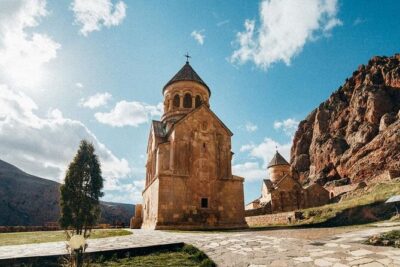
Khor Virap, Noravank & Birds’ Cave Day Trip with Wine Tasting
Read our review →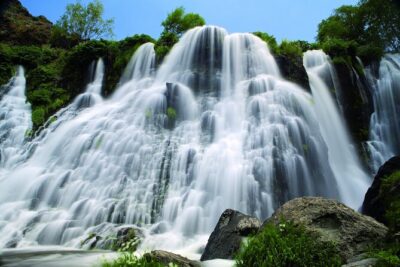
Tatev & Shaki Waterfall Guided Group Tour with Wine Tasting
Read our review →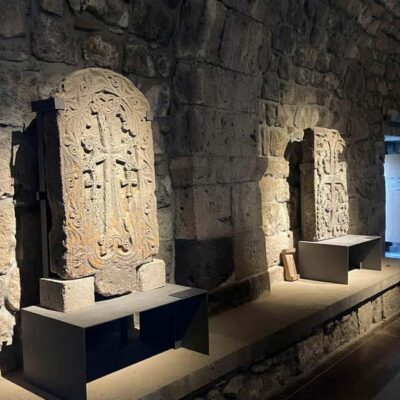
Tatev Day Trip with Shaki Waterfall & Wine Tasting
Read our review →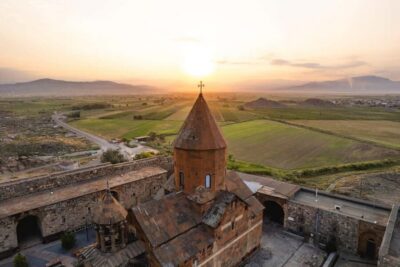
Khor Virap, Noravank, Jermuk, Areni wine tasting
Read our review →
Tour Transfer to/from Tbilisi with Lake Sevan & Wine tasting
Read our review →Browse the lists this tour appears in