
Reviewed · ECHMIADZIN & ZVARTNOTS CATHEDRALS
Tsitsernakaber-Hripsime-Echmiatsin-Noy brandy factory
Start with memory, end with brandy. I like how this route pairs Etchmiadzin Cathedral in Vagharshapat with a guided stop at Noy brandy factory, so your day moves from faith and history to something tasty and local.
One possible drawback: the Etchmiadzin Cathedral area is under restoration, so you will see the cathedral from the outside rather than going fully inside during this tour.
In This Review
- Key highlights to look for
- A half-day itinerary with real emotional range
- Tsitsernakaberd: why this memorial hits harder than photos
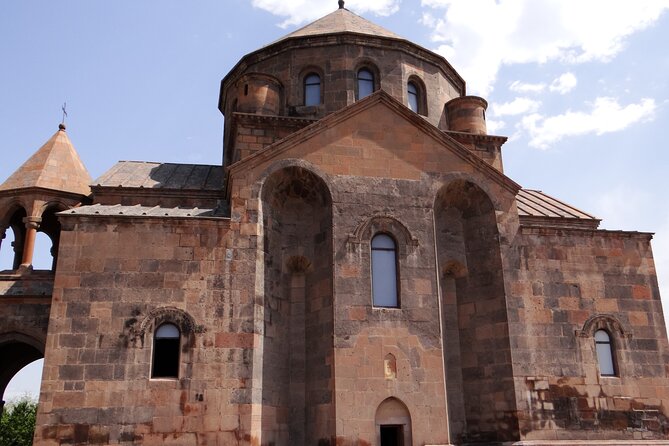
- Saint Hripsime and the UNESCO churches around Vagharshapat
- Etchmiadzin (Holy Sea): cathedral importance with a museum backup plan
- Noy Yerevan Ararat Brandy-Wine-Vodka Factory: port wine from 1941 and two brandies
- Price and timing: what you actually get for $100
- Your guide can make or break the day, especially for history
- Who should book this tour, and who should skip it
- Should you book this tour?
- FAQ
- How long is the tour?
- Where does the tour start?
- What main stops are included?
- Are admission fees included?
- Is lunch included?
- What tasting is included at the Noy factory?
- Is the Etchmiadzin Cathedral accessible inside during the tour?
- Can I cancel or change the booking?
Key highlights to look for
- Tsitsernakaberd’s eternal flame and 12-province layout make the genocide memorial feel intentional, not just symbolic
- UNESCO Vagharshapat churches with a guide give you context for what you are seeing
- Saint Hripsime Church is presented as a 7th-century UNESCO site, with discussion of Catholicos Komitas
- Echmiadzin (Holy Sea) museum includes major religious relics like a part of Noah’s arch and the Holy lance
- Noy factory tasting includes port wine from 1941 plus two types of brandy
More cathedral days at Echmiadzin and Zvartnots:
- Group Tour: Echmiadzin Cathedral & churches, Zvartnots Temple
★ 5.0 · 352 reviews - Yerevan: Khor Virap, Garni, Geghard, Echmiadzin, & Zvartnots
★ 4.9 · 192 reviews - Private Half-day Echmiadzin Cathedral, Hripsime & Zvartnots Temple from Yerevan
★ 5.0 · 95 reviews
A half-day itinerary with real emotional range
This is the kind of Yerevan tour that doesn’t try to be light and fluffy. You start at Tsitsernakaberd, a memorial complex for the Armenian Genocide, and you end at a spirits producer in the Ararat Valley, where the mood shifts fast from solemn to celebratory.
What makes it work is the balance of guided context and included access. You are not just dropped at landmarks. You get a local guide who helps you connect the dots at each stop, from the meaning of the memorial to the significance of the oldest Christian sites in Armenia.
I also like that the tour respects your time. The schedule is tight enough to fit major sights, but it still gives each location a sensible window to take it in. And since the vehicle is air-conditioned and the group is capped at 15, the day feels manageable rather than chaotic.
The only thing you should mentally prep is the restoration factor. If seeing inside the cathedral is your main goal, you will be disappointed, because the cathedral itself is not presented internally on this tour.
Tsitsernakaberd: why this memorial hits harder than photos
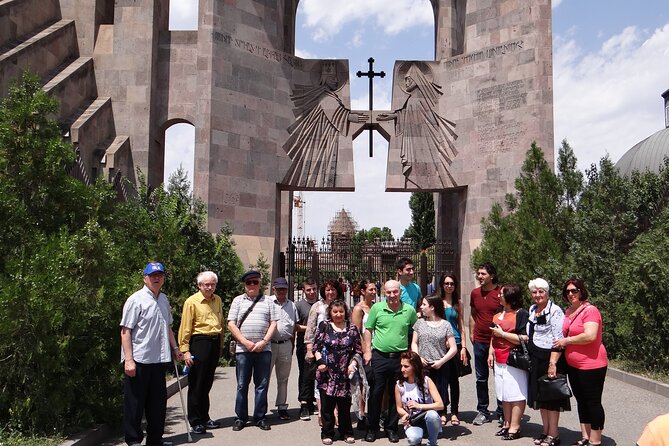
Your first stop is Tsitsernakaberd, the Armenian Genocide Memorial in Yerevan. This is one of those places where you feel the weight immediately, even before you reach the museum. The complex is built around a towering granite stele, with twelve surrounding slabs that represent the twelve provinces of historical Western Armenia, where the genocide took place.
At the base of the stele is an eternal flame. It is there for a reason, as a living symbol of remembrance for the victims. It can sound like a slogan until you stand in front of it, and then it stops being abstract.
You also get access to the museum onsite. It showcases the history and atrocities of the genocide, which is important if you want more than a quick view. Even if you feel you know the basics already, the museum gives you a structured way to understand what happened, and why the memorial is shaped the way it is.
Timing helps here. You are scheduled for about 45 minutes, with admission covered (free). That is enough to see the monument layout and walk through the museum without feeling rushed. If you want to read every sign carefully, go slower and accept that you may not finish everything in the museum.
Practical tip: wear comfortable shoes. You will walk around the memorial grounds, and you might want extra minutes to simply look and re-center yourself.
Saint Hripsime and the UNESCO churches around Vagharshapat
After Tsitsernakaberd, the tour shifts into religious Armenia, specifically the UNESCO World Heritage sites in Vagharshapat. First up is Saint Hripsime Church.
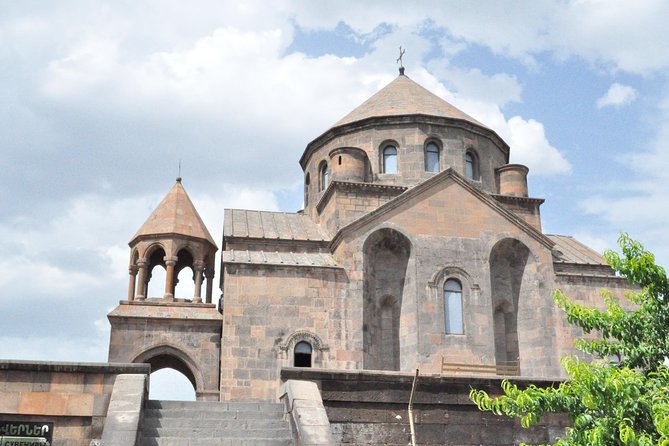
Saint Hripsime is described as a 7th-century church and is itself a UNESCO site. It is a short stop, about 30 minutes, and admission is free. That means your guide’s job is crucial: you do not have time to wander without a plan. You will want to follow along and ask questions, because the key value here is understanding what you are looking at, not just ticking off a building.
One of the most interesting parts is the way your guide ties Hripsime to the life of Catholicos Komitas. Armenia’s church history is full of strong personalities, and hearing Komitas’ name in connection with the church gives the site more human scale. Even if architecture is not your thing, the historical framing makes the stop more meaningful.
Then comes Saint Gayane Church, the third of Vagharshapat’s UNESCO-listed landmarks. This stop focuses on Armenia’s conversion to Christianity and how it relates to Catholicism. The wording in the tour description points you toward the theme, so expect your guide to connect religious change to the broader political and cultural shifts of the era.
Here is the honest consideration: with these churches, the tour is not a slow art-history seminar. If you want long interior time and deep architectural sketching, this may feel brief. But if you want a well-guided overview with enough time to process each site, it is a solid fit.
More brandy cellars to walk through:
- Walking Yerevan City Tour with 5 Wine & 10 years-old brandy★ 5.0 · 17 reviews
- Yerevan Brandy Factory: Armenian Brandy Tasting Tour★ 4.0 · 6 reviews
- Private Yerevan City tour: Cognac factory,Megerian Carpet Museums★ 5.0 · 4 reviews
- Shopping with Brandy★ 5.0 · 2 reviews
Etchmiadzin (Holy Sea): cathedral importance with a museum backup plan
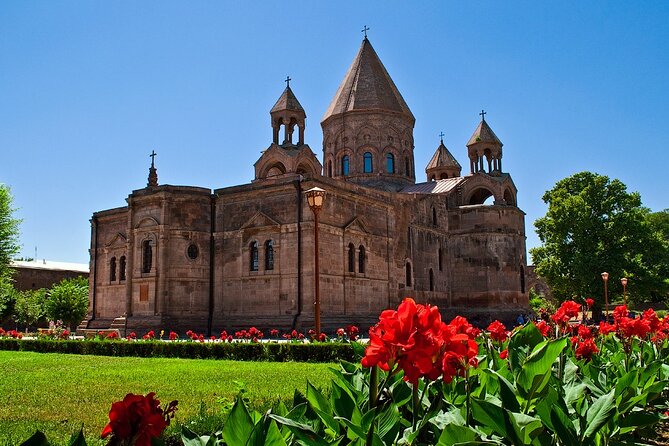
Your main destination is Echmiadzin, also called the Holy Sea. It is presented as the most ancient Christian cathedral in the world, and it has a huge place in Armenian Apostolic Christianity. This is the setting where the religious story of Armenia feels grounded and central.
There is one major logistical detail you should know up front. The cathedral is under restoration, so you can only see it from the outside during this tour. That can feel like a letdown if you came for interior views. But the tour compensates by sending you to the museum of Echmiadzin.
Inside the museum, you will see important relics, including a part from Noah’s arch and a part of the Holy lance. Those are the kinds of items that make the site feel bigger than one building. They connect faith, tradition, and national identity in a very tangible way.
You are scheduled for about 1 hour here, and museum entry is included. That hour is a helpful compromise. You do not have to choose between the cathedral setting and the relics and artifacts. You get both, just in different formats: outside atmosphere plus indoor context.
I also like how this stop fits the overall arc of the day. After the genocide memorial, you go from a place built to preserve memory to a place built to preserve belief. That contrast is heavy, but it is also thoughtful, and your guide’s explanations help it land in a respectful way.
If you care most about Echmiadzin itself, you should still see good value here. One of the strongest themes from the tour feedback is that Etchmiadzin is a top priority in the Yerevan area. Even with restoration limiting access, it remains the spiritual and historical core of the region.
Noy Yerevan Ararat Brandy-Wine-Vodka Factory: port wine from 1941 and two brandies
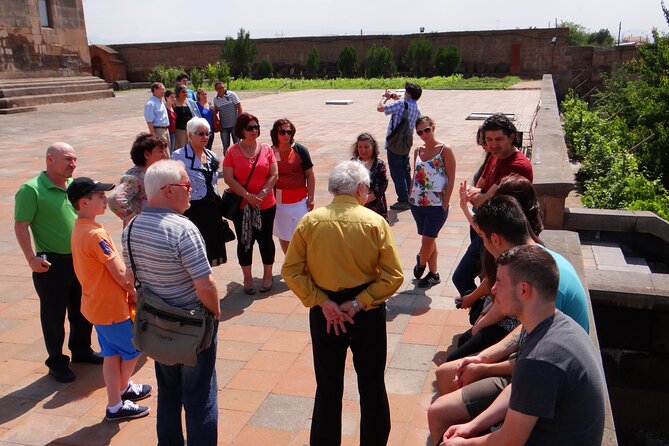
The last stop is Noy Yerevan Ararat Brandy-Wine-Vodka Factory, located in Armenia’s Ararat Valley. It is a well-known spirits producer, and the tour presentation highlights why people make a point of visiting: the company was established in 1877 and is known for Armenian brandies aged in oak barrels for decades.
You get a guided tour at the factory, and then a tasting session. The included tasting is port wine from 1941 plus two types of brandy. For many people, that is the best part of the value equation, because the tour price includes the alcohol tasting rather than leaving you to buy everything separately.
The tour also frames the craft. It mentions traditional distillation methods and locally sourced grapes. It even points to international recognition, including awards like the International Wine & Spirit Competition, and export reach to more than 30 countries. You will not just be drinking. You are supposed to learn how the product gets made and why it has the flavor profile people associate with Armenian brandy.
Who should love this stop? Anyone who likes tasting but does not want a long wine tour day. It is straightforward: one place, one guided experience, and a short list of tastings included.
Who might not love it? If you do not drink alcohol, you will have less incentive to stay for the full timing. The tasting is included as part of the experience, so your best move is to plan a non-alcoholic snack strategy around it.
A practical tip: pace yourself with the port wine. It is easy to have a second pour before you realize you have already caught up with the day’s pace.
Price and timing: what you actually get for $100
The price is listed at $100 per person, and for the length of the day (about 5 hours), you are paying for three things that are often separate on DIY days: guided interpretation, included admission where relevant, and the tasting.
Here is the value math that matters. Tsitsernakaberd admission is free, and Saint Hripsime admission is also free. But you are still paying for the local guide, the air-conditioned vehicle, and the time you save by not figuring out routes and timings yourself. The museum in Echmiadzin is included. And the tasting at Noy includes port wine from 1941 plus two types of brandy, which can cost extra when bought independently.
Lunch is not included. If you need it, the cost is listed as $15 per person. This matters because you might finish the churches part hungry and still have the factory stop afterward. If you are sensitive to long gaps without food, plan to eat before the 9:30 am start, or budget for lunch once you confirm your schedule.
Logistics are also handled in a simple way. Pickup is offered, and the group is capped at 15 travelers, which usually means you are not stuck behind a crowd at each site. Confirmation is stated as received within 48 hours of booking, subject to availability, and the tour uses a mobile ticket.
One more note: the tour is listed as non-refundable and cannot be changed for any reason. That is not rare, but it is decisive. If your plans are flexible, lock this in only when your Yerevan dates are stable.
Your guide can make or break the day, especially for history
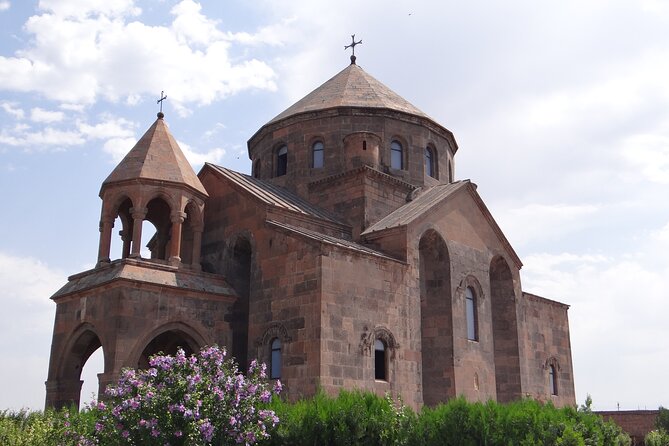
The tour’s real strength is how it uses a guide to turn stops into stories. The religious sites and the genocide memorial both benefit from explanation. Without that, you risk seeing buildings and monuments without learning why they matter.
In particular, the guide name Nvard comes up as a standout. The feedback describes her as a nice lady with good English and solid knowledge of each place and its history. That kind of guide skill makes a short stop feel fuller. You get answers fast, and you can keep up without feeling lost.
There is also a helpful human detail that matters more than you might think: Nvard volunteered to help with photos for a solo traveler. If you are traveling alone, that is a little confidence boost. Bring your phone or camera settings ready, and it is reasonable to ask for help at the best photo angles.
My practical advice is simple: ask one question at each stop. For Tsitsernakaberd, ask what the twelve slabs represent beyond the basic fact. For Hripsime, ask how Komitas connects to the church story. For Echmiadzin, ask what relics you should pay attention to in the museum. For Noy, ask what aging in oak barrels changes in the final brandy.
Short questions lead to short, satisfying answers, and the day feels more personal.
Who should book this tour, and who should skip it
This is a great match if you want a structured, guided day that covers big themes in Armenia in one go. It is especially good for first-timers who want:
- UNESCO World Heritage churches in Vagharshapat in a single half-day window
- a serious start at Tsitsernakaberd, without rushing the emotional part
- a cultural finish at a real Armenian distillery with a tasting included
It is less ideal if your top priority is seeing Etchmiadzin Cathedral from inside. Since the cathedral is under restoration and you will only view it from outside on this tour, you might feel like something is missing.
It is also not the best choice if you do not want alcohol involved. The Noy tasting is part of the included package, including port wine from 1941 and two types of brandy.
Finally, consider your pace. This day is built for short windows at multiple sites. If you prefer slow travel and long stays, you may feel the schedule is a bit compressed.
Should you book this tour?
Book it if you want a smart first hit on Armenia’s big stories, genocide remembrance, UNESCO faith sites, and an included Armenian spirits tasting, all organized with a local guide and a small group size.
Skip it or look for a different format if you specifically want interior access to Etchmiadzin Cathedral, or if you want a non-alcohol-focused tour. The restoration limitation is the one clear deal-breaker here.
If your schedule is tight in Yerevan and you want a day that actually teaches as it goes, this is strong value at $100, especially because the museum time and the port and brandy tastings are built in.
FAQ
How long is the tour?
The tour is listed as about 5 hours.
Where does the tour start?
It starts at 9:30 am, and pickup is offered.
What main stops are included?
You visit Tsitsernakaberd, Saint Hripsime Church, Saint Gayane Church, the Echmiadzin (Holy Sea) area including the museum, and the Noy brandy factory.
Are admission fees included?
Museum tickets are included. Tsitsernakaberd and Saint Hripsime Church have free admission on this schedule.
Is lunch included?
No. Lunch is not included, but it is offered at $15 per person if you need it.
What tasting is included at the Noy factory?
The included tasting is port wine from 1941 and two types of brandy.
Is the Etchmiadzin Cathedral accessible inside during the tour?
The cathedral is under restoration, and you can see it only from the outside on this tour. You will visit the museum instead.
Can I cancel or change the booking?
No. The experience is non-refundable and cannot be changed for any reason.
Newest listings across Yerevan
- Yerevan’s Sights: Guided Walking Tour★ 5.0 · 1 review
- Private transfer Yerevan-Tbilisi-Yerevan in one day★ 5.0 · 1 review
- Yerevan tour in a retro Lada with drinks (Yerevan city tour)★ 5.0 · 1 review
- Private tour to Saghmosavank, Karmravor, Oshakan, Hovhannavank★ 5.0 · 1 review
- Day Tour to Amberd Fortress Aragats and Kari Lake From Yerevan★ 5.0 · 1 review
- Yerevan Walking Architecture Tour★ 5.0 · 1 review
- Armenia – Guaranteed Departure – Book Now! – 2025★ 5.0 · 1 review
- Mother Cathedral of Holy Echmiadzin★ 5.0 · 1 review
Echmiadzin & Zvartnots Cathedrals, compared.
Echmiadzin Cathedral & churches, Zvartnots Temple
Read our review →
Khor Virap, Garni, Geghard, Echmiadzin, & Zvartnots
Read our review →Echmiadzin Mother Cathedral, Hripsime, Zvartnots
Read our review →
Private Half-day Echmiadzin Cathedral, Hripsime & Zvartnots Temple from Yerevan
Read our review →
Khor Virap, Echmiadzin & Zvartnots UNESCO Small-Group Tour
Read our review →
Private tour to Echmiadzin (st Cathedral), Zvartnots, Khor Virap, Garni, Geghard
Read our review →
Private 8-9-hour Echmiadzin, Zvartnots, Garni and Geghard trip from Yerevan
Read our review →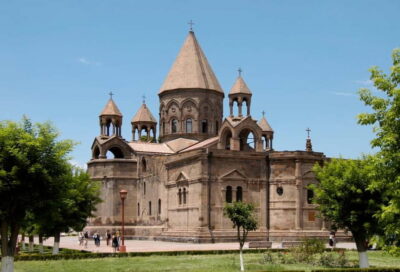
Echmiadzin, Hripsime, Gayane, Zvartnots Temple Tour
Read our review →Browse the lists this tour appears in