
Reviewed · GARNI TEMPLE & GEGHARD MONASTERY
Winter tour: Garni and Geghard, lavash baking
A day in Kotayk feels short, but the views land hard. You start at the Arch of Charents with one of the most famous Ararat angles, then you move to Garni, Armenia’s only pagan temple, with Greek style columns and nearby Roman-era bathhouse remains. You finish with Geghard, a dramatic rock-carved monastery where even the name connects to a spear story. The only real catch is you need to plan extra for Garni entrance tickets and you’ll handle food and drinks on your own.
I also like the pacing for winter: hotel pickup, a private group setup, and an English-friendly driver who stays with you for the whole tour. At 5 hours total, it’s enough time to feel you got the main sights without turning your day into a full marathon. Still, since this is not suitable for wheelchair users, you’ll want to be comfortable with walking and uneven ground at the sites.
In This Review
- Key Things I’d Not Skip on This Winter Garni, Geghard, Lavash Tour
- Arch of Charents: Where Ararat Looks Suspended
- Garni’s Pagan Temple: Greek Style Meets Armenian Myth
- Roman Baths and the Sense of Layered Time
- Lavash Baking Master Class: A Warm, Tasty Pause
- Geghard Monastery: A Rock Carved for Long Stories
- Ararat Views, Winter Timing, and What You’ll Feel on the Day
- Price and Value: $152 for Up to 3 People
- Who This Winter Tour Fits Best
- Should You Book the Garni, Geghard, Lavash Winter Tour?
Key Things I’d Not Skip on This Winter Garni, Geghard, Lavash Tour
- Arch of Charents Ararat view that looks like the mountain is hanging close to the sky
- Garni Temple as Armenia’s only pagan monument, built in the 1st century AD under King Trdat
- Greek style architecture at Garni that makes the site feel connected to the wider Hellenistic world
- Geghard’s cave monastery setting and the spear meaning behind its name
- Lavash baking master class to balance all that sightseeing with something hands on
- Private group and a driver with you the entire tour, which makes the timing feel smooth
More Garni and Geghard mornings:
- From Yerevan: Khor Virap, Garni, and Geghard Day Trip
★ 4.8 · 214 reviews - Khor Virap, Garni, Geghard, Syphony & Charents Arch + Lavash
★ 4.6 · 205 reviews - Garni Temple-Symphony of Stones-Geghard Monastery
★ 4.1 · 9 reviews
Arch of Charents: Where Ararat Looks Suspended
The tour kicks off at the Arch of Charents, and that first stop matters more than you might expect. From here, the view is said to look almost unreal in winter light, as if Ararat is hanging down from the sky rather than sitting in the distance.
This is the moment where you get oriented fast. Even if you have seen Ararat photos before, the scale hits differently when you’re standing where the view was framed for visitors. If you’re the type who likes getting the best photo early, this is your best time to do it, before the day fills up with stairs, stone steps, and warm up breaks.
The arch itself is named for Armenian poet Yeghishe Charents. It’s a nice touch because it reminds you this area is not just scenic, it’s cultural, too. In other words, you’re not only sightseeing rocks, you’re in a place loaded with Armenian identity.
Garni’s Pagan Temple: Greek Style Meets Armenian Myth
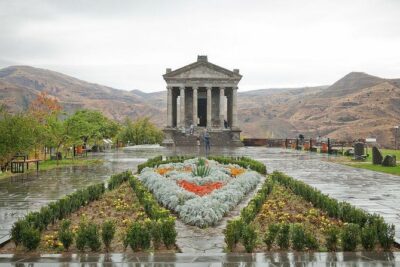
Next comes Garni, built in the 1st century AD by Armenian King Trdat. Garni is especially important because it’s described as the only monument connecting Armenia’s paganism and Hellenism era, dedicated to the sun god Mithra.
What I like about Garni is how it feels “architectural,” not just archaeological. The temple follows classical Greek architecture rules, and the result looks very similar to what you might recognize from Athens style temples. That can make the site easier to understand, even if you don’t know every date and dynasty by heart. You can just look and say, yes, this is built with intentional proportions and design.
Nearby, you’ll also see the bathhouse remains not far from the palace, built in the 3rd century AD, with features specific to Roman baths. That pairing is part of what makes Garni click. You see a pagan temple image, then you’re close to Roman bathhouse thinking, and suddenly the area feels like a crossroads of influences over time.
Winter note: plan for colder ground and a bit of careful footing. The temple and surrounding areas are stone, so if the weather is icy, take your time. Also, Garni entrance tickets are not included in the tour price, so check costs in advance so you are not surprised at the gate.
Roman Baths and the Sense of Layered Time
Even if Garni is the headline, I love what the bathhouse brings to the experience: context. The Roman-era bathhouse features give you a quieter story that runs under the big visual one. Instead of only worship and monuments, you get a hint of daily life and how people moved through public spaces.
In practical terms, this also helps your brain. When you’re standing in a place with centuries stacked on top, it’s easy to get overwhelmed. Seeing the bathhouse remains nearby gives you a second anchor to look at, so you can focus on one section at a time.
If you’re traveling in winter, this kind of layered stop is a win. You’re not just rushing to one photo spot and out. You can linger, look closer at details, and still stay within a comfortable 5-hour total duration.
Yet more lavash baking classes in Garni:
- Trip to Symphony of Stones, Geghard & Lavash Baking in Garni★ 4.6 · 3 reviews
- Group Tour: Garni, Symphony of Stones, Geghard, Lavash Baking★ 5.0 · 1,042 reviews
- Garni & Geghard Small-Group Day Trip with Lavash Baking★ 4.8 · 881 reviews
- Yerevan: Garni, Geghard, Symphony of Stones & Lavash Baking★ 4.8 · 758 reviews
Lavash Baking Master Class: A Warm, Tasty Pause
Between the big stone sites, the tour includes a lavash baking master class, and this is the part that often makes the day feel complete. Sightseeing can be cold, both literally and mentally. A hands on food experience resets your energy fast.
The tour includes bottled water and the class itself, so you’re not scrambling for refreshments during the activity. Also, since the tour is private, you generally get a calmer pace here than you would in a packed group where everyone wants to watch the oven at once.
I recommend taking this seriously as part of the cultural experience, not only as a snack stop. Lavash is everyday Armenian food culture, and learning the process helps you connect the meals you might have later to where it all starts. Even if you don’t end up remembering every step, you’ll walk away with a better feel for the craft.
Only keep in mind: food and drinks are not included. The lavash class is included, but you still need to plan your own lunch or other snacks.
Geghard Monastery: A Rock Carved for Long Stories
The final major stop is Geghard, a monastery built in the 4th century by Gregory the Illuminator, the First Armenian Catholicos. You’ll also hear it described as a cave monastery, and that detail changes how the place feels as soon as you arrive.
Geghard is famous for being carved out of rock, and the style makes you slow down. Even in winter, when you might want to move quickly, the environment naturally makes you look up, look around, and notice how the stone shapes the space. It’s not just a building, it’s a site that feels formed with the landscape.
The name story is one of the most memorable parts of this experience. It was initially called Airivank, which means cave monastery, then renamed Geghard. The name Geghard is explained as meaning spear, tied to the story of the Roman soldier whose spear pierced the body of Jesus Christ.
That might sound like a religious detail, but for me it helps you understand why the site is taken so seriously. The naming turns the monastery into more than a pretty rock cut out of a hillside. It becomes a place with layered meanings people carried through time.
Practical tip: bring a warm outer layer and focus on comfortable shoes. The tour duration is only 5 hours, but stone steps and uneven areas can add up quickly across two major sites.
Ararat Views, Winter Timing, and What You’ll Feel on the Day
This tour is designed for a compact day, with a total duration of 5 hours. That timing makes it realistic even when winter daylight is short. You’re not trapped in a long schedule, and it gives you freedom to do something else afterward, like a relaxed meal back at your hotel.
Hotel pickup and drop-off are included, and you’re asked to wait in the hotel lobby about 5 minutes before your scheduled pickup time. That little buffer matters. It reduces stress, especially in cold weather, because you are not standing outside longer than necessary.
Also, the transport is in an air-conditioned vehicle. In winter, air conditioning might seem odd, but vehicles still get stale. Better comfort helps you enjoy the stops instead of arriving already tired and stiff.
Driver support matters too. The driver speaks Armenian, English, French, and Russian, and one recent 5 out of 5 rating praised the driver because he stayed with the group the entire tour and was genuinely nice. That kind of steady support is a big deal on short trips.
Price and Value: $152 for Up to 3 People
The price is $152 per group up to 3, which is where the math starts doing real work. If you travel as a group and fill all three spots, you are roughly at about $50 per person for a packed mix of Garni, Geghard, Ararat views from the Arch of Charents, plus the lavash baking master class.
Even if you’re traveling solo or as a couple, you should still compare this to what each component might cost if booked separately. The included transport, bottled water, and hotel pickup take away the hassle of coordinating your own car for multiple sites. In a place like Kotayk, that convenience saves time and effort, which is often worth more than a small discount.
One more value note: Garni entrance tickets are not included, so treat the tour price as the base for guided movement and activities, then budget for site admission separately. Food and drinks are also not included, so plan a meal before or after the 5-hour window.
Who This Winter Tour Fits Best
This tour is ideal if you want a high-impact day without the stress of complicated logistics. You get the key must-sees in Kotayk, and you add a practical Armenian craft element with lavash.
I think it’s especially good for:
- Couples or small groups who want a private feel
- People who care about Armenian architecture and religious sites, not only scenic photos
- Travelers who like mixing big sights with a hands on food moment
It may be less ideal if:
- You need wheelchair access, since the tour is marked as not suitable for wheelchair users
- You dislike cold weather walking, even though the total duration is short
Should You Book the Garni, Geghard, Lavash Winter Tour?
If your goal is a tight, meaningful winter day in Kotayk, I’d say yes. The Ararat view from the Arch of Charents sets a strong mood, Garni gives you a rare look at Armenia’s pagan temple era, and Geghard delivers a rock-carved monastery experience with a name story you will remember. The lavash baking master class is the right counterbalance, turning the trip from only stone and photos into something you can taste and take away.
Just plan your extras: budget for Garni entrance tickets and sort out your own food and drinks. If you do that, this is good value for up to three people, with hotel pickup and a driver who stays with you the whole time.
More Cold-Weather Bookings near Garni
- Tsaghkadzor & Lake Sevan։ Winter Day Tour from Yerevan
★ 5.0 · 50 reviews - Winter Special – Tsaghkadzor, Kecharis, Abovyan & Lake Sevan
★ 4.0 · 10 reviews - Winter tour: Lake Sevan, Tsaghkadzor
★ 4.9 · 9 reviews - From Yerevan: Winter Private Tour to Tsaghkadzor & Kecharis
★ 3.7 · 3 reviews - Tsaghkadzor & Lake Sevan։ Winter Day Tour from Yerevan
★ 4.7 · 3 reviews
Newest listings across Garni
- Yerevan: Garni Temple, Geghard Monastery, Symphony of Stones★ 5.0 · 1 review
- “Journey Through Time: Garni Temple and Geghard Monastery”★ 5.0 · 1 review
- Garni, Geghard, and more: Gastro and Cultural Tour★ 5.0 · 1 review
- Garni, Geghard, Symphony of stones, Arch of Charents★ 5.0 · 1 review
- Private Day Trip to Garni, Geghard, Sevan & Tsaghkadzor★ 5.0 · 1 review
- Armenia: Private Tour to Garni Temple and Geghard Monastery★ 5.0 · 2 reviews
- Symphony of Stones, Garni, Geghard, photo stop Charents arch★ 5.0 · 2 reviews
- Trip to Symphony of Stones, Geghard & Lavash Baking in Garni★ 4.6 · 3 reviews
Garni Temple & Geghard Monastery, compared.
Garni, Symphony of Stones, Geghard, Lavash Baking
Read our review →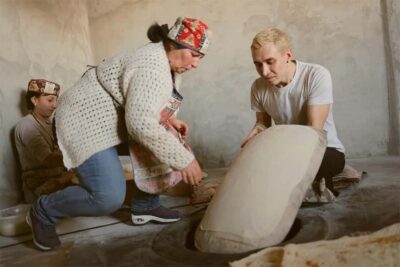
Garni & Geghard Small-Group Day Trip with Lavash Baking
Read our review →
Garni, Geghard, Symphony of Stones & Lavash Baking
Read our review →Garni, Geghard, Symphony of Stones & Lavash Baking
Read our review →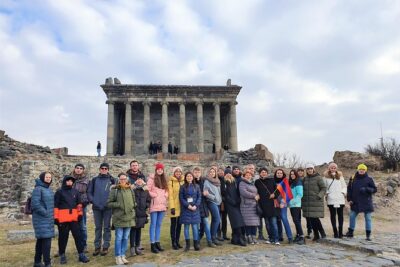
Garni pagan temple, Geghard monastery, Lake Sevan, Sevanavank
Read our review →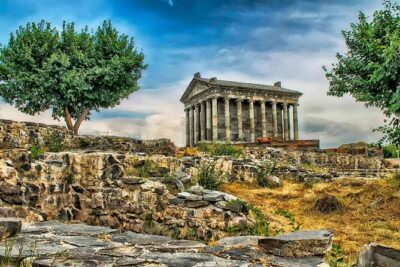
Khor Virap, Garni temple, Geghard, Lavash baking
Read our review →
Private 7-8-hour Khor Virap, Garni temple & Geghard monastery trip from Yerevan
Read our review →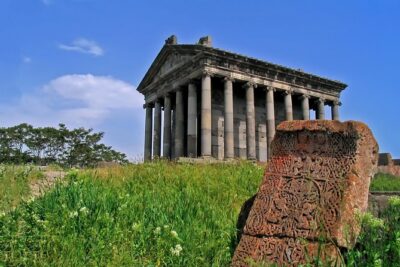
Garni, Geghard & Symphony Small-Group Day Trip with Lavash Baking
Read our review →Browse the lists this tour appears in