
Reviewed · LAKE SEVAN TRIPS
Yerevan: Gutanasar Volcano, Tsaghkadzor, and Lake Sevan Tour
A giant plow-cut in a volcano makes the day feel real fast. This half-day links Gutanasar’s black obsidian slopes, Tsaghkadzor’s big mountain views, and Armenia’s high-altitude monasteries into one tight route. I especially like the hands-on geology stop at Gutanasar and the way the plan gives you Lake Sevan viewpoints from multiple angles.
I also like that the tour is built for your time, not just your calendar. In about 6 hours, you get mountain panoramas, monastic history from the 11th to 13th centuries, and even a chance to swim at the lake during a dedicated stretch of free time. One thing to consider: the weather can change the route, and cable car time is optional but costs extra.
In This Review
- Key highlights at a glance
- A 6-hour Armenia sampler from Yerevan
- Gutanasar volcano: obsidian, fissures, and the 2,200-meter cut
- Tsaghkadzor ski resort and the cable car to 3,000 meters
- Pahlavuni monastic complex: 11th to 13th century faith and family power
- Sevanavank: the 200 steps climb for a 1,950-meter lake view
- Lake Sevan at 1,902 meters: boat, swimming, and water-balance stories
- Driving the Pambak Range: an abandoned road viewpoint from your SUV
- Price and value for a private group up to 4 people
- What to bring: shoes, warmth, and a plan for snowfall
- Should you book the Yerevan Gutanasar, Tsaghkadzor, and Lake Sevan tour?
- FAQ
- How long is the tour?
- Where do you get picked up?
- Is the tour private?
- What languages are the guides?
- What is included in the itinerary for Lake Sevan?
- Is the cable car included?
- How much extra is the fish lunch?
- How many steps do you climb at Sevanavank?
- What happens if there is heavy snowfall?
- Can I cancel and get a full refund?
Key highlights at a glance
- Gutanasar volcano fissure views from an extinct 2,200-meter summit, plus the chance to pick up obsidian
- Tsaghkadzor cable car to 3,000 meters for Mount Ararat and Lake Sevan views (with an extra 7€ fee)
- Pahlavuni family monastic complex from the 11th to 13th centuries, including a family tomb visit
- Sevanavank climb of 200 steps to two 9th-century domed churches and major lake views
- Lake Sevan at 1,902 meters with a boat cruise, shopping time, and even swimming
- SUV drive along an abandoned old road on the Pambak Range for a different angle on the lake
More days up at Lake Sevan:
- Group Tour: Lake Sevan (Sevanavank), Dilijan (Goshavank, Haghartsin)
★ 5.0 · 1,036 reviews - From Yerevan: Lake Sevan & Dilijan Full-Day Group Tour
★ 4.7 · 709 reviews - Group Tour: Tsaghkadzor (Kecharis, Ropeway), Lake Sevan, Trout barbecue treat
★ 5.0 · 511 reviews
A 6-hour Armenia sampler from Yerevan
This is the kind of tour that works when you want variety without feeling rushed all day. You start in Yerevan with pickup at your hotel, then you ride out into Gegharkunik Province for a day of geology, viewpoints, and religious sites, with one big “wow” per stop.
The best part for most people is the pacing. You are not just hopping between checkmarks. Each stop has a reason to be there. Gutanasar gives you the physical story of volcanic Armenia. Tsaghkadzor shifts the mood to winter sports culture and high-altitude views. Then the monasteries turn the volume down, letting you slow your eyes and notice details like domed churches and family tombs. Finally, Lake Sevan puts everything back together with wide, high-elevation water views.
Because it is a private group, the guide can steer the day around your pace. In this case, the operator is Levon and Aleksandr LLC, and the guide experience matters here. The day works best if you ask questions, especially around what you are seeing at the volcano and how the monastic complexes connect to local families and power.
Gutanasar volcano: obsidian, fissures, and the 2,200-meter cut
Gutanasar is the first stop for a reason. You need the geology to set the emotional tone for the rest of the day. From the volcano area at 2,200 meters, you look at a deep fissure that runs across the mountain. The description of it feels oddly practical once you are standing there: it looks like a giant plow line across solid stone.
Then comes the part you will actually remember on the drive home. The black volcanic glass, obsidian, is scattered across the local slopes, and you can collect a handful as a souvenir. That is not just a souvenir moment. It is a tactile way to connect the view to the material history of the area.
If you are the sort of person who likes science without the lecture, this stop hits a good balance. You can look at the visible layers of solidified lava in the cut, then turn your head and notice the texture of the ground where obsidian breaks out. The day feels less like a scenic drive and more like a place with a story written in stone.
Weather note you should take seriously: if there is heavy snowfall, Gutanasar may be replaced by Bjni fortress, monastery, and a mineral spring. That is not a downgrade by default. It is a different flavor of history and nature, and you still keep the overall flow of volcano-style scenery plus a cultural stop.
Tsaghkadzor ski resort and the cable car to 3,000 meters
Tsaghkadzor is your shift from volcanic geology to alpine views. The town is known as a training ground for generations of Olympic athletes thanks to its unique climate. Even if you are not skiing, it adds context. This is a mountain place that people used seriously, not just for vacations.
Your big view tool here is the cable car. You can take it up to 3,000 meters for panoramic scenes, including Mount Ararat and Lake Sevan. If you only choose one “upgrade” on this tour, this is the one most people will find worth it, since the altitude changes what you can see. Just keep in mind the cost: the cable car ride is 7€ per person.
What makes Tsaghkadzor feel valuable is that it does not only show a view. It gives you a framing device for the whole day. Seeing Lake Sevan from above helps the later monastery climbs make more sense. It also helps you understand why the lake is such a big deal for this part of Armenia.
There is also an optional zip line mentioned for the area. Whether you do it or not, the point is that Tsaghkadzor is not stuck in the past. It is a living recreation zone, and the scenery reads differently when you know it is used for training.
More Tsaghkadzor and Kecharis trips:
- Yerevan: Tsaghkadzor, Sevan Lake, and Sevanavank Guided Tour★ 4.9 · 224 reviews
- Private 6-7 hour Tsaghkadzor, Kecharis, Lake Sevan, Sevanavank Tour from Yerevan★ 5.0 · 94 reviews
- Private Tour to Tsaghkadzor, Kecharis Monastery, Lake Sevan, Sevanavank★ 5.0 · 86 reviews
- Private tour to Garni – Geghard – Tsaghkadzor (Kecharis)★ 5.0 · 57 reviews
Pahlavuni monastic complex: 11th to 13th century faith and family power
After you get your mountain views, the tour transitions into slower time with a monastic complex dating from the 11th to 13th centuries. This is where the day gains depth. Monasteries are not only about architecture here. They also signal influence, land, and the kind of families who shaped local politics and learning.
This complex was built by the Pahlavuni princely family. Their descendants later became known as commanders, scholars, poets, and statesmen. Even if you only catch a few details, that chain of influence is what makes the stop more than photo time. It connects stone buildings to people and ideas.
Inside the complex, you visit the family tomb. That detail matters. Tombs turn a monastery visit from sightseeing into something more grounded. You can stand there and understand why architecture and burial spaces often share the same sacred importance.
A practical tip for enjoying this stop: take a moment before you start walking to choose what you want to notice. Pick one thing, like stonework, layout, or the tomb area, and let the guide’s explanations land around that focus. It is the easiest way to make history feel present instead of abstract.
Sevanavank: the 200 steps climb for a 1,950-meter lake view
Sevanavank is the tour’s physical challenge, and it is a good one. You climb 200 steps to reach the monastic complex, and once you are up there, the pay-off is immediate: stunning views over Lake Sevan from about 1,950 meters.
This site has multiple layers. You will visit two 9th-century domed churches, which is a specific and rewarding architectural style. Domes are visually powerful even at a distance, and standing near them helps you see how the builders shaped the space.
The third building’s story is described as ambiguous, with a transformation over time. That kind of note is useful because it reminds you not to expect every stone to stay frozen in one purpose forever. Here, the monastery reads like a living institution that changed roles as needs shifted.
If you want the best photos, go at the right pace. The climb can be quick, but rushing reduces your ability to enjoy the slope view as you rise. Take it one section at a time, then let your eyes rest on the lake once you hit the top.
Lake Sevan at 1,902 meters: boat, swimming, and water-balance stories
Lake Sevan is the tour’s big emotional reset. You are at 1,902 meters above sea level, with sculpted mountain ridges around you, and the lake’s “blue” look gets explained by altitude and distance rather than just color alone.
You learn about the lake’s origins, including how the story is described as mysterious. You also hear about unsuccessful attempts to interfere with the water balance. That part can sound abstract until you are actually looking across the water and thinking about what it means for a high-elevation freshwater lake to change.
Time here is not only walking. You get free time, plus a boat cruise, shopping, sightseeing, and even the option to swim. The swim and the warmth factor matters. Warm clothing is recommended at the lake, even if the day started mild.
When you are planning what to do with your free time, decide early. If swimming is on your list, do it during the lake break, because conditions and temperature can change faster than you expect. If you care more about views, prioritize the shoreline paths and give yourself space to stare across the water without trying to capture every frame.
Also, do not treat the lake as a single viewpoint. The tour helps you understand that with the next part of the journey.
Driving the Pambak Range: an abandoned road viewpoint from your SUV
On the way back, you drive along an abandoned old road on the slope of the Pambak Range. This is one of those details that sounds small until you see what it does for the day. Instead of only looking at the lake straight on from viewpoints, you get a slanted perspective.
Because it is done in an SUV, it feels comfortable and practical. You are not dealing with a rough, slow crawl, but you still get that sense of traveling along a forgotten route. It also keeps the tour from feeling like pure stop-and-go sightseeing.
This is a good moment to put your impressions together. Earlier, you had volcano stone and obsidian underfoot. Then you had Tsaghkadzor altitude views. Now you have a viewpoint that frames the lake as part of a larger mountain system. Even if you only spend a few minutes looking out the window, the angle helps you build a mental map of the area.
Price and value for a private group up to 4 people
The price is $176 per group up to 4 people for a 6-hour tour. That matters because you are buying a whole package: pickup from your hotel, guide time (English or Russian), vehicle transport, and admission-based stops such as the volcano area, Tsaghkadzor, monastic complexes, and Lake Sevan.
For many people, the value comes from not having to coordinate multiple separate half-days. You also avoid the headache of timing public transport between places that are better reached by car. In a region like this, time is the real currency.
The optional costs are straightforward:
- Cable car is 7€ per person
- Fish lunch at the lake is optional at €5–10 per person
- A zip line is optional
So the “headline price” is a good baseline, and you can shape your day by adding only what you genuinely want. If you do the cable car, budget it. If you are traveling light and prefer to keep costs down, the rest of the experience still works well without it.
Who this fits best:
- You want a one-day sampler of volcano plus monasteries plus Lake Sevan
- You prefer a private group pace and pickup convenience
- You like learning from a guide, not just collecting stamps
It may be less ideal if you want a slow, long stay at each site. The tour is efficient by design. You get a lot, but you are not in one place for hours.
What to bring: shoes, warmth, and a plan for snowfall
This tour is in the mountains, so pack like you are going higher than you think you are. Bring:
- Comfortable shoes for walking and especially the 200-step Sevanavank climb
- Warm clothing, particularly for the Lake Sevan portion
Cable car day can also mean cooler air at 3,000 meters, so having layers helps you stay comfortable while you wait or take photos.
Finally, be mentally flexible about the volcano stop. If there is heavy snowfall, Gutanasar can be swapped for Bjni fortress, a monastery, and a mineral spring. That change keeps the tour moving even when the mountain road conditions do not cooperate.
Should you book the Yerevan Gutanasar, Tsaghkadzor, and Lake Sevan tour?
I think you should book if you want a compact day that feels like Armenia’s variety, not just one theme. The best reasons are the combination of Gutanasar obsidian geology, the real altitude views from Tsaghkadzor and Sevanavank, and the practical Lake Sevan time with boat cruise and swimming options.
If you are the type who hates surprises, you should still book, but plan your mindset. Weather can shift the volcano portion, and the operator handles that with a replacement plan.
If you want one shortcut to deciding, use this rule: if your dream Yerevan day includes monasteries plus a high lake view, this fits perfectly.
FAQ
How long is the tour?
The tour duration is 6 hours.
Where do you get picked up?
Pickup is included from your hotel in Yerevan.
Is the tour private?
Yes. It is listed as a private group tour.
What languages are the guides?
The live tour guide is available in English and Russian.
What is included in the itinerary for Lake Sevan?
At Lake Sevan you have photo time, a guided visit, free time, a boat cruise, shopping, sightseeing, walking, and swimming (during the lake portion).
Is the cable car included?
The cable car ride is optional. If you choose it, it costs 7€ per person.
How much extra is the fish lunch?
Fish lunch is not included. If you want it, it costs €5–10 per person.
How many steps do you climb at Sevanavank?
You climb 200 steps to reach the Sevanavank monastic complex.
What happens if there is heavy snowfall?
If there is heavy snowfall, Gutanasar is replaced with Bjni fortress, monastery, and a mineral spring.
Can I cancel and get a full refund?
Yes, you can cancel up to 24 hours in advance for a full refund.
Newest listings across Yerevan
- Yerevan’s Sights: Guided Walking Tour★ 5.0 · 1 review
- Private transfer Yerevan-Tbilisi-Yerevan in one day★ 5.0 · 1 review
- Yerevan tour in a retro Lada with drinks (Yerevan city tour)★ 5.0 · 1 review
- Private tour to Saghmosavank, Karmravor, Oshakan, Hovhannavank★ 5.0 · 1 review
- Day Tour to Amberd Fortress Aragats and Kari Lake From Yerevan★ 5.0 · 1 review
- Yerevan Walking Architecture Tour★ 5.0 · 1 review
- Mother Cathedral of Holy Echmiadzin★ 5.0 · 1 review
- Armenia – Guaranteed Departure – Book Now! – 2025★ 5.0 · 1 review
Lake Sevan Trips, compared.
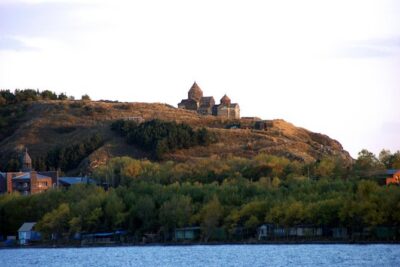
Lake Sevan (Sevanavank), Dilijan (Goshavank, Haghartsin)
Read our review →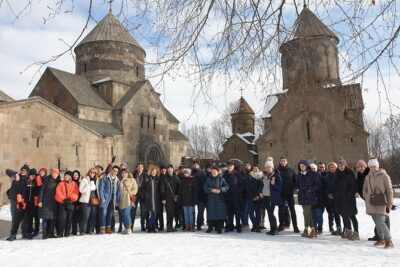
Tsaghkadzor (Kecharis, Ropeway), Lake Sevan, Trout barbecue treat
Read our review →Sevan, Dilijan, Ancient Monasteries: Haghartsin & Goshavank
Read our review →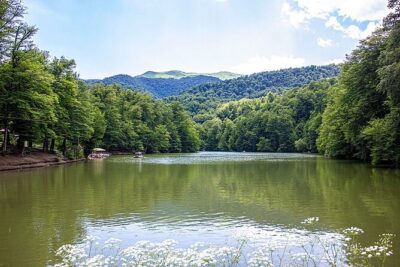
Sevan, Dilijan, Haghartsin, Goshavank, Lake Parz
Read our review →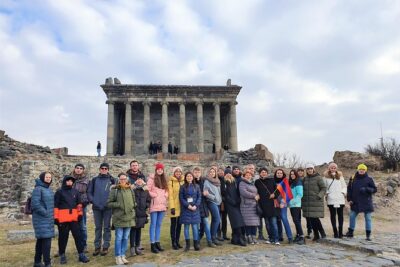
Garni pagan temple, Geghard monastery, Lake Sevan, Sevanavank
Read our review →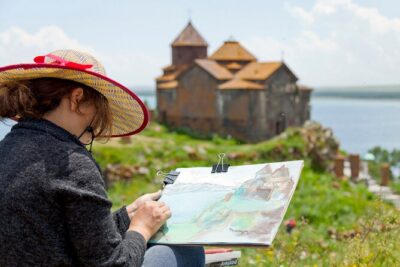
Armenia. Akhpat, Dilijan, Sevan, cascad Yerevan from Tbilisi
Read our review →Browse the lists this tour appears in