
Reviewed · KHOR VIRAP, NORAVANK & ARENI
Khor Virap, Garni Temple, Geghard, Echmiadzin, Zvartnots
Five major holy sights in one day. This Armenia route strings together Khor Virap and UNESCO-listed Geghard cave monastery, then keeps going to Garni, Echmiadzin, and the earthquake-ravaged ruins of Zvartnots. You also get smart photo breaks like the Azat Reservoir stop, so the day feels more like a guided road trip with milestones than a rushed checklist.
Two things I like a lot are the private group setup (priced for up to 3) and the fact that the tour mixes guided time with free time, so you can actually look instead of just moving. The other big plus is the way the religious sites are explained, especially the cave-carved churches and cathedral details.
One thing to consider: key sites have entrance tickets not included (Garni Temple, Zvartnots Temple, Symphony of Stones), and lunch is not included either, so you’ll want to plan your food timing.
In This Review
- Key highlights worth your attention
- A 9-Hour Private Route That Hits Armenia’s Most Photogenic Sacred Sites
- Khor Virap Monastery and the Azat Reservoir Photo Break
- Geghard Cave Monastery, Symphony of Stones, and Why UNESCO Matters Here
- Garni Temple and Charents Arch, Small Stops That Keep the Day Moving
- Hripsime and Gayane Churches, Early Christian Armenia in Two Carefully Timed Visits
- Echmiadzin Mother Cathedral and the Treasury Museum Details That Make It Feel Real
- Zvartnots Temple Ruins, Why You Still Feel the Scale
- Price and Logistics for a Private Group of Up to 3
- The Human Touch: What Makes the Day Feel Smooth
- Who This Tour Fits Best
- Should You Book This Khor Virap to Zvartnots Day Trip?
- FAQ
- How long is this tour?
- What is the price for this experience?
- Where is pickup and drop-off offered?
- What sites are included in the visit?
- Are entrance tickets included for all attractions?
- Is lunch included?
- Is Wi-Fi or bottled water provided?
- What languages are available for the driver?
- What should I bring for the day?
- Are alcohol, drugs, or food allowed in the vehicle?
Key highlights worth your attention
- Khor Virap viewpoint moments: a classic Armenia stop tied to pilgrimage culture, plus time for photos.
- Geghard cave monastery: UNESCO World Heritage site experience focused on architecture and religious artifacts.
- Symphony of Stones: a protected natural monument that’s more than a quick photo stop.
- Garni and pagan history: the preserved temple links pre-Christian Armenia to later royal life.
- Echmiadzin Mother Cathedral details: you get guided attention to the cathedral layout and the Treasury Museum.
- Zvartnots ruins at full scale: even damaged by an earthquake, the site still communicates grandeur.
More runs to Khor Virap, Noravank and the Areni cellars:
- From Yerevan: Khor Virap, Garni, and Geghard Day Trip
★ 4.8 · 214 reviews - Khor Virap, Garni, Geghard, Syphony & Charents Arch + Lavash
★ 4.6 · 205 reviews - Garni Temple-Geghard Monastery-Khor Virap Monastery tour
★ 4.7 · 5 reviews
A 9-Hour Private Route That Hits Armenia’s Most Photogenic Sacred Sites
This is a strong pick if you want a full Armenia highlight reel in one day, without dealing with planning, route logistics, or jumping between tickets on your own. The timing is built around a smooth drive out of Yerevan and back, with short focused visits rather than endless hours at one place.
I especially like that it is set up for small groups. The price is listed per group up to 3, and you also get free pickup and drop-off within Yerevan, plus bottled water and Wi-Fi in the vehicle. In practice, that combo makes the day feel calmer, even when the itinerary is packed.
The whole trip centers on what I call Armenia’s “stone story.” You’re moving through religious architecture carved into hillsides, built on sacred springs, and rebuilt across centuries, all while looking at the countryside that frames these monuments.
Khor Virap Monastery and the Azat Reservoir Photo Break
Khor Virap is one of those places where the name alone sets the mood. The monastery, built in 642, is known from the Armenian meaning of deep hole, and it functions as a shrine of the Armenian Apostolic Church with pilgrimage roots.
You’ll have about an hour here, with break time and time to visit and sightsee. That duration matters. It’s enough time to get your bearings, walk at your own pace, and take photos without feeling like you’re sprinting. The stop also makes a helpful start point because it sets up the day’s theme: Armenia as a place where faith and landscape are tightly linked.
Right after that, you stop at Azat Reservoir for a photo break. It’s at about 1,050 meters above sea level, and it’s located in Ararat province. Twenty minutes sounds short, but photo-stop breaks are often where you get the cleanest views and the best chance to reset before the next cluster of major monuments.
Practical tip: comfortable shoes matter on this kind of circuit, especially if you want to climb a bit for viewpoints.
Geghard Cave Monastery, Symphony of Stones, and Why UNESCO Matters Here
Geghard Monastery is the kind of stop that makes you understand why UNESCO listings exist. It’s a cave monastery, with the complex hollowed out into rock, and it’s included in UNESCO World Heritage. You’re not just looking at buildings from far away, you’re seeing medieval architecture built to work with the mountain itself.
Plan on about an hour at Geghard, with guided tour time plus free time. That split is smart, because the guided portion helps you decode the site, and the free time lets you absorb the scale and shadows without being rushed.
Geghard also comes with a story worth hearing. The monastery’s name is linked to the spear associated with Jesus Christ, with the spear said to be kept in the museum of Etchmiadzin. Even if you’re not into religious relic history, the fact that the site connects to another major stop later in the day makes the route feel linked instead of random.
Then you move to the Symphony of Stones, another protected natural monument. You’ll have about an hour total here, with photo-stop time, guided tour, and free time. This is where I’d tell you not to treat it like a quick roadside photo. Take a walk slowly. The “stone symphony” concept makes more sense when you move around the formations and notice how weather and time shape the rock shapes.
Tickets note: entrance tickets for Symphony of Stones are not included, so budget for that if you want to enter rather than just view from the roadside.
More Garni and Geghard mornings:
- Garni Temple-Symphony of Stones-Geghard Monastery★ 4.1 · 9 reviews
- Garni temple Geghard Monastery Stone Symphony★ 5.0 · 6 reviews
- Garni, Geghard & Symphony of Stones: A Scenic Cultural Tour★ 5.0 · 5 reviews
- Essential Armenia Tour Geghard, Garni, Sevan, Homemade lunch★ 4.9 · 5 reviews
Garni Temple and Charents Arch, Small Stops That Keep the Day Moving
Garni Temple is a change of pace in the best way. It is the pagan temple built in the second half of the 1st century by King Trdat III, and it’s described as the only preserved pagan temple on Armenian territory. After Christianity spread, it became a summer residence linked to royal life, so you get a mix of pre-Christian and later history layered in one place.
You’ll have around two hours near Garni. That’s enough time to see the main temple area at a relaxed pace, plus take photos without feeling like you only have one window of light. It also gives you room to wander a bit and decide how much time to spend before moving on.
After Garni, there’s a shorter photo-stop at Charent’s Arch, plus a guided portion and about a 30-minute walk time. The arch was erected in 1957 and dedicated to Armenian poet Yeghishe Charents. This isn’t a “big sacred monument” moment, but it’s a useful reminder that Armenia’s identity is carried not only by churches and monasteries, but by literature and public memory too.
Ticket note: Garni Temple entrance tickets are not included, so confirm the on-site cost with your guide driver before you settle into the visit.
Hripsime and Gayane Churches, Early Christian Armenia in Two Carefully Timed Visits
Saint Hripsime Church is one of the early heavy-hitters on this route. It was founded in the 7th century by Catholicos Komitas I Aghtsetsi, placed in the area of the sepulcher of Saint Hripsime. Since 2000, Saint Hripsime Temple has been included in UNESCO World Heritage.
You’ll have about an hour here, including photo-stop time, guided tour, and sightseeing. This is a stop where guided context really helps, because early Christian Armenian architecture can look similar at first glance if you do not know what to look for. The guided portion gives you those cues, and the free time lets you check details at your own pace.
Next is Saint Gayane Church, built in the 7th century on the place of an earlier 4th century chapel. It’s described as one of the best monuments of Armenian architecture, and the relics of Saint Gayane are kept in the southern wall of the temple near the altar niche.
You’ll have another hour here, with a mix of guided and free time. One thing I like about pairing Hripsime and Gayane is that you can compare the feel of each site. The day shifts from cave and pagan temple energy into focused sacred architecture, which helps you digest what you’ve already seen.
Practical note: these church stops are not built for long snack breaks. If you need food, plan it outside the key religious focus time.
Echmiadzin Mother Cathedral and the Treasury Museum Details That Make It Feel Real
Etchmiadzin Mother Cathedral is the center of gravity for a lot of what you’re seeing. You’ll have about an hour here for visit, guided tour, sightseeing, and walking time. The name is described as place of the descent of the Only Begotten, and the cathedral includes not just a main altar in the eastern part, but also another altar in the middle at the site of Christ’s descent.
That layout detail matters, because it changes how you view the building. You’re not only looking at walls and domes. You’re tracking the meaning of space.
The right-hand boundary of the cathedral is also where the Treasury Museum is located. It’s described as housing relics, church clothes embroidered with gold and pearls, catholicos staffs and crosses, and many ritual objects made of gold, silver, and ivory. If you like religious art and material culture, this is the moment where you get to see how devotion shows up in objects.
One more reason this stop works well in a day trip: it also ties back to Geghard’s spear story. That connection gives your route a kind of thread, and it makes the day feel more coherent.
Zvartnots Temple Ruins, Why You Still Feel the Scale
Zvartnots Temple, meaning Temple of Vigil Forces, was built in the 7th century over 20 years. The key story here is loss and resilience. The temple was destroyed by a powerful earthquake in the 20th century, and only the ruins remain.
You’ll have about an hour here, with guided tour and time for sightseeing and photos. And here is the main value: even in ruins, the site communicates scale. When you look at how ruins sit in space, you start to understand the building’s original ambition.
Ticket note: entrance tickets for Zvartnots Temple are not included. If you care about going inside or accessing key viewpoints, factor that into your day budget.
Also, consider your photo planning. Ruins can be best photographed from certain angles, and having time rather than a quick glance helps you get something you’ll actually keep.
Price and Logistics for a Private Group of Up to 3
The price is listed as $146 per group up to 3 for a 9-hour day. For a private group, that can be good value because you’re paying for transportation plus guided time on multiple major sites. It’s not just a driver taking you around.
You also get free pickup and drop-off within Yerevan, transportation on comfortable vehicles with professional drivers, bottled water, and Wi-Fi in the vehicle. There’s also traffic accident insurance and taxes included, which reduces little-but-real stress when you’re trying to travel smoothly.
Guide service is optional, but guided tours are part of the experience at several stops like Geghard, Symphony of Stones, Charent’s Arch, Saint Hripsime, Saint Gayane, Echmiadzin Cathedral, and Zvartnots. In plain terms, this is a tour where you are meant to understand what you’re looking at, not just point a camera.
The trade-off is that lunch is not included, and entrance tickets are not included for Garni Temple, Zvartnots Temple, and Symphony of Stones. So if you only eat once that day, you’ll feel it. I recommend planning a quick lunch strategy before you get locked into religious site time blocks.
The Human Touch: What Makes the Day Feel Smooth
The best thing I see from the reviews is consistent praise for hospitality, punctuality, and flexibility. That matters a lot on this kind of route, because weather, walking pace, and photo timing can easily throw off a rigid plan.
One review highlighted that the guide was not overbearing and chatted at the right moments. That is exactly what you want. You can ask questions without feeling like a lecture is chasing you down the road.
Another review specifically praised a Japanese explanation. That suggests the guide or setup may be more flexible on language than the basic driver languages you see listed. Even so, I’d treat Japanese support as a bonus rather than a guarantee, then confirm expectations with the provider when you reserve.
Who This Tour Fits Best
This tour fits you if you:
- Have limited time in Armenia and want a focused circuit of the most famous sacred sites.
- Want a private day trip without the hassle of ticket lines and route decisions.
- Like guided explanations, especially for cave architecture and cathedral details.
- Prefer short museum and church visits with breathing room for photos.
It might not be ideal if you:
- Hate walking, since most stops include some walking and sightseeing time.
- Want lunch included or a very food-forward day.
- Plan to visit every site and view it as a budget priority, since several key entrances require separate tickets.
Should You Book This Khor Virap to Zvartnots Day Trip?
I’d book it if you want a well-paced, guided highlight day that connects Khor Virap, Geghard, Garni, Echmiadzin, and Zvartnots into one story. The UNESCO value is real at Geghard, and the route keeps returning to meaningful Armenian religious architecture rather than scattering random stops.
Also, the private group setup for up to 3 plus Yerevan pickup is a practical win. You’ll spend less time figuring things out and more time looking closely at what makes each site special.
If you’re deciding between self-guided and this tour, my advice is simple. Choose the tour when you want context and convenience in one package. Choose self-guided only if you’re comfortable handling tickets and you already know what each monument is trying to communicate.
FAQ
How long is this tour?
The tour duration is 9 hours.
What is the price for this experience?
The price is $146 per group up to 3.
Where is pickup and drop-off offered?
Free pick-up and drop-off within Yerevan is included, and pickup can be organized at any location in Yerevan.
What sites are included in the visit?
The tour includes Khor Virap Monastery, Azat Reservoir (photo-stop), Geghard Monastery, the Symphony of Stones, Garni Temple, Charent’s Arch, Saint Hripsime Church, Saint Gayane Church, Echmiadzin Mother Cathedral, and Zvartnots Temple.
Are entrance tickets included for all attractions?
No. Entrance tickets are not included for Garni Temple, Zvartnots Temple, and Symphony of the Stones.
Is lunch included?
Lunch is not included.
Is Wi-Fi or bottled water provided?
Yes. Wi-Fi is included in transportation, and bottled water is provided.
What languages are available for the driver?
The driver is listed as English and Russian.
What should I bring for the day?
Bring comfortable shoes, a camera, and water.
Are alcohol, drugs, or food allowed in the vehicle?
Alcohol and drugs are not allowed, and food and drinks are not allowed in the vehicle.
More Cathedral Days at Echmiadzin and Zvartnots
- Group Tour: Echmiadzin Cathedral & churches, Zvartnots Temple
★ 5.0 · 352 reviews - Yerevan: Khor Virap, Garni, Geghard, Echmiadzin, & Zvartnots
★ 4.9 · 192 reviews - Group Tour: Echmiadzin Mother Cathedral, Hripsime, Zvartnots
★ 4.7 · 159 reviews - Private Half-day Echmiadzin Cathedral, Hripsime & Zvartnots Temple from Yerevan
★ 5.0 · 95 reviews - Khor Virap, Echmiadzin & Zvartnots UNESCO Small-Group Tour
★ 4.8 · 67 reviews
Newest listings across Garni
- Yerevan: Garni Temple, Geghard Monastery, Symphony of Stones★ 5.0 · 1 review
- Winter tour: Garni and Geghard, lavash baking★ 5.0 · 1 review
- “Journey Through Time: Garni Temple and Geghard Monastery”★ 5.0 · 1 review
- Garni, Geghard, and more: Gastro and Cultural Tour★ 5.0 · 1 review
- Garni, Geghard, Symphony of stones, Arch of Charents★ 5.0 · 1 review
- Private Day Trip to Garni, Geghard, Sevan & Tsaghkadzor★ 5.0 · 1 review
- Armenia: Private Tour to Garni Temple and Geghard Monastery★ 5.0 · 2 reviews
- Symphony of Stones, Garni, Geghard, photo stop Charents arch★ 5.0 · 2 reviews
Khor Virap, Noravank & Areni, compared.
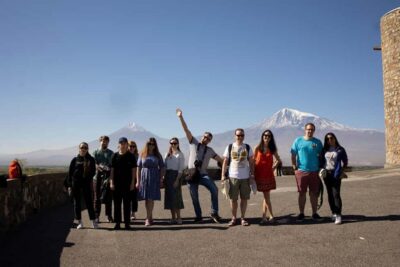
Khor Virap, Noravank and Birds’ Cave Trip with Wine Tasting
Read our review →
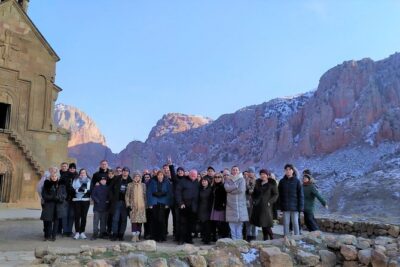
Khor Virap, Noravank, Tatev monasteries (wayback on Ropeway)
Read our review →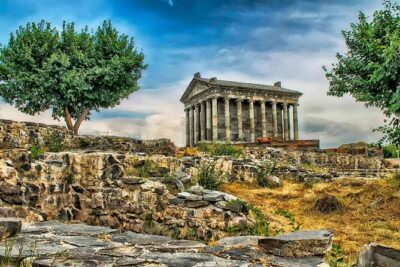
Khor Virap, Garni temple, Geghard, Lavash baking
Read our review →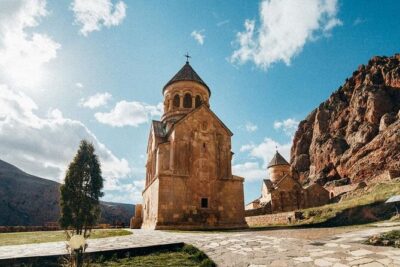
Khor Virap, Noravank & Birds’ Cave Day Trip with Wine Tasting
Read our review →
Private 7-8-hour Khor Virap, Garni temple & Geghard monastery trip from Yerevan
Read our review →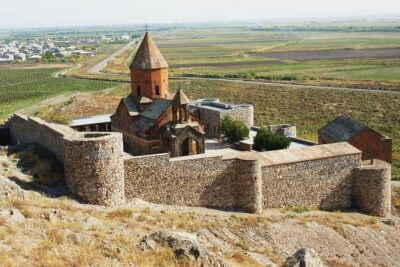
Browse the lists this tour appears in