
Reviewed · THINGS TO DO IN GYUMRI
Group Tour: Gyumri sightseeing, Black Fortress, Harichavank
Gyumri tells a different Armenia story. I love the way this day strings together local life at the Urban Life Museum and the stark drama of the Black Fortress in one smooth loop, and it also gives you a real taste of Shirak region spirituality at Harichavank. The main catch to plan for is that this is a long day with several stops, and the guide experience runs English and Russian together, which can feel a bit uneven if you prefer one language only.
You start with a drive out of Yerevan into Shirak valley, then spend the bulk of the day exploring on foot and by bus rides between sights. I also like that the tour includes practical extras like water, sweets, WiFi on the ride, and admissions, so you are not constantly budgeting on the fly. If you want a relaxed stroll with minimal walking, this might feel like more movement than you expected, so bring comfortable shoes and expect some outdoors time.
In This Review
- Key highlights that make this tour a strong choice
- Gyumri, the Black Fortress, and Harichavank: the day-trip logic
- Leaving Yerevan: meeting point, timing, and comfort on the road
- Dzitoghtsyan Museum: Urban life in a 1872 mansion of red tuff
- Old Gyumri walking time: smiths’ hammers and film-shot streets
- Black Fortress: what an abandoned hilltop really feels like
- Lunch in Gyumri: national-style food with cash-first reality
- Harichavank: St. Gregory, St. Astvatsatsin, and a chapel that towers over a canyon
- The walking and timing reality: why 11 hours can feel long
- Language and guide style: enjoy the stories, but know the format
- Price and value: what you get for $41 and what costs extra
- Who should book this trip, and who should skip it
- Should you book this Hyur Service day trip?
- FAQ
- How long is the Gyumri, Black Fortress, and Harichavank tour?
- Where does the tour start?
- What sights are included in the tour?
- Are admissions included in the price?
- What is included besides the guide?
- What about lunch, is it included?
- Should I bring cash for lunch?
- What should I wear?
- Is the tour wheelchair accessible?
- When should I arrive at the meeting point?
Key highlights that make this tour a strong choice
- Urban Life Museum in a 1872 mansion: See how Gyumri’s architecture and everyday culture were shaped in Shirak.
- Dzitoghtsyan red tuff details: The museum building itself is a lesson in local building materials.
- Old Gyumri streets and earthquake survivors: Walk areas where houses endured the 1988 earthquake.
- Black Fortress views over Alexandrapol’s past: Tour a black tuff hilltop ruin linked to the ancient fortress.
- Harichavank churches and an earthquake-split rock chapel: Gothic-feeling stone work with a dramatic geology story.
- Guides who bring the sites to life: You may meet guides like Hayk, Manya, Marina, or Tatev, and many are known for storytelling energy.
Yet more Things to Do in Gyumri
- Museum of Illusions Tour
★ 5.0 · 84 reviews - Gyumri Architectural Walking Tour
★ 4.9 · 11 reviews - Paint Your Own Traditional Doll
★ 5.0 · 10 reviews
Gyumri, the Black Fortress, and Harichavank: the day-trip logic
This trip works because it moves from city life to old defense walls to living religion. Instead of treating Gyumri as a quick photo stop, you get time to understand the place, then you switch gears at the Black Fortress, and finally you close with Harichavank, one of the most famous monastic centers in Armenia.
Gyumri is often seen as Armenia’s cultural capital, but the best part is how tangible it feels. The streets, the buildings, and the local rhythm do not read like a staged history walk. You are seeing a working city in Shirak, and that matters when you are trying to learn beyond Yerevan.
If you are short on time and want a different side of Armenia, this is one of the clearer ways to do it in 11 hours. You are not just traveling outward, you are also building a story: how people lived, how the city defended itself, and how spiritual centers shaped the region.
Leaving Yerevan: meeting point, timing, and comfort on the road
The day starts at the Hyur Service head office. Arrive 15 to 30 minutes early for check-in, because you want to settle before the group moves out.
You get air-conditioned transportation, plus bottled water and WiFi during the trip. That might sound like basic perks, but in practice it helps on a longer route day when you can end up spending hours in a bus, even with sightseeing breaks.
One small practical note: seats are not fixed in advance. If you care about where you sit for views, go a little earlier so you can pick your spot without stress.
The driving time between Yerevan and Shirak valley is part of the day’s rhythm. Use it to plan your photos and decide what you want to prioritize, because once you are in Gyumri and then Harichavank, there is a lot to see and not a lot of spare time for lingering.
Dzitoghtsyan Museum: Urban life in a 1872 mansion of red tuff
The first major cultural stop is the Museum of National Architecture and Urban Life, housed in the Dzitoghtsyan mansion. This building was built in 1872 by the merchant Petros Dzitoghtsyan using red tuff stone from Shirak.
That detail matters. When you enter, you are not just looking at indoor exhibits. You are inside a structure that already tells you how Gyumri’s material choices created its look and feel. Armenia’s stone architecture can feel abstract until you see it up close and understand what locals used and why.
In 1984, the Museum of Urban Life was established in this mansion. Inside, you will see displays focused on Gyumri’s history, culture, and architecture. Plan to spend real time here, not just a quick sweep. The value is in connecting the city you see outside later with what you learn about how it developed.
If you are the type of traveler who loves context, this is the anchor stop. It gives you the background to make sense of later sights like the old street houses and the defensive fortress walls.
Point the car somewhere else for the day:
- Private Day Trip From Yerevan to Gyumri★ 4.8 · 10 reviews
- Professional Armenian Costume Photo Shoot★ 5.0 · 8 reviews
- Gyumri: Private Guided Walking Tour By A Local Guide★ 5.0 · 6 reviews
- Group Tour to Gyumri: City tour, Monasteries and Culture★ 4.4 · 6 reviews
Old Gyumri walking time: smiths’ hammers and film-shot streets
After the museum, you shift into Gyumri city center time, with a mix of guided elements, photo stops, and walking.
One of the charming notes here is the old-street feel. You may hear the sounds associated with the smiths’ hammers, and that small sensory detail helps you picture daily life rather than just monuments.
You are also walking through areas where many famous Armenian films were shot. That means the streets have a cinematic character, with angles and facades that look natural on screen and in real life. If you like recognizing locations you have seen in movies, this is a fun way to get a connection that goes beyond dates and facts.
The earthquake story is also part of the walk. Some old houses resisted the devastating 1988 earthquake, and seeing that resilience makes the architecture feel less like decoration and more like survival engineering.
How much time do you get? You will have a longer block in Gyumri city, with guided components and free time mixed in. So you can listen during the guide-led part, then step out and get your bearings, grab extra photos, and slowly roam.
Black Fortress: what an abandoned hilltop really feels like
Next comes one of the day’s most striking contrasts. The Black Fortress is an abandoned Russian imperial hilltop fortress made of black tuff. It is linked to the southern castle of the ancient Alexandrapol fortress, which gives it deeper roots than the word abandoned might suggest.
When you approach a fortress ruin, it is easy to focus on what is missing. Here, the opposite is more rewarding. Pay attention to how the tuff darkens the structure and how the geometry of the military buildings creates a strong silhouette even in partial ruin.
The viewpoint is the other big reason people love this stop. From the fortress area you get views of the Statue of Mother Armenia and Shirak stadium. Even if you are not there for long, those views create a sense of place, tying this hillside into the wider Armenian landscape you have been traveling through.
You will get a guided visit plus time to walk and take photos. If you bring a camera, this is a good time to set up for golden-hour light if the timing fits, but even in flat daylight the contrast of black stone and valley sky is dramatic.
One practical thing: wear shoes you trust. The walking at a hilltop fortress can mean uneven ground, especially if the surface is rocky or dusty.
Lunch in Gyumri: national-style food with cash-first reality
Lunch is built into the schedule with about an hour in Gyumri. The meal is at a national-style restaurant, with three meal options available on the way.
Here is the practical tip that will save you time. You pay upon arrival, and it is best to carry cash drams because credit card is not always possible at the restaurant.
The lunch price range is 3900 to 4900 AMD, which is roughly 10 to 13 USD. That cost sits outside the tour price, so treat it as part of the total day budget.
If you care about authenticity, you will likely do better if you keep expectations flexible. The meal is described as national-style, but you should also understand it is organized for groups, so you may not get to choose an ultra-local family kitchen. Still, this stop is valuable because it breaks up the day without sacrificing time for more sights.
Harichavank: St. Gregory, St. Astvatsatsin, and a chapel that towers over a canyon
The final stop is Harichavank, a prominent spiritual and cultural center in the Shirak region. This is where the day changes tone from city sights to monastic quiet and long-looking stone.
The monastery complex includes St. Gregory and St. Astvatsatsin churches, established before the 13th century. That gives you a mix of eras in one place, and you will notice how different parts of the complex communicate through their design choices.
There is also a smaller chapel nearby that makes Harichavank unforgettable: it is built on a piece of rock that split from the cape during an earthquake. The chapel now towers over the canyon. This is one of those details that instantly links Armenian geological history to architecture, and it makes the site feel lived-in, not just historic.
You will have a guided visit plus photo stops and free time. Even with a shorter timeframe, you can still step back and absorb the scale, then return to specific buildings for close inspection. Bring patience for the walking paths. The value here is in slowing down once you arrive.
Some guides add extra charm at Harichavank. In past departures, guides like Hayk have been known for entertaining storytelling, and other guides have even used brief singing to show off the acoustics of the church spaces. If your guide does something like that, it is worth leaning into, because it is a small way of understanding why this place feels different from a museum hall.
The walking and timing reality: why 11 hours can feel long
This day-trip is 11 hours total, so plan your energy like you would for a full-day museum plus site-hopping day at home.
Your time blocks are split like this: Black Fortress is a shorter stop around 30 minutes, the Museum of Urban Life has about 70 minutes, lunch takes about an hour, you get a larger chunk in Gyumri around 110 minutes, and Harichavank is about 30 minutes with photo stop and free time.
That means you are not rushing between every single sight. But you are also not hanging out for hours either. You will move, get oriented, walk, and then move again.
The good news is that you have built-in pacing. The bus ride breaks up the day, and the included water and sweets help keep the energy up. The WiFi is also useful if you want to quickly check maps or confirm details while waiting.
The not-so-fun part is clothing rules. Shorts and short skirts are not allowed. Even if it is warm, plan for respectful coverage, especially when you reach the monastery where attire expectations tend to be stricter.
Also, bring weather-appropriate clothing. Shirak valley conditions can change, and you will be outdoors during walks.
Language and guide style: enjoy the stories, but know the format
The tour guide provides English and Russian consecutively. That means the group is likely switching between languages depending on the segment.
Most days, the guide is excellent at keeping things moving, and many guides you might meet are praised for kindness and energy. Names that have come up include Hayk, Manya, Marina, Tatev, Karen, Lebon, Josef, Hovsep, and even singing or extra performance moments at Harichavank.
Still, there is a practical consideration. If you strongly prefer one language and dislike switching, you may feel like you are getting only part of the commentary at certain moments. The workaround is simple: listen when the segment matches your language, then switch to photos and independent observation during the other language portion.
In other words, you can still get a lot from the day. Just adjust your expectations about how much you will understand every single sentence.
Price and value: what you get for $41 and what costs extra
At $41 per person, this tour is priced as a full-day, guided route with admissions included. That included admissions piece matters because you are not paying separate entrance fees for each stop.
You also get:
- A professional guide with English and Russian consecutive support
- Air-conditioned transportation
- Bottled water, sweets, and WiFi
- Skip the ticket line
The biggest extra cost is lunch, 3900 to 4900 AMD (10 to 13 USD). You also need to carry cash drams in case the restaurant cannot take credit cards.
So is it good value? For me, the logic is this: you are paying for a single organized day that takes you to Gyumri plus Black Fortress plus Harichavank, which are not in the same neighborhood. If you tried to DIY the route, you would spend time coordinating transport and you would lose the structured storytelling that connects the sites.
Also, the time investment is heavy but efficient. You see a museum, a fortress viewpoint, a long walking chunk in Gyumri, and a monastery complex all in one day.
Who should book this trip, and who should skip it
This tour is a strong match if you:
- Want to get out of Yerevan and see another Armenian city
- Like history that comes through everyday streets, not just monuments
- Enjoy architecture, churches, and the story behind stone buildings
- Are comfortable with moderate walking and outdoor time
It is less ideal if you:
- Need wheelchair accessibility. This tour is not suitable for wheelchair users.
- Want a purely single-language guided experience, because English and Russian are both part of the format.
- Have a very low tolerance for a long day (11 hours) with multiple structured stops.
Should you book this Hyur Service day trip?
I would book this if your goal is a well-paced day that teaches you how Gyumri works, not just how it looks. The Urban Life Museum at Dzitoghtsyan gives you the context you need. Black Fortress supplies that cinematic, black-stone feeling with big valley views. Harichavank ends the day with a powerful mix of church architecture and a geology-driven story tied to an earthquake.
If you can handle language switching and you pack cash for lunch, this is a good use of time. For me, the best reason to go is simple: you walk through old Gyumri streets, then you climb toward the Black Fortress, and then you finish in a monastery that feels dramatically connected to the land.
FAQ
How long is the Gyumri, Black Fortress, and Harichavank tour?
The total duration is 11 hours.
Where does the tour start?
It starts at Hyur Service (Head Office).
What sights are included in the tour?
You visit Gyumri, the Museum of National Architecture and Urban Life (Dzitoghtsyan), the Black Fortress, and Harichavank Monastery.
Are admissions included in the price?
Yes, admissions are included.
What is included besides the guide?
You also get air-conditioned transportation, bottled water, sweets, and WiFi.
What about lunch, is it included?
Lunch is not included. It costs 3900 to 4900 AMD, and you pay upon arrival.
Should I bring cash for lunch?
Yes. The tour information notes it is not always possible to pay for lunch by credit card, so bring cash drams.
What should I wear?
Bring comfortable shoes and weather-appropriate clothing. Shorts and short skirts are not allowed.
Is the tour wheelchair accessible?
No, this tour is not suitable for wheelchair users.
When should I arrive at the meeting point?
Please arrive 15 to 30 minutes before the activity starts for check-in.
Newest listings across Gyumri
- Gyumri-Zvartnots airport transfer★ 5.0 · 1 review
- Private Traditional Coffee And Dessert Making Activity★ 5.0 · 2 reviews
- 3 Day Private Tour with an Exclusive Visit to Gyumri★ 5.0 · 3 reviews
- Discover Gyumri by Train, the City of Art and Culture★ 4.9 · 3 reviews
- Make Your Own Gyumri Door at Varem Marem Studio★ 5.0 · 4 reviews
- Paint Your Own Traditional Doll★ 5.0 · 4 reviews
- Armenia’s Cultural Capital։Gyumri★ 5.0 · 4 reviews
- Museum of Illusions Gyumri★ 4.2 · 5 reviews
Things to Do in Gyumri, compared.

Group Tour to Gyumri: City tour, Monasteries and Culture
Read our review →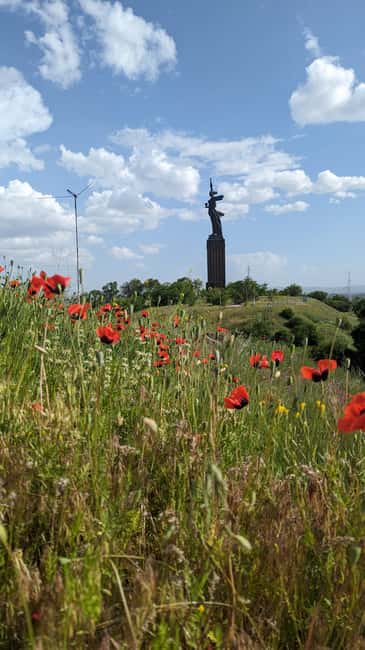

Private Professional Armenian Costume Photo Shoot
Read our review →Browse the lists this tour appears in