
Reviewed · WALKING TOURS
Gyumri Architectural Walking Tour
Gyumri’s streets make sense fast. In a short 2 hours, you get the story behind Kumayri’s historic buildings, from volcanic tufa facades to the people who built them, explained by Ashot Mirzoyan, a local architect and founder of the City Research Center NGO. The result feels more like a guided conversation with the city than a checklist of sights.
Two things I really like about this experience are how tightly it focuses on 18th and 19th century urban architecture, and how Ashot connects what you see to how locals lived. You’ll notice the narrow street layout, then the opulent old mansion fronts, theaters, coffeehouses, and workshops made with black and red tufa, some restored, some still worn down.
One consideration: because the tour is only 2 hours, you will likely want to follow up with extra self-guided time afterward if you enjoy taking photos or asking follow-up questions beyond the main route.
In This Review
- Key things to know before you go
- Meeting point in Vardanants Square, and why the start matters
- Kumayri’s narrow streets, 18th to 19th century architecture, and what to watch for
- Volcanic tufa in black and red, and why the stone changes the whole look
- What Ashot teaches you about people, values, and city life
- Restoration and reconstruction, and how to read a facade under repair
- Duration, pace, and what to wear for a 2 hour walk
- Price and logistics that affect value
- Who this tour is best for
- Should you book the Gyumri Architectural Walking Tour with Ashot?
- FAQ
- Where do I meet the guide?
- How long is the Gyumri Architectural Walking Tour?
- What does the tour cost?
- Is hotel pickup included?
- Is the tour wheelchair accessible?
- What is the cancellation policy?
Key things to know before you go
- Local architect guide (Ashot Mirzoyan): He leads with architectural context, not just general sightseeing.
- Kumayri district focus: You are walking through an area with authentic urban Armenian architecture.
- Historic building density: The district includes over 1,500 historic structures from the 18th and 19th centuries.
- Volcanic tufa everywhere: Expect to see how black and red tufa shapes facades, texture, and character.
- Questions welcome: The private group format keeps the tone flexible and conversational.
- A slow, thoughtful pace: It is designed for understanding, not rushing.
More walking routes through Gyumri:
- Gyumri: Private Guided Walking Tour By A Local Guide
★ 5.0 · 6 reviews - Cultural Walking Tour in Yerevan with Armenian food Tastings
★ 5.0 · 334 reviews - Private sightseeing and walking tour in Yerevan
★ 5.0 · 78 reviews
Meeting point in Vardanants Square, and why the start matters
You meet your guide in Gyumri’s central Vardanants Square, in front of the statue. That matters more than you might think. Starting from a recognizable public point helps you get your bearings quickly, especially in a city where the charm is in the street-level details, not big monuments.
Ashot is your guide, and that is a key detail. He is not just a translator or a storyteller who happens to love architecture. He is a local architect, and he founded the City Research Center NGO. In practice, that usually means two things during a walk: you get design-minded explanations, and you also get opinions about preservation and reconstruction, not just facts.
The tour is a private group, so you are not squeezed into a one-size-fits-all pace. If you are the type who asks why something is built a certain way, this setup is helpful.
Kumayri’s narrow streets, 18th to 19th century architecture, and what to watch for
The heart of this experience is the Kumayri district in Gyumri, Armenia’s second largest city and a cultural center. This is one of the few places where authentic urban Armenian architecture still survives in the region, and the tour is built around that idea.
As you walk, pay attention to how the narrow streets guide your eyes. These streets create a “close-up” feeling. Instead of seeing buildings from far away, you are reading them like pages: entrances, window arrangements, facade patterns, and the way buildings hold their shape down the block.
You are also going to encounter a mix of building types, not only houses. The district includes old mansions and also spaces like theaters, coffeehouses, and workshops. That’s important because it shows you architecture as everyday infrastructure, not just noble residences. Gyumri’s urban fabric was designed for work, social life, and public gathering.
The key time period to keep in mind is the 18th and 19th centuries. When the guide explains that these buildings date to then, the facades stop looking like pretty rubble and start looking like a deliberate local language. Even the uneven states of restoration make sense in context, because you are watching a living city protect its past while negotiating the present.
Volcanic tufa in black and red, and why the stone changes the whole look
Gyumri’s architecture is tied to a material story. A lot of the historic building stock in Kumayri uses volcanic tufa, especially black and red stone. You do not need a geology degree to spot it, but having it explained gives you a new way to look.
Here is what to watch for as you walk:
- Color shifts on facades, from darker soot-like tones to redder surfaces
- Texture, where tufa weathering can look rougher than smoother stone
- Repairs that may look different from original construction, helping you see restoration choices up close
What I like about this focus is that it turns “old buildings” into “built decisions.” You start thinking about how available local stone shapes design, and how that stone ages. In places where the facades are in decay and other areas are being reconstructed, you can compare old and new surfaces in one walk. That makes the conversation about preservation much more grounded.
Yet more Things to Do in Gyumri
- Museum of Illusions Tour★ 5.0 · 84 reviews
- Group Tour: Gyumri sightseeing, Black Fortress, Harichavank★ 4.7 · 66 reviews
- Paint Your Own Traditional Doll★ 5.0 · 10 reviews
- Private Day Trip From Yerevan to Gyumri★ 4.8 · 10 reviews
What Ashot teaches you about people, values, and city life
This is not just a design lecture. The walk is framed around the local people who built these houses and public spaces, and what that tells you about life in Gyumri.
Expect to hear about local history and the city’s development: how it was created, and what different architectural influences have appeared over time. When a guide is an architect, the explanations tend to follow an order that makes sense. You first learn what you are seeing, then why it took that form, then how it connects to daily habits.
One of the best parts of a walking tour with a guide like Ashot is that you can keep digging with questions. The tone is open enough that you are not boxed into only architecture. You can ask about history, religion, and even Soviet-era context, and the guide can connect those threads back to what you see on the street.
That approach matters for you because it makes the city feel less like an exhibit and more like a place with a consistent human story. Architecture becomes a way to understand values, priorities, and change over time.
Restoration and reconstruction, and how to read a facade under repair
Kumayri has historic buildings, but it also has real life happening on top of them. The tour directly addresses that. Along the narrow streets, you will see facades in various stages of decay alongside buildings that have been reconstructed or restored.
Try this mental trick while you are walking: do not treat restoration as either good or bad by default. Treat it as evidence. Repairs show what the community and decision-makers consider worth saving, and they show what modern constraints look like on top of older design.
Because Ashot is an architect and the founder of a City Research Center NGO, the conversation around preservation tends to be more practical than sentimental. Instead of only saying that older buildings are beautiful, the guide can point out what makes the architecture significant and what gets compromised when repairs are done poorly.
You may not have time to master every detail in 2 hours, but you will finish the walk with better “reading skills.” Afterward, you will look at Gyumri’s walls and actually understand what you are seeing.
Duration, pace, and what to wear for a 2 hour walk
This tour runs for 2 hours. That is a sweet spot for people who want more than a quick stop but do not want a half-day commitment. It is also a time limit that shapes what you can absorb. You will likely come away with a strong understanding of the district’s core features, then want to spend more time on your own for extra photos or follow-up questions.
Because the route is built around narrow historic streets, comfortable shoes matter. You will be walking through areas where the charm comes from close-up viewing, so expect to slow down and look upward.
It is also a private group, and you can usually feel that in the pacing. The guide is not trying to shepherd a big crowd through photo stops. You can ask questions and stay with what captures your attention.
Price and logistics that affect value
The price is $25 per person for a 2 hour walking tour. For Gyumri, that is strong value if you care about architecture beyond the postcard level.
What makes it good value is the kind of expert you get: Ashot is an architect, and he leads the tour through the Kumayri district with the kind of building-focused explanations that usually take longer than a standard sightseeing walk. You are also not paying for hotel pickup, since pickup and drop-off are not included. That can be a win for you if you are already positioned in central Gyumri and want a simple start.
The tour is also wheelchair accessible, and it is a private group. If you have mobility needs, wheelchair accessibility is a must-have detail to check off early, and it is covered here.
Who this tour is best for
I think this tour works best if you fall into one of these categories:
- You like architecture and want to understand how building materials and street layout shape life
- You enjoy deep context, like Soviet-era history and the role of religion, but still want it grounded in real buildings
- You want a smaller-group, question-friendly format instead of a big group march
- You are visiting Gyumri and want a high-impact orientation to Kumayri’s historic core
It also suits people who like conversation during travel. A good walking tour is half walking, half talking, and this one is designed to invite questions.
If you are in Gyumri for only a brief visit and you are torn between generic sightseeing and a focused architecture guide, this tour is the more useful choice. The subject matter is specific, which helps you leave with real understanding, not just memories of pretty streets.
Should you book the Gyumri Architectural Walking Tour with Ashot?
Book this tour if you want the Kumayri district to make sense. If you love details, you will enjoy the way Ashot connects historic facades made from black and red tufa to how the city functioned. The architecture focus, plus the room for questions about broader history like Soviet times and religion, gives you more than a surface-level walk.
Skip or reconsider if you only want quick photo stops or you are not interested in architectural explanation. Because it is only 2 hours, it is not meant to be a slow, open-ended wander. Also, if you are the kind of traveler who prefers to read independently with no guide-led discussion, you might not fully benefit from the expert time.
If you do book, show up ready to look closely. Bring comfortable shoes, and come with at least one question you genuinely want answered. With a guide like Ashot, that is where the tour really pays off.
FAQ
Where do I meet the guide?
You will meet your guide in Gyumri’s central Vardanants Square, in front of the statue.
How long is the Gyumri Architectural Walking Tour?
The tour lasts 2 hours.
What does the tour cost?
The price is $25 per person.
Is hotel pickup included?
No. Hotel pickup and drop-off are not included.
Is the tour wheelchair accessible?
Yes, the tour is wheelchair accessible.
What is the cancellation policy?
You can cancel up to 24 hours in advance for a full refund.
Newest listings across Gyumri
- Gyumri-Zvartnots airport transfer★ 5.0 · 1 review
- Private Traditional Coffee And Dessert Making Activity★ 5.0 · 2 reviews
- 3 Day Private Tour with an Exclusive Visit to Gyumri★ 5.0 · 3 reviews
- Discover Gyumri by Train, the City of Art and Culture★ 4.9 · 3 reviews
- Make Your Own Gyumri Door at Varem Marem Studio★ 5.0 · 4 reviews
- Paint Your Own Traditional Doll★ 5.0 · 4 reviews
- Armenia’s Cultural Capital։Gyumri★ 5.0 · 4 reviews
- Museum of Illusions Gyumri★ 4.2 · 5 reviews
Walking Tours, compared.

Cultural Walking Tour in Yerevan with Armenian food Tastings
Read our review →

Walking Yerevan City Tour with 5 Wine & 10 years-old brandy
Read our review →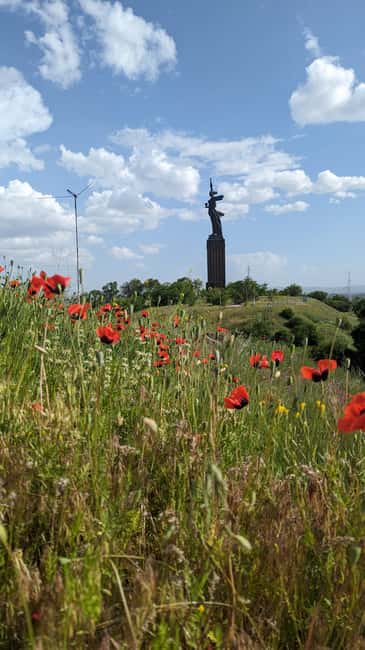

Budget walking tour in Yerevan (Yerevan city tour)
Read our review →

Browse the lists this tour appears in